
We identified the public blockchain CCTV deliberately left unnamed.
Written by KarenZ, Foresight News
On the evening of November 22, CCTV-13’s *Joint Focus* reported Beijing’s first novel illegal pyramid selling case tied to blockchain and virtual currency operations, in which third-party entities facilitated the scheme.
According to the CCTV report, the technology company involved acted as an outsourced service provider for an unnamed public blockchain, delivering services including operations, market outreach, promotional activities, exchange integration, and ongoing platform maintenance. The public blockchain launched a suite of wealth management products, peddling affiliated virtual currencies and luring investors with promises of exorbitant returns, which allowed it to sell virtual currency worth over RMB 300 million at a rapid pace.
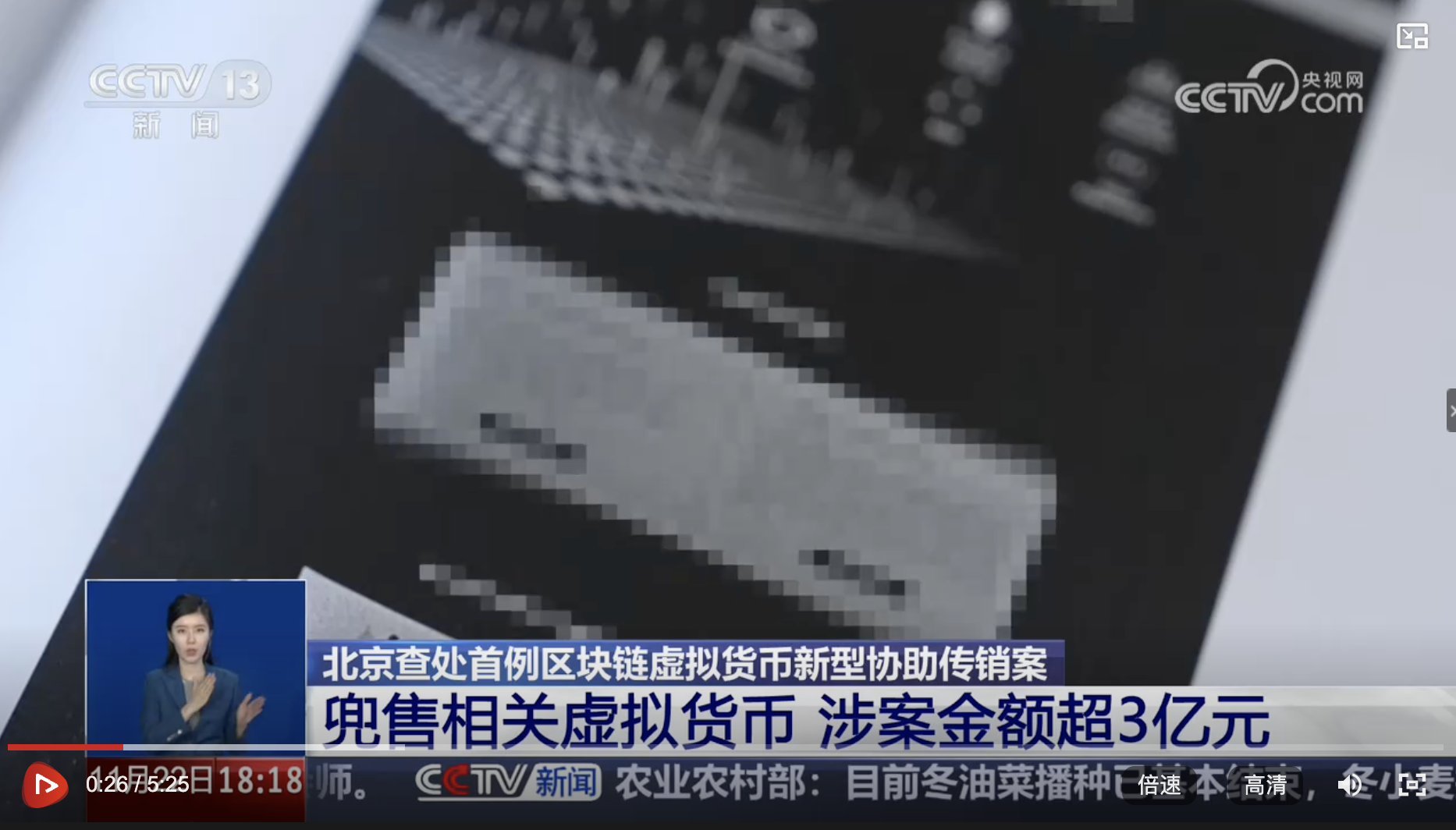
Source: Screenshot from CCTV-13 news report
Hu Rilu, an enforcement officer from the Haidian District Market Regulation Comprehensive Enforcement Brigade in Beijing, disclosed that the relevant projects advertised annualized returns of over 20%! (MISSING) for simply staking the parent token, with promised returns for the secondary token even higher. However, investigations found that these seemingly complex wealth management products were built on the core mechanics of illegal pyramid selling: requiring upfront entry fees, recruiting downstream participants, and providing tiered commissions.
As stated in the CCTV report, public security authorities have placed individuals suspected of organizing the pyramid scheme under criminal detention, and on-chain assets have been locked and frozen through technical intervention.
More surprisingly, the technology company that provided operations, promotion, and exchange integration services for the public blockchain was also subject to combined administrative penalties (fines and confiscated illegal gains) totaling over RMB 930,000.
CCTV did not directly disclose the names of the implicated technology company and public blockchain. But following the materials shown in the program and cross-referencing public administrative penalty records, a public chain first launched in 2018 that once marketed itself as "Blockchain 4.0" has come to light: Seele (Yuanyi).
Which Public Blockchain Was Uncovered in CCTV’s Coverage of the RMB 300 Million Pyramid Scheme?
In the CCTV report, the names of the involved technology company and public blockchain, as well as key sections of relevant case documents, were deliberately blurred, with generic references such as "a certain public blockchain" and "the implicated technology company" used throughout.
Even so, the broadcast retained a number of traceable clues.
After cross-verification, the public blockchain promotional materials, project logos, and associated data shown in the CCTV broadcast all match traceable records from Seele’s historical public documentation. The CCTV clip retained the phrase "Staking Pool Unveils with 20.3%!P(MISSING)otential ANY", which matches the latter half of an announcement Seele published in February 2023. In addition, the public blockchain logo shown in the CCTV footage is nearly identical to the logo displayed on Seele’s official Twitter account and the cover of Seele’s early whitepaper.
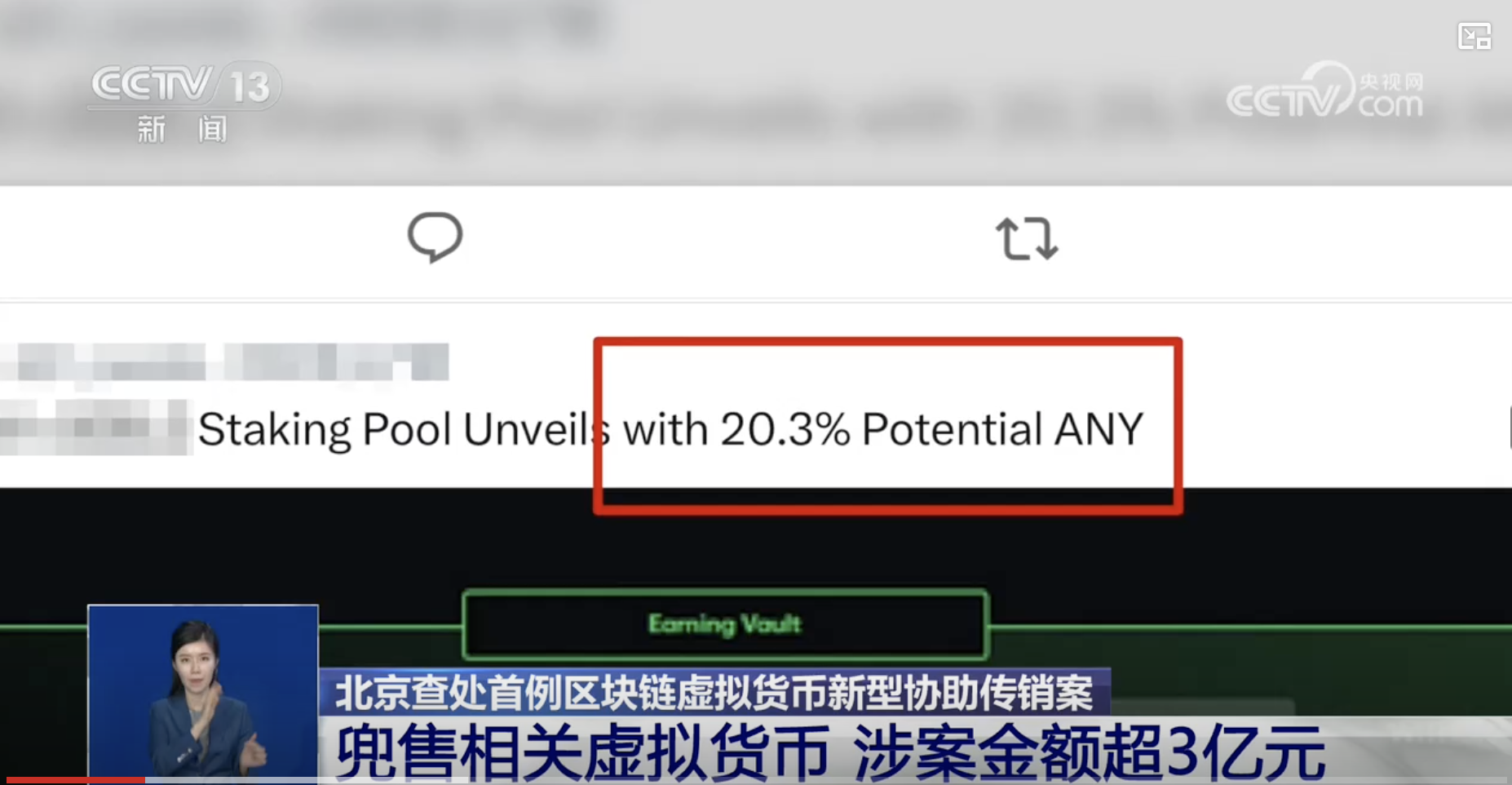
Source: Screenshot from CCTV-13 news report
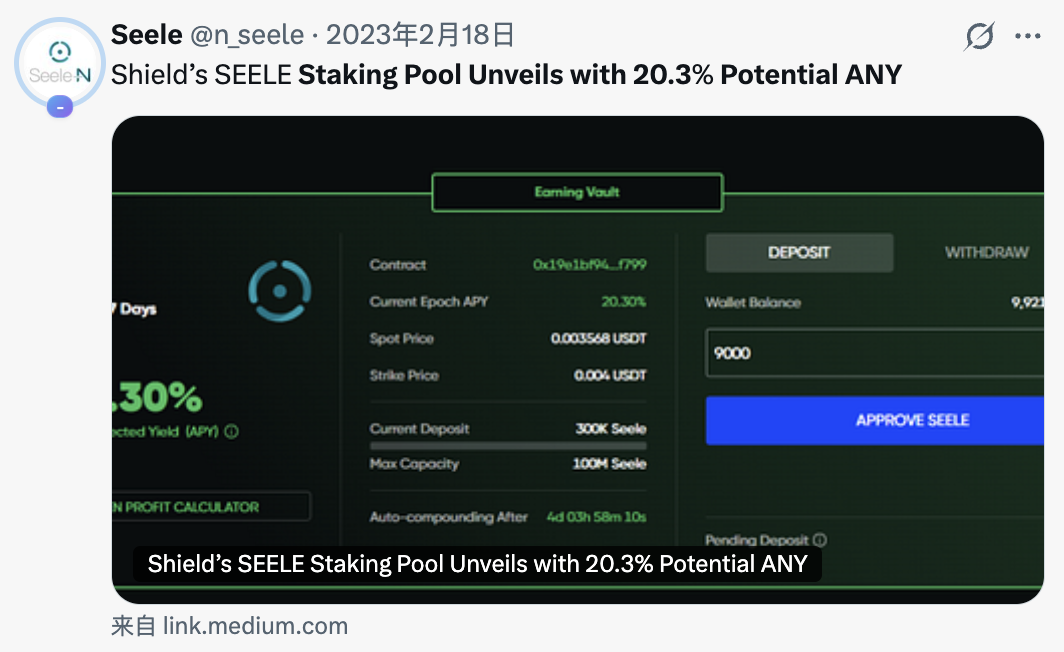
Source: Screenshot from Seele’s official Twitter account
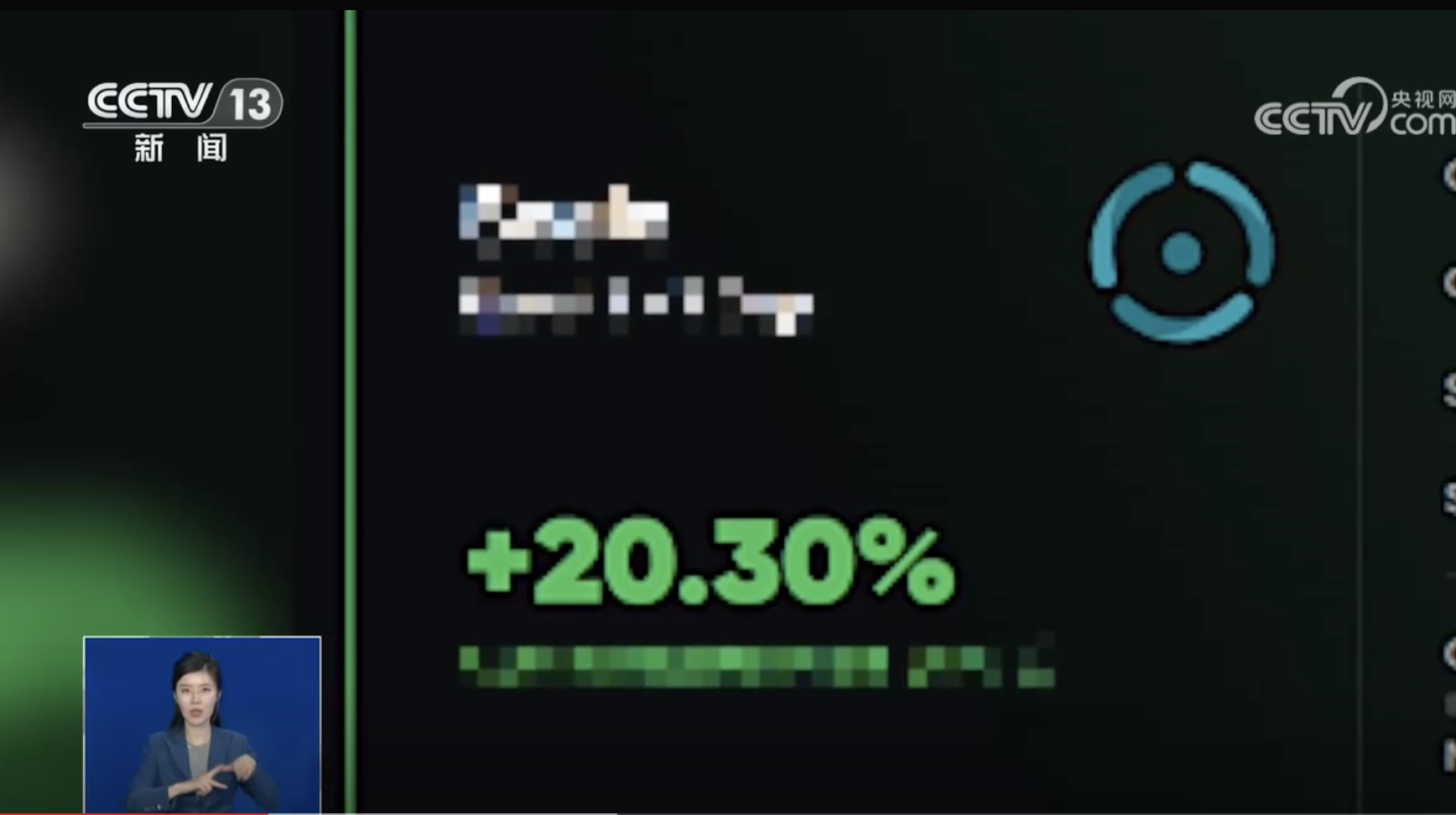
Source: Screenshot from CCTV-13 news report
Additionally, the table of contents of an English-language whitepaper shown in the CCTV report listed chapters including On-chain Governance, Staking, Slashing, and Distribution of Mining Pools and GAS. When cross-referenced against archived versions of SeeleN V3.1’s Chinese-language whitepaper, these chapter titles and their sequential order align perfectly.
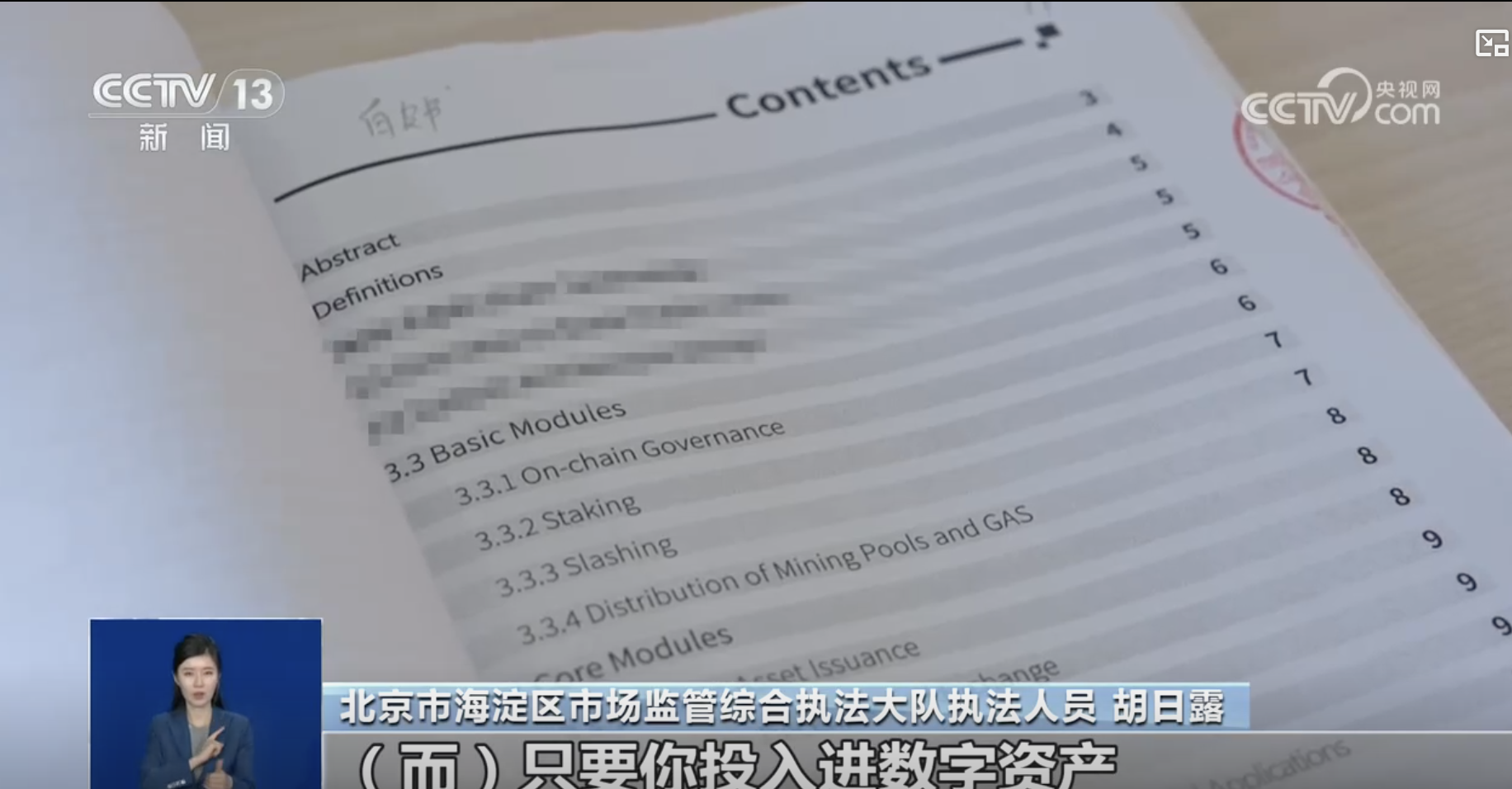
Source: Screenshot from CCTV-13 news report
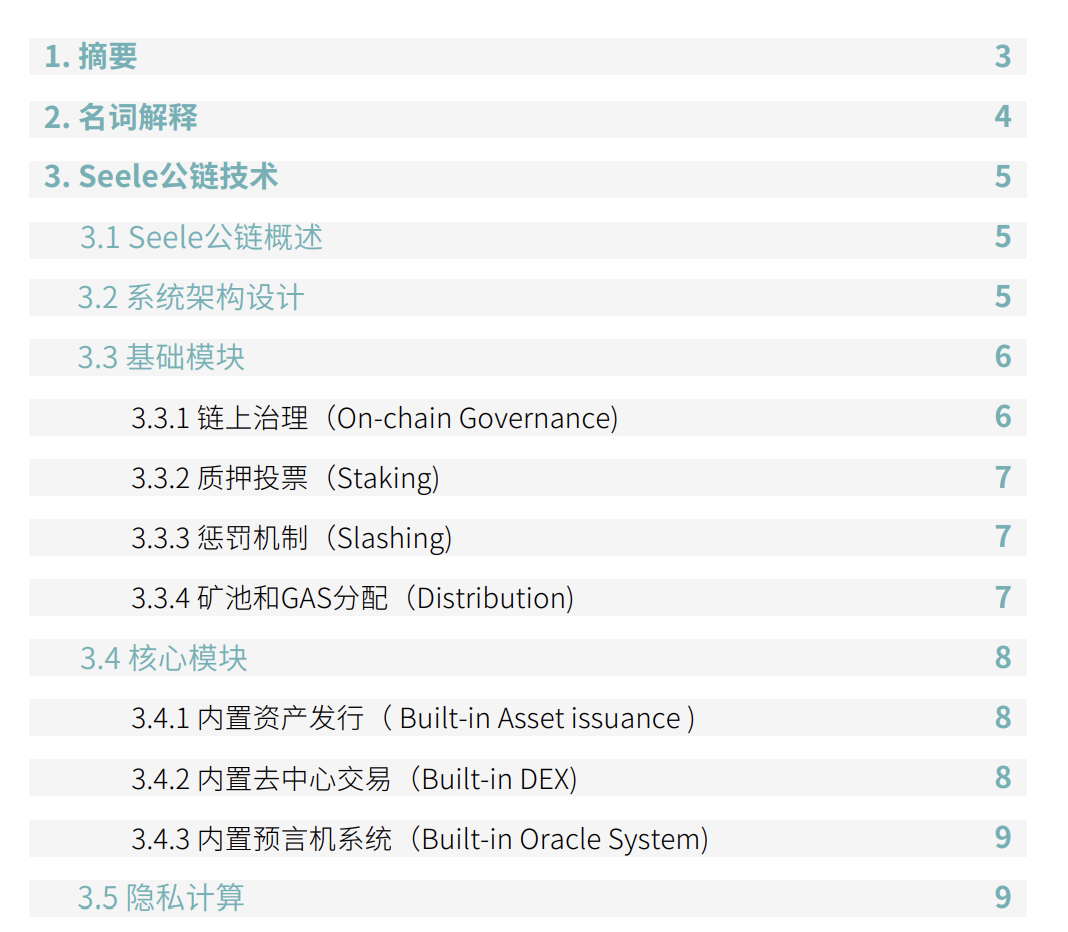
Source: Archived table of contents page from the November 2021 Seele 3.1 Chinese whitepaper
Even more direct clues came from prior public notices released by regulators. On October 28, the WeChat official account for Beijing’s municipal market regulation system, *Market Regulation Voice*, published a case update, explicitly stating that the implicated public blockchain launched the "Atom Plan" and "Hathaway Plan" programs, whose core model was recruiting participants and paying commissions based on headcount, with participants required to invest upfront to gain entry eligibility.
The notice further pointed out that the implicated technology company, despite being aware of the ongoing pyramid selling activities, continued to provide services including technical operations and maintenance, external promotional outreach, and virtual currency trading channel upkeep. It was ultimately subject to combined administrative penalties (fines and confiscated gains) totaling over RMB 930,000 in accordance with Article 26 of the Regulations on Prohibiting Pyramid Selling (promulgated in 2005).
Tracing the exact penalty amount across public records led to the identification of the specific company involved.
Publicly disclosed administrative penalty case records from the Haidian District Administration for Market Regulation in Beijing show that Beijing Saibo Tongchuang Technology Development Co., Ltd. was penalized on June 4, 2026, with the penalty decision document number "Jing Hai Shi Jian Chu Fa [2026] No. 4682".
Per the public disclosure, the company was issued a RMB 100,000 fine and required to forfeit illegal gains of RMB 830,955.52, bringing the total combined penalty to RMB 930,955.52. The penalty was issued under Article 26, Paragraph 1 of the Regulations on Prohibiting Pyramid Selling. This figure is exactly identical to the total penalty amount shown on the law enforcement document displayed in the CCTV report.
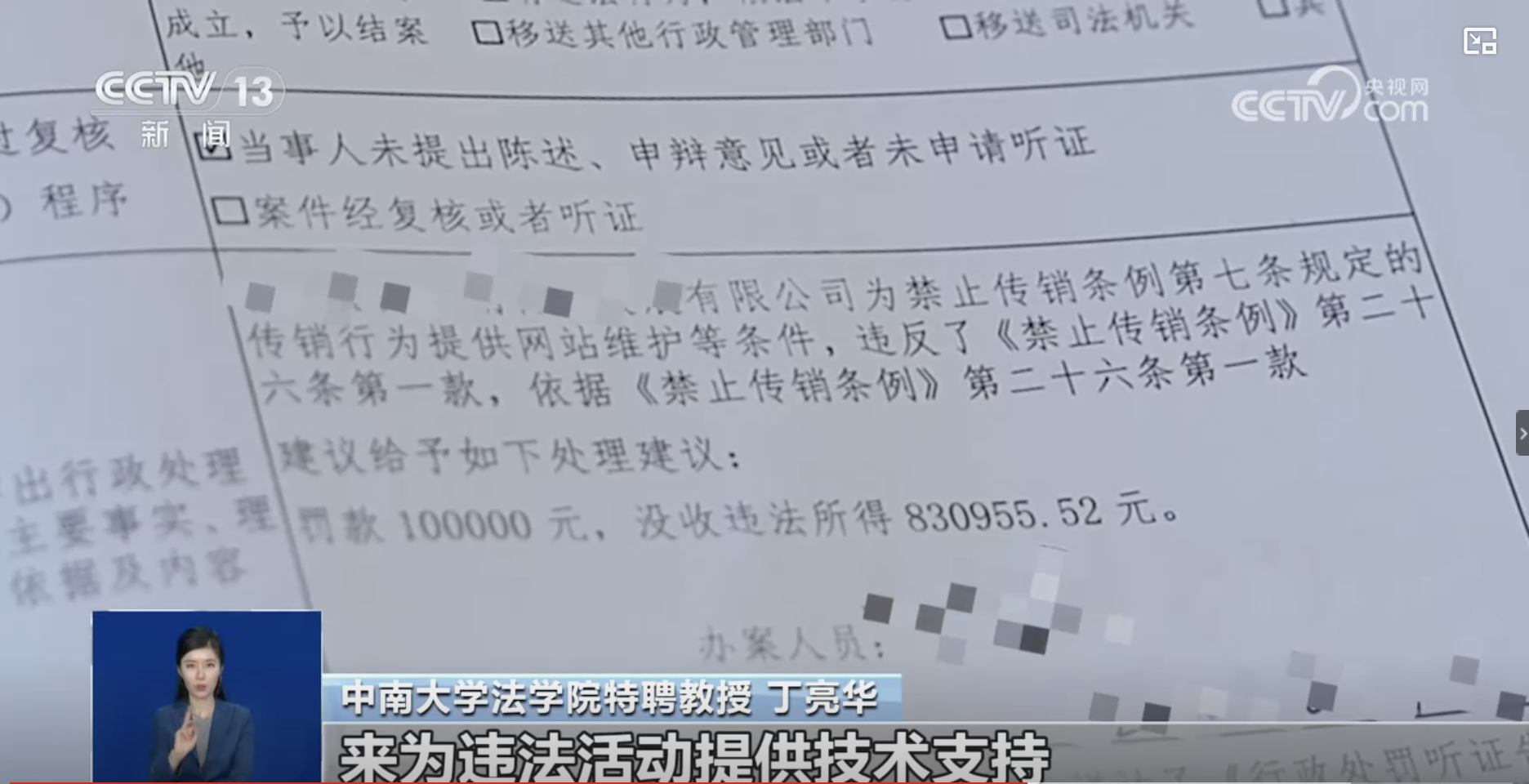
Source: Screenshot from CCTV-13 news report
More critical details appear in the administrative penalty records compiled by Qichacha, China’s leading enterprise credit information platform.
The "illegal facts" section of these records cites the criminal judgment (No. 123, Criminal Final, Su [2024]) from the Intermediate People’s Court of Taizhou, Jiangsu Province, which states that the "Seele" project supported by Beijing Saibo Tongchuang was a public blockchain project under the actual control of Liang Jie.
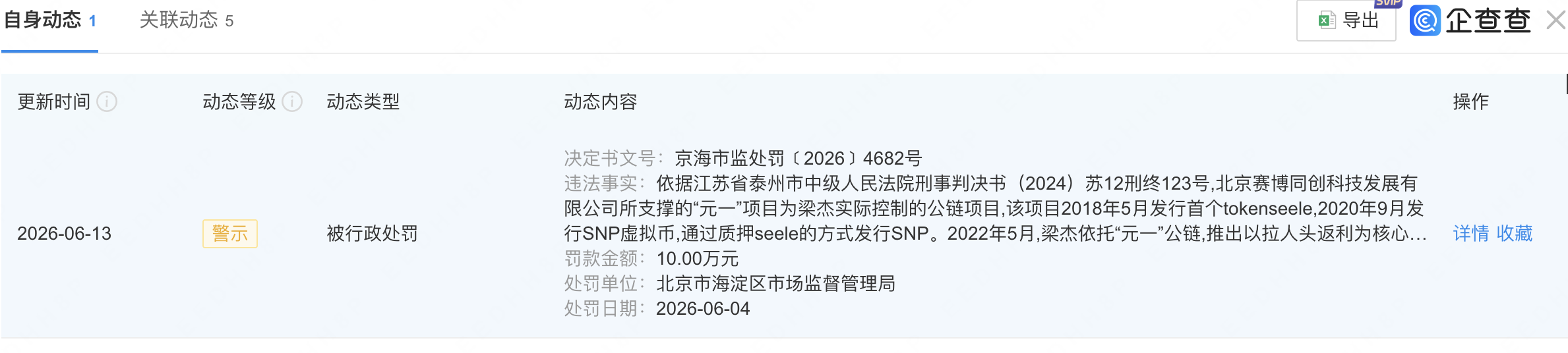
Source: Qichacha
The penalty records show that Seele launched its SEELE token in May 2018, followed by the SNP token in September 2020, which could be obtained by staking SEELE. From May 2022 to April 2023, during the launch and operation of the aforementioned "Atom Plan" and "Hathaway Plan" pyramid selling activities, Beijing Saibo Tongchuang continued to provide operational and service support for the Seele public blockchain.
It should be noted that we have not yet obtained the full text of the aforementioned Taizhou Intermediate Court criminal judgment, nor the complete administrative penalty decision for Beijing Saibo Tongchuang. However, based on public administrative penalty disclosures, regulator notices, and the illegal facts disclosed by Qichacha, there is sufficient cross-verifiable public evidence linking the implicated public blockchain and its outsourced service provider in this case.
The Outsourced Service Provider Behind the Public Blockchain Was Held Liable After Collecting 965,000 USDT in Service Fees
While the over RMB 300 million in virtual currency sales illustrates the scale of this pyramid scheme, another sum documented in the administrative penalty records maps out the service ecosystem operating behind the Seele public blockchain.
965,000 USDT.
Per the illegal facts disclosed by Qichacha in the administrative penalty records, starting in 2022, Beijing Saibo Tongchuang entered an outsourced cooperation agreement with Liang Jie, the actual controller of the Seele project, to provide public blockchain operations, market outreach, promotional activities, and exchange integration and maintenance services. While Liang Jie is identified as the actual controller of the Seele-related public blockchain projects, available public materials are insufficient to clarify the scope of his control, or his relationship with Seele’s early foundation and core technical team.
From May 2022 to April 2023, which aligns with the operational period of the "Atom Plan" and "Hathaway Plan" pyramid schemes as identified in the penalty records, Beijing Saibo Tongchuang continuously provided the aforementioned outsourced services. Over this period, the company received a total of 965,000 USDT in payments from Liang Jie.
After receiving the USDT, the company periodically converted it to RMB via exchange OTC platforms or other over-the-counter traders based on operational needs, using the proceeds to cover employee salaries, network maintenance, media promotion, rent, and other operating expenses.
Based on the actual exchange rates cited in the penalty records, these USDT payments translated to approximately RMB 6.2725 million in revenue for the company.
The records further specify that necessary operating expenses over the relevant period totaled RMB 5,441,544.48, covering salaries, social security contributions, housing fund contributions, taxes, network maintenance fees, media publishing and production costs, design fees, rent, and property management fees.
After deducting these expenses, regulators determined the company’s illegal gains to be RMB 830,955.52.
This raises a key question.
If Beijing Saibo Tongchuang was only being paid to deliver contracted services, why was it held legally liable?
The answer, per the penalty records, lies in the scope of Beijing Saibo Tongchuang’s business, which extended beyond basic technical operations to include promotional outreach, market services, and exchange integration and maintenance. When capital is raised through downstream recruitment and tiered commission structures, the tangible impact of these services requires close scrutiny.
Per the illegal facts disclosed by Qichacha, regulators determined that Beijing Saibo Tongchuang had subjective knowledge that Liang Jie and other parties were developing headcount-recruitment pyramid applications on the Seele public blockchain, yet chose to let these activities proceed, and continued to provide conveniences including website maintenance, external promotional outreach, and virtual currency trading channel support.
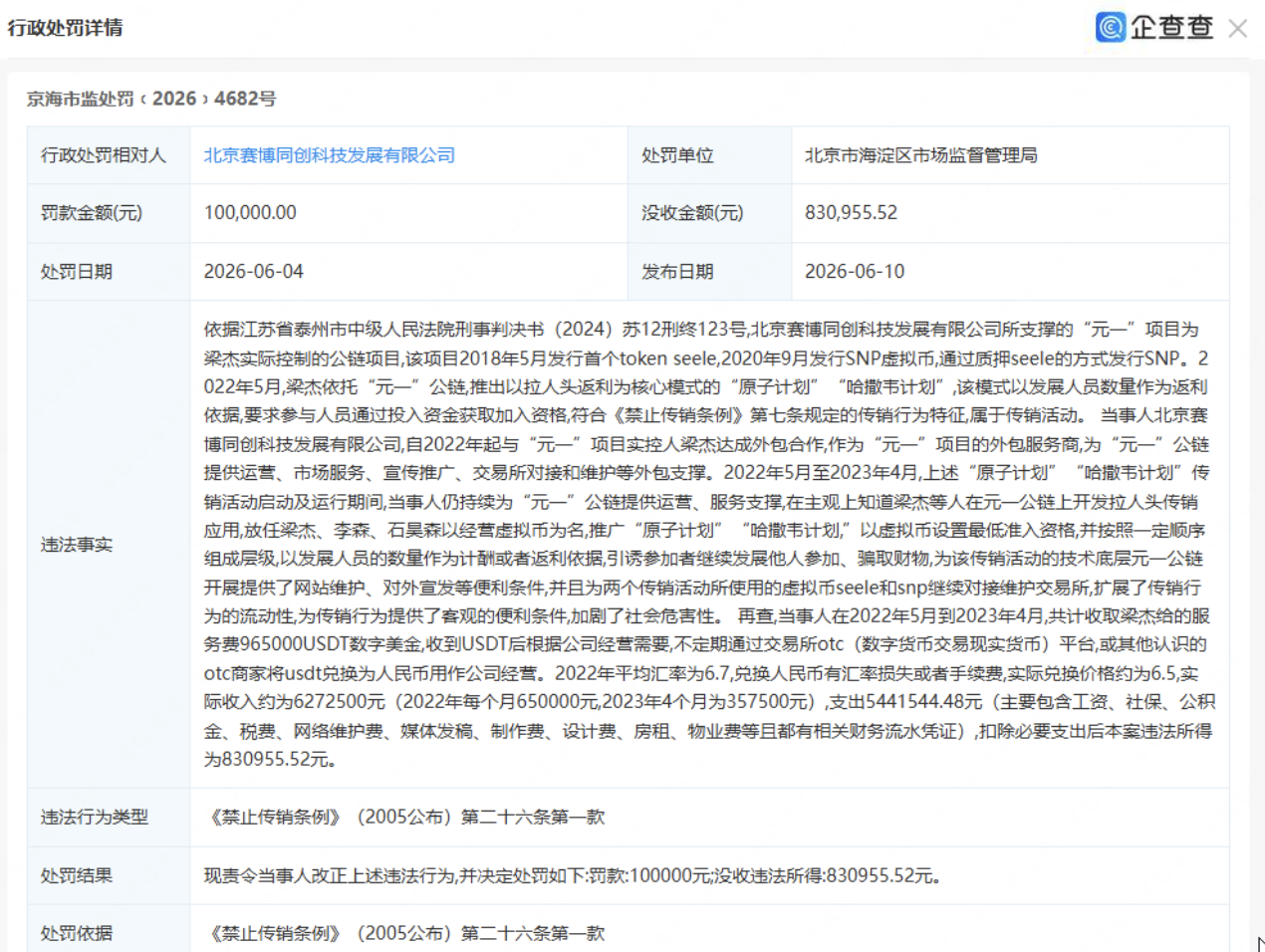
Source: Qichacha
The penalty records also note that Liang Jie, Li Sen, Shi Haosen, and other individuals participated in promoting the relevant programs.
Haidian District market regulators previously explained the unique nature of this case: it is a typical example of the reverse administrative-criminal coordination mechanism being applied in pyramid scheme regulation. Case clues were formally transferred by procuratorial authorities in accordance with the law, after which the Haidian District Market Regulation Bureau deployed specialized enforcement teams to conduct a full investigation.
In a CCTV interview, Ding Ke, deputy captain of the 10th Enforcement Team of the Haidian District Market Regulation Comprehensive Enforcement Brigade, explained the difference between this new type of pyramid scheme and traditional models. Traditional pyramid schemes often rely on offline gatherings, centralized training, and in-person cash collection and participant recruitment. In this case, however, participants could complete all required operations via online communities and web platforms, and transfer funds using virtual currencies.
What Happened to Seele, the Project That Once Marketed Itself as "Blockchain 4.0"?
Turn the clock back to 2018, and Seele was pitching a narrative centered on cutting-edge blockchain technology.
This was the height of the 2018 public blockchain boom, and Seele positioned itself as the flagship of "Blockchain 4.0", claiming its neural consensus algorithm and heterogeneous forest network would solve blockchain’s longstanding performance and scalability challenges. Its early whitepaper even cited experimental results of 100,000 transactions per second across a 100,000-node network. It is important to note, however, that these were only the project’s stated technical claims, and did not reflect actual mainnet performance delivered later.
The project’s team background was also a key part of its early promotional pitch. Its early whitepaper listed core team members including CEO Maolin Zheng, Chief Scientist Bi Wei, and COO Nick Smith.
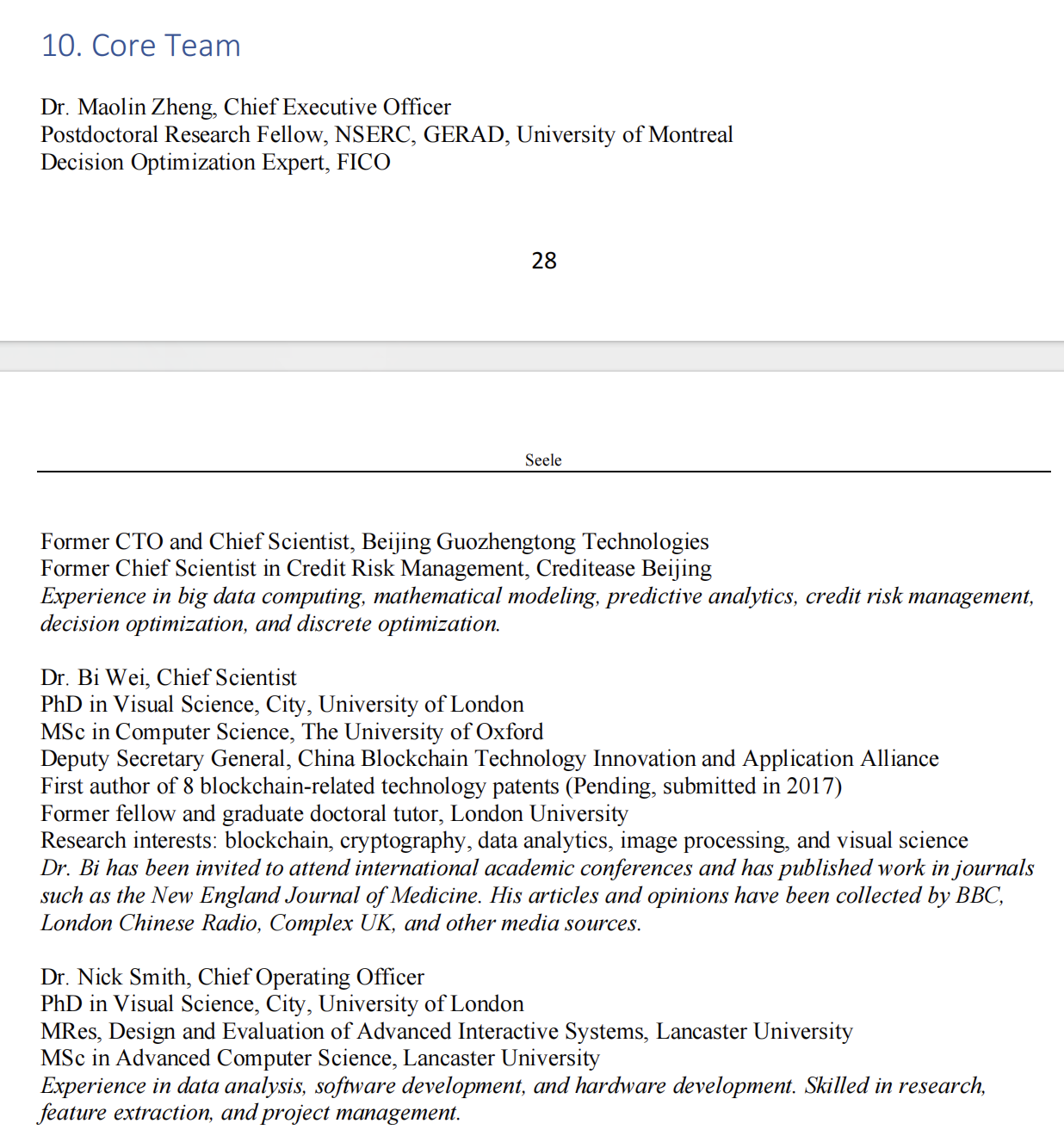
Source: Seele’s early whitepaper
The project launched its fundraising round soon after. Per Seele’s 2018 fundraising plan, the initial total supply of SEELE was 1 billion tokens, with a hard cap of 30,000 ETH for token sales, split between 25,000 ETH for private round allocations and 5,000 ETH for public sale allocations.
Records from third-party crypto fundraising data platform ICO Drops show that Seele raised approximately USD 10.194 million in its 2018 private round and USD 1.936 million in its public sale, for a total of roughly USD 12.13 million.
Controversies surrounded the project as early as its launch. In February 2018, an impersonation scam targeted Seele’s Telegram community. Per disclosures from Seele at the time, scammers posed as project administrators to solicit funds. Cointelegraph reported at the time that the scam involved ETH worth approximately USD 1.8 million at then-current prices.
A more dramatic turning point came at the end of that year. On December 31, 2018, the Seele Foundation published an open letter acknowledging it had decided to close its Shenzhen and Beijing offices, with a total staff layoff rate of 80%!, (MISSING) including a portion of its core public blockchain development team.
The foundation explained that the project had expanded too rapidly in the first half of the year, and the sharp crypto market crash in the second half caused the value of its held digital assets to plummet, making its original operating budget unsustainable.
More than a year later, Maolin Zheng shared additional details in an open letter. Per his account, when he took over mainnet development in December 2018, the San Francisco team he led had only six members, and the digital assets transferred to him by the foundation were worth less than 400,000 USDT at then-current prices. His team eventually launched the project’s first-generation mainnet on March 31, 2019.
Notably, this remaining balance of under 400,000 USDT stood in stark contrast to the project’s initially disclosed fundraising scale.
In April 2020, Seele assembled new teams for technical development, industry growth, and community operations, and gradually rebranded to the SeeleN identity. The project’s public narrative also shifted from its early focus on foundational consensus algorithms to industrial asset integration, tokenomics, and DeFi applications.
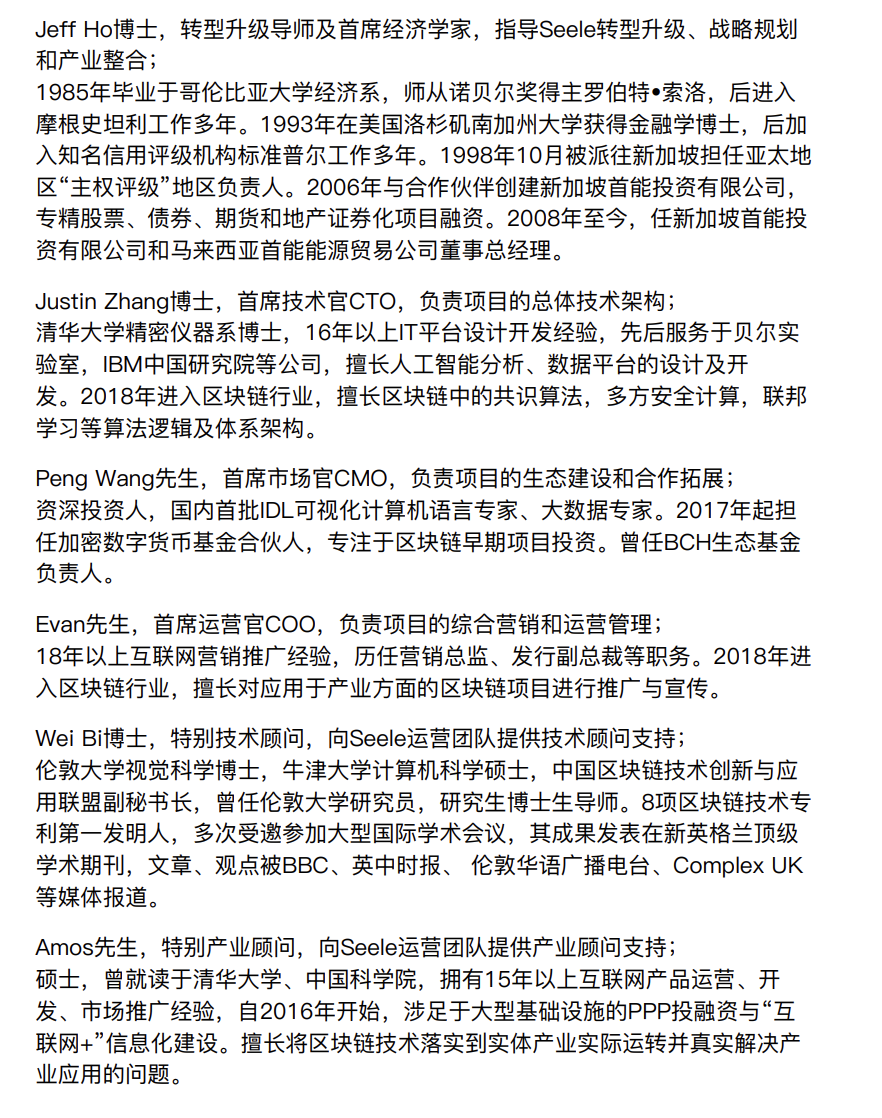
Source: Archived Seele Chinese whitepaper from November 2020
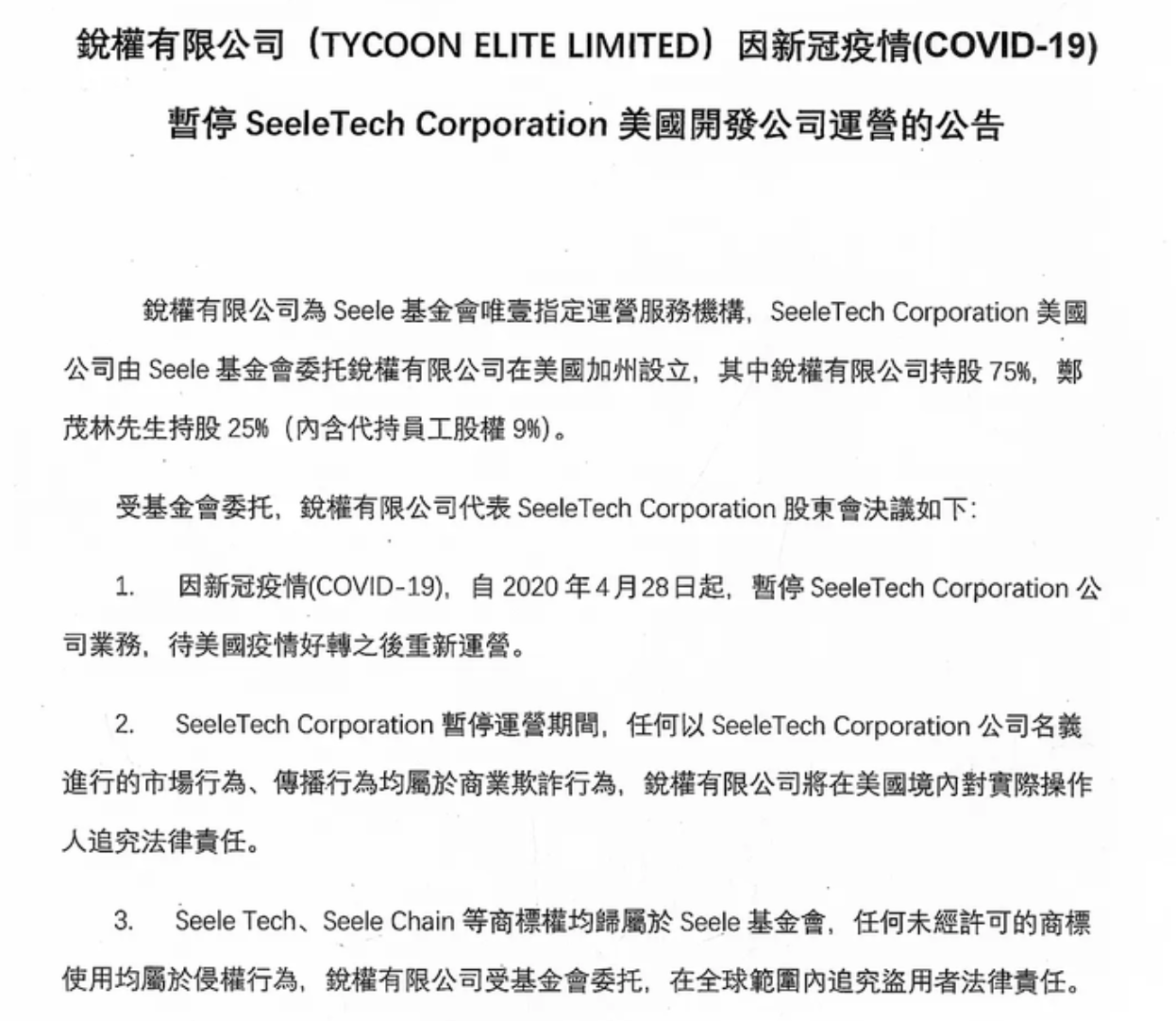
At the same time, TYCOON ELITE LIMITED, the designated operations service provider for the Seele Foundation, announced that, due to the COVID-19 pandemic, it would suspend operations of its U.S. subsidiary SeeleTech starting April 28, with plans to resume operations once pandemic conditions improved. TYCOON ELITE LIMITED held a 75%! (MISSING) stake in the U.S. development entity SeeleTech Corporation, while Maolin Zheng held the remaining 25%!, (MISSING) including a 9%! (MISSING) stake held in trust for employees.
After this period, Seele’s product focus shifted. The early iteration of Seele emphasized foundational consensus algorithms and blockchain infrastructure, while the later SeeleN iteration gradually shifted focus to industrial asset integration, tokenomics, community governance, and DeFi applications. In August 2020, Seele launched a mainnet token swap program, allowing eligible holders to exchange Seele mainnet native coins for SEELE tokens issued on the Ethereum network.
SEELE and the governance token SNP became core components of the project’s subsequent ecosystem.
In April 2022, SeeleN officially launched SNP staking pools. Per the announcement, users could earn SNP by depositing SEELE or USDT, and then stake SNP to earn additional token rewards.
In October of the same year, the project promoted an asset management platform called Nerv Ledger, positioning it as the "Berkshire Hathaway" of the blockchain space.
Another historical announcement creates a more direct parallel with the content of the CCTV report.
In February 2023, SeeleN published an announcement on its official Medium page about the launch of the Shield SEELE staking pool, with the title explicitly advertising a potential return rate of 20.3%!. (MISSING)Shield is a one-stop solution for DeFi options vaults; the project also published a piece around the same time about its partnership with Shield to expand yield opportunities for ecosystem users, highlighting their collaborative work on staking returns.
Notably, an English announcement screenshot shown in the CCTV report explicitly featured text including "SEELE Staking Pool" and "20.3%!" (MISSING), which largely matches the title and content of this historical announcement. However, it has not yet been confirmed whether this activity is the same operation as the "Atom Plan" and "Hathaway Plan" that were determined to be part of the pyramid scheme.
In addition to the high-return promotional claims, another case document shown in the CCTV report directly included statistical details such as the "Hathaway Plan", a maximum tier depth of 51 levels, and 3,086 addresses with recorded deposit activity. The footage also showed two monetary figures: approximately RMB 150 million and RMB 185.7 million, but because the relevant content was not fully displayed, it is not yet possible to confirm the specific nature of these funds or the statistical methodology used.
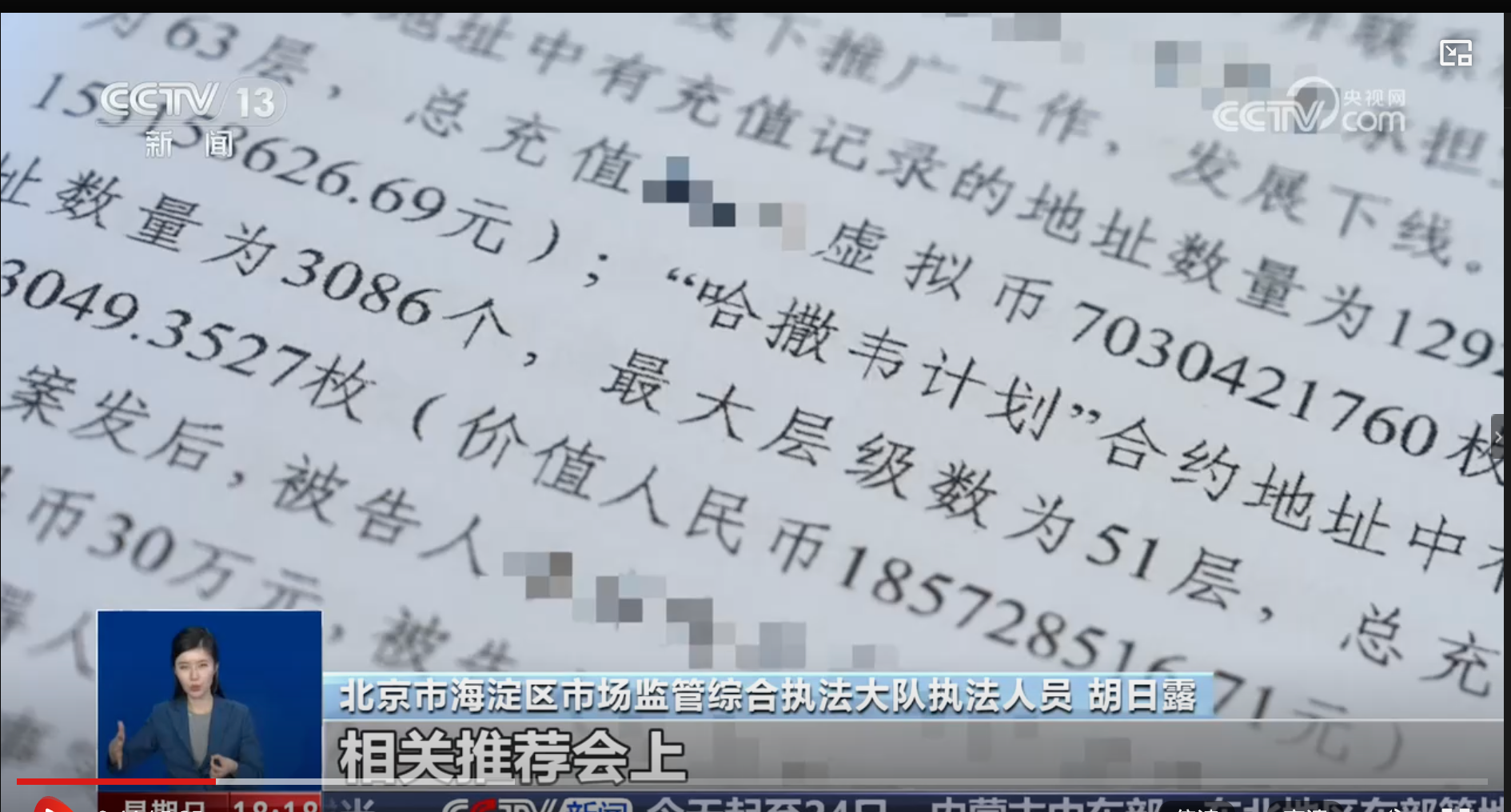
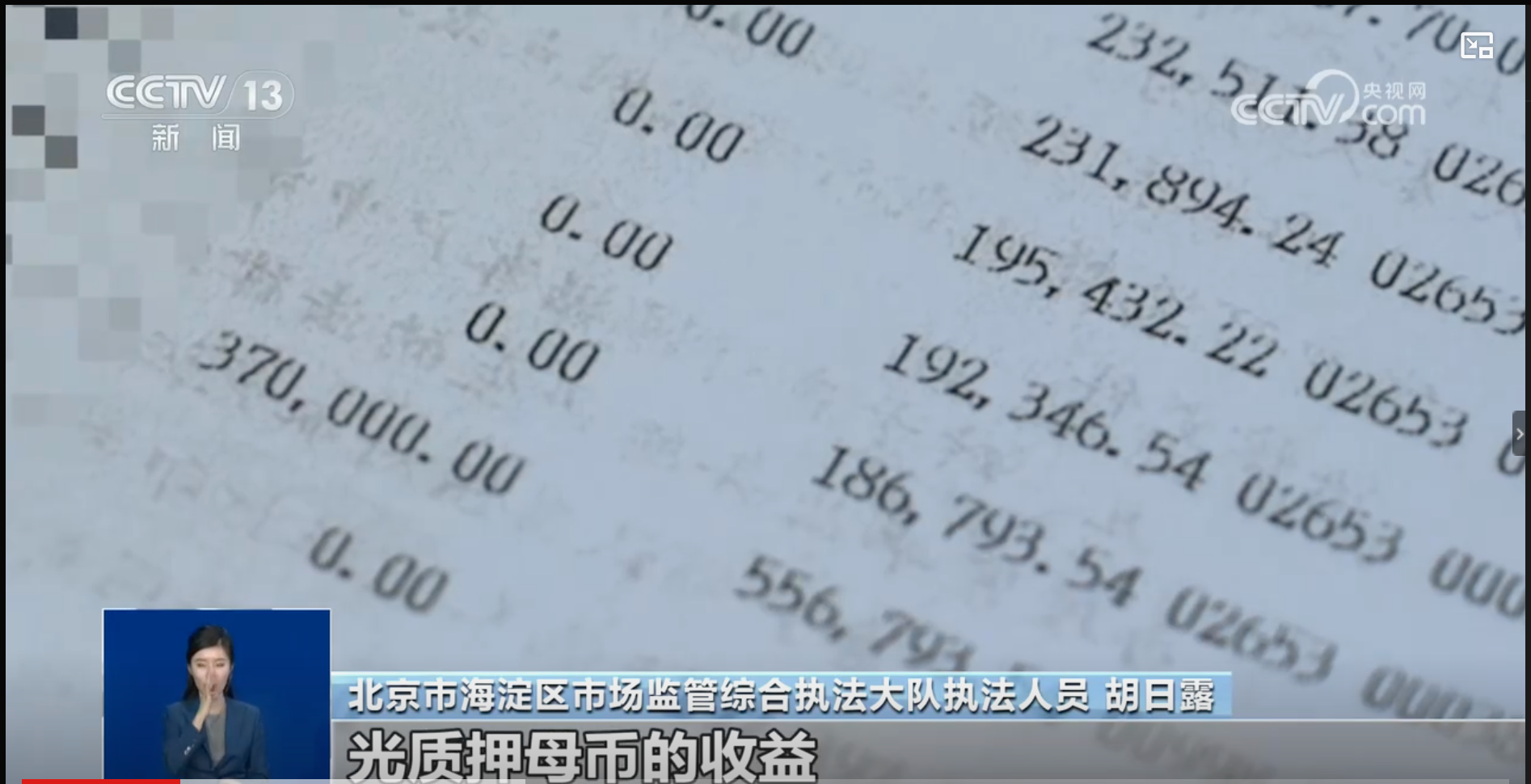
Source: Screenshot from CCTV-13 news report
Meanwhile, both SEELE and SNP experienced extreme price volatility. Data from GeckoTerminal shows that the two tokens once reached estimated market capitalization highs in the hundreds of millions of USD, before plummeting sharply. As of November 23, 2026, the estimated market capitalizations of SEELE and SNP are approximately USD 147,500 and USD 135,800, respectively.
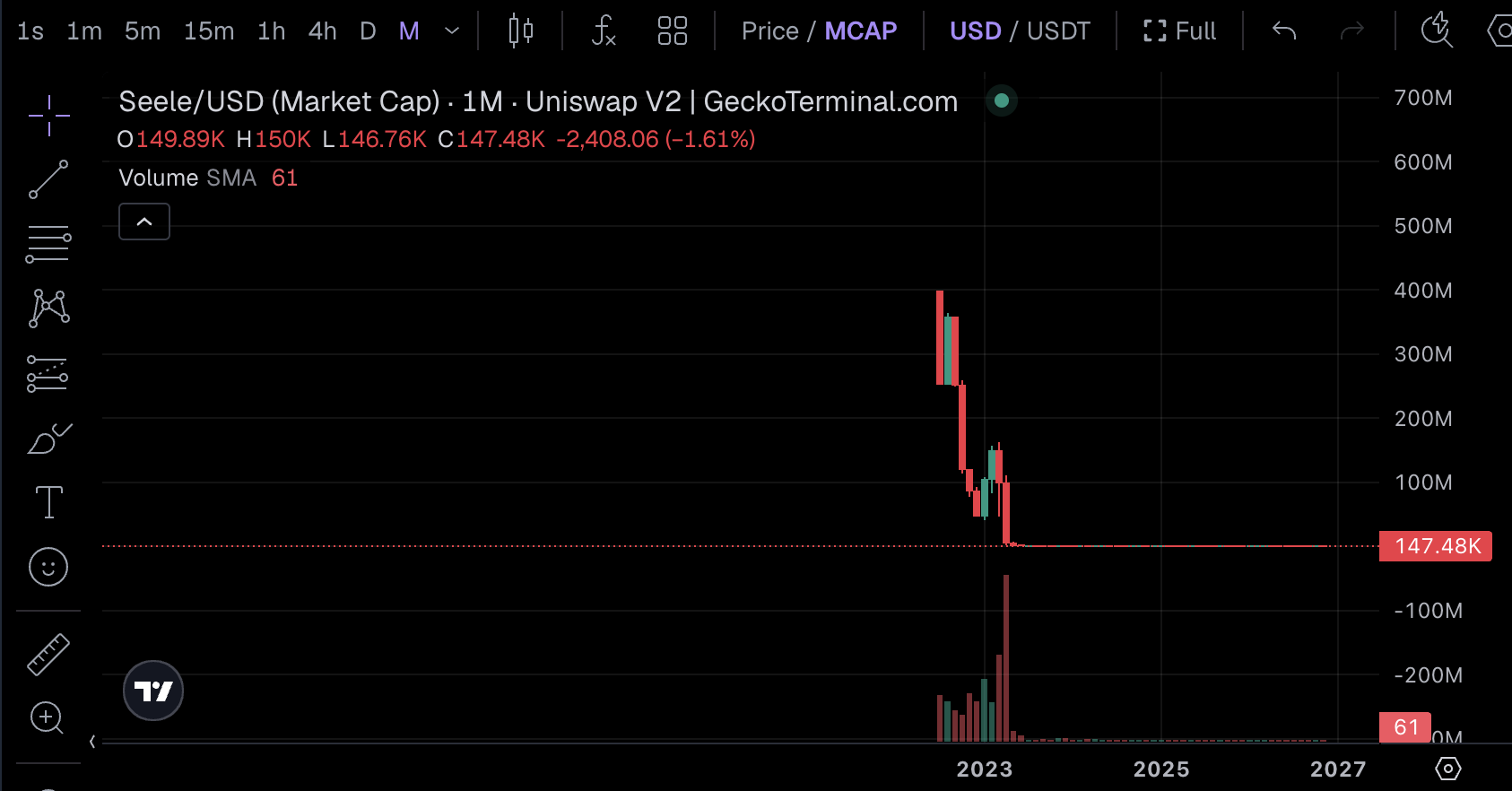
Source: GeckoTerminal
It is worth noting that the penalty records compiled by Qichacha link Liang Jie to the actual control of the Seele public blockchain project, but it remains unclear whether this determination applies to the overall operational management rights of the Seele public blockchain, or only to specific applications and businesses built on top of the chain. Since the full text of the relevant criminal judgment has not been obtained, it is also impossible to confirm whether there was a transfer of control between Liang Jie and Seele’s early foundation and development team.
The key basis for the penalty in this case is not that the outsourced provider simply offered technical operations and maintenance services, but that regulators determined it continued to provide operational support, promotional outreach, and virtual currency trading channel maintenance while being aware of the ongoing pyramid scheme, thereby creating convenient conditions for the scheme to operate and spread.
This also means that being a technical outsourced vendor is not an automatic exemption from liability. Whether legal liability applies must still be determined based on the service provider’s level of awareness, specific conduct, and tangible impact on the illegal activities in question.