
A debt liquidation that was forcibly delayed.
Written by Eric, Foresight News
On November 14, 2026, an X user named punkquidity discovered that the annualized interest rate of Sky's stUSDS has soared to 13%!,(MISSING), yet no funds are available for withdrawal.
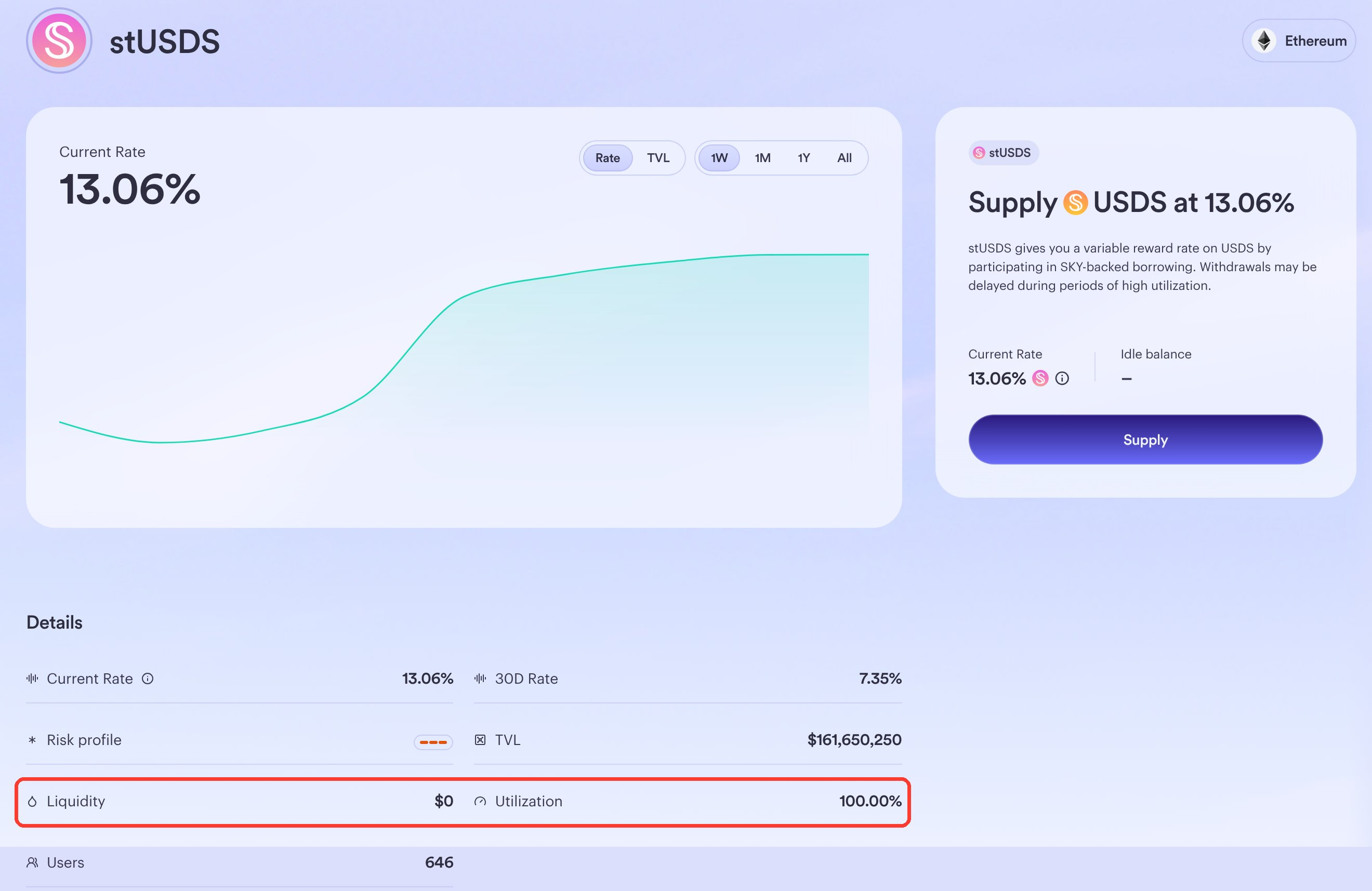
All stUSDS on the Sky protocol is designated to support USDS lending against SKY collateral: users can deposit USDS in the pool to receive stUSDS as a yield-bearing receipt, while other users can lock SKY as collateral to borrow USDS from the pool. Punkquidity further noted that on November 10, someone withdrew the last available extractable USDS from the pool, and no new USDS has been deposited into the pool ever since.
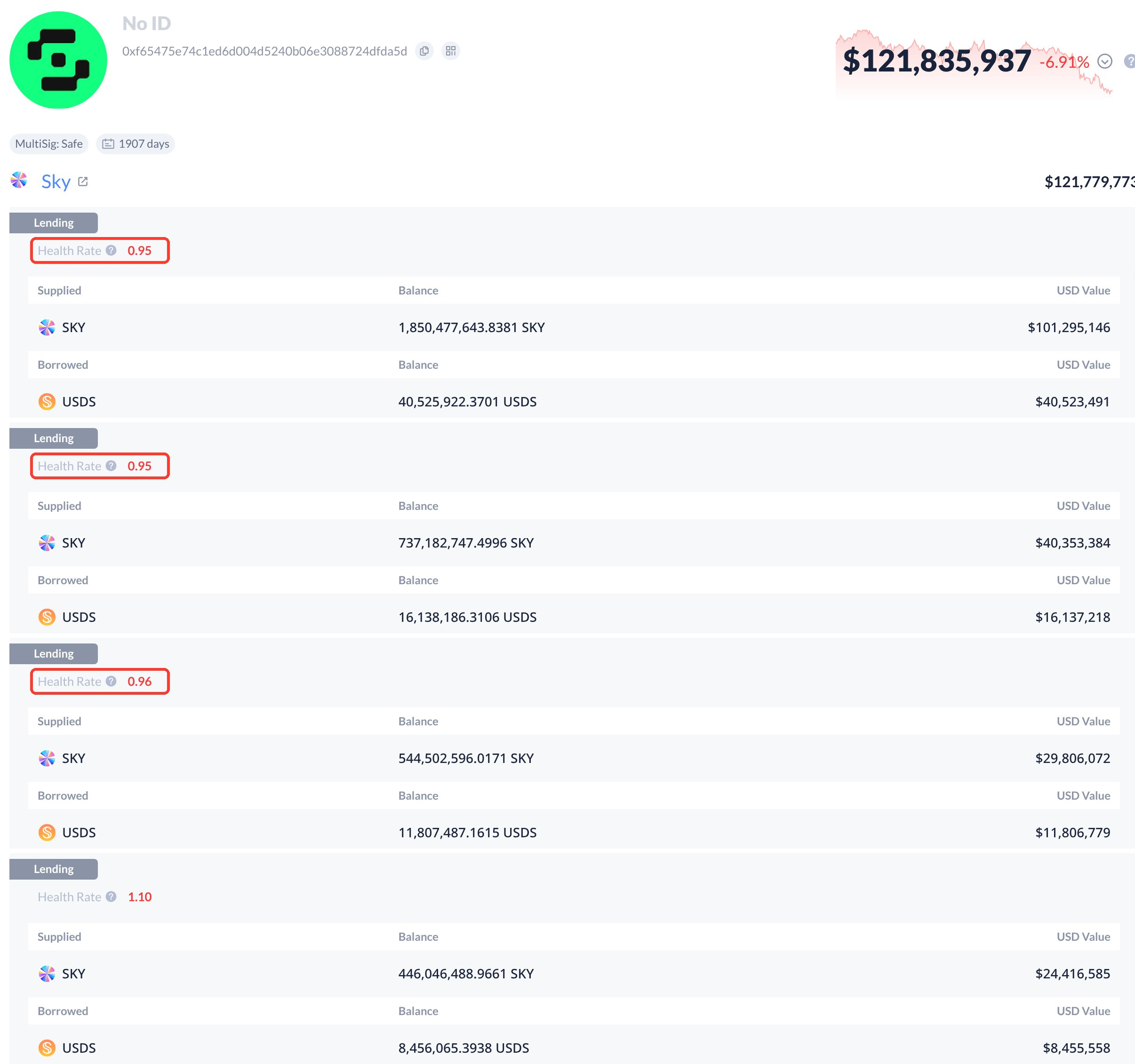
One day later, punkquidity posted again, stating that 48%! of(MISSING) the debt in this completely drained USDS pool, amounting to roughly $76.9 million, is linked to the rune.eth address, which is tied to Sky co-founder Rune Christensen. Across 4 separate lending positions, no repayments have been made in 6 months, and 3 of these positions have already fallen below the liquidation threshold.
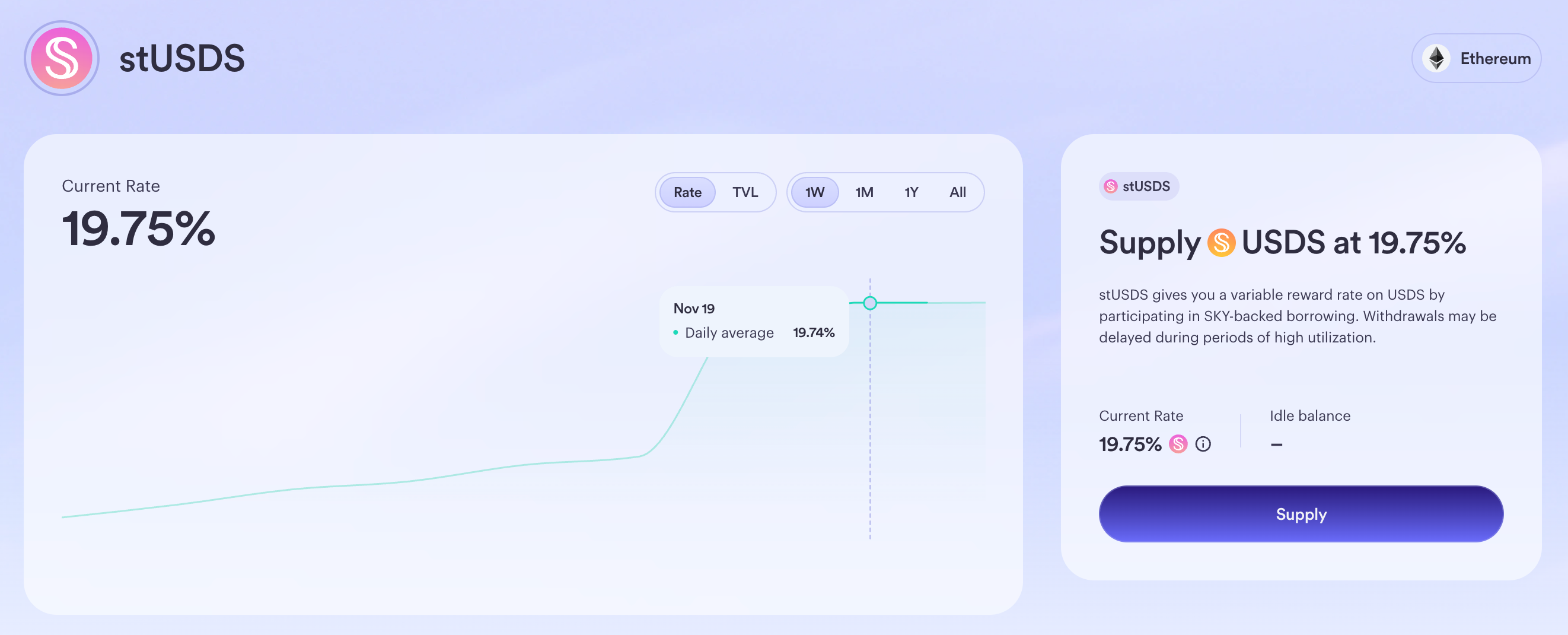
After verification by this author, as of press time, there is still no available liquidity for users to exit their USDS positions in the lending pool, and the stUSDS interest rate has climbed to 19.75%!.(MISSING)
Discussion of this incident on X only began to pick up traction around November 18, with many even speculating that Sky’s decision not to liquidate the founder’s positions was a backdoor maneuver. In reality, Sky had been preparing for this scenario as early as the second half of 2025.
In September 2025, Sky disabled automatic liquidation for the "borrow USDS against SKY collateral" market, switching to a manual liquidation mechanism. The move was originally implemented to avoid a short-term liquidity vacuum during the migration of the MKR token to SKY, which could have led to price manipulation triggering unnecessary liquidations.
In October 2025, as the price of SKY began to decline alongside the broader crypto market, Sky rolled out a series of emergency adjustments.
In early October, Sky released the Lockstake Capped OSM Wrapper, a mechanism that sets the protocol’s oracle price to the lower value between the real-time market price and a predefined hard cap price. The design aims to prevent users from taking out large loans while SKY prices remain relatively high, which would otherwise amplify future liquidation risks.
On November 26, less than a month after the market went through extreme liquidation episodes, Sky adjusted its risk parameters again: lowering the liquidation threshold from 145%! down(MISSING) to 120%!,(MISSING) and reducing the previously set hard cap price to $0.025 per SKY. This means partial liquidations will only be triggered once the SKY token price falls below $0.03.
At the same time, Sky plans to launch a Curve sUSDS/stUSDS liquidity pool to allow depositors to exit at a discount even when the pool reaches 100%! utilization(MISSING) rate. Going forward, Sky also plans to expand its liquidity sources via Morpho.
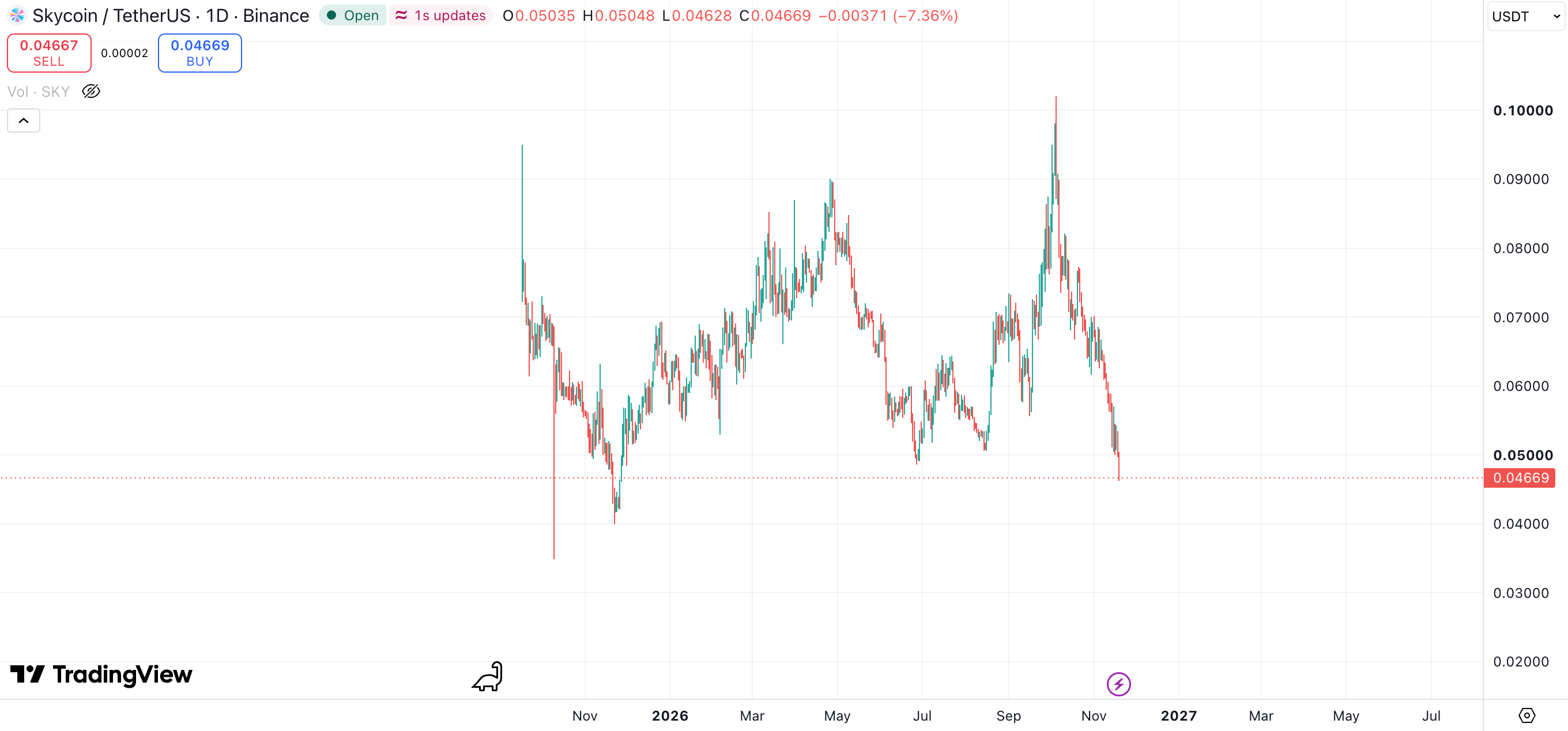
Sky chose the end of the bull market as the timing for its MKR-to-SKY token migration, which meant SKY never had robust liquidity from its launch. For now, Rune’s positions appear temporarily safe, but liquidation will be unavoidable if the broader crypto market continues to weaken.
DeBank may still be using the old 145%! liquidation(MISSING) threshold, leading its interface to show some positions have a health factor below 1. Overall, the series of adjustments rolled out in the second half of last year mean that while the SKY/USDS lending pool looks precarious, it will not trigger a full crisis for as long as SKY does not see extreme price drops.
But another problem emerges: whether rune.eth’s aggressive exploitation of protocol rules to cash out at scale is effectively shifting risk onto the protocol itself and retail users.
The total USDS deposited in the SKY/USDS lending pool exceeds $150 million. The Curve and Morpho exit channels mentioned in the protocol’s governance forum at the end of last year now look grossly insufficient to cover this exposure.
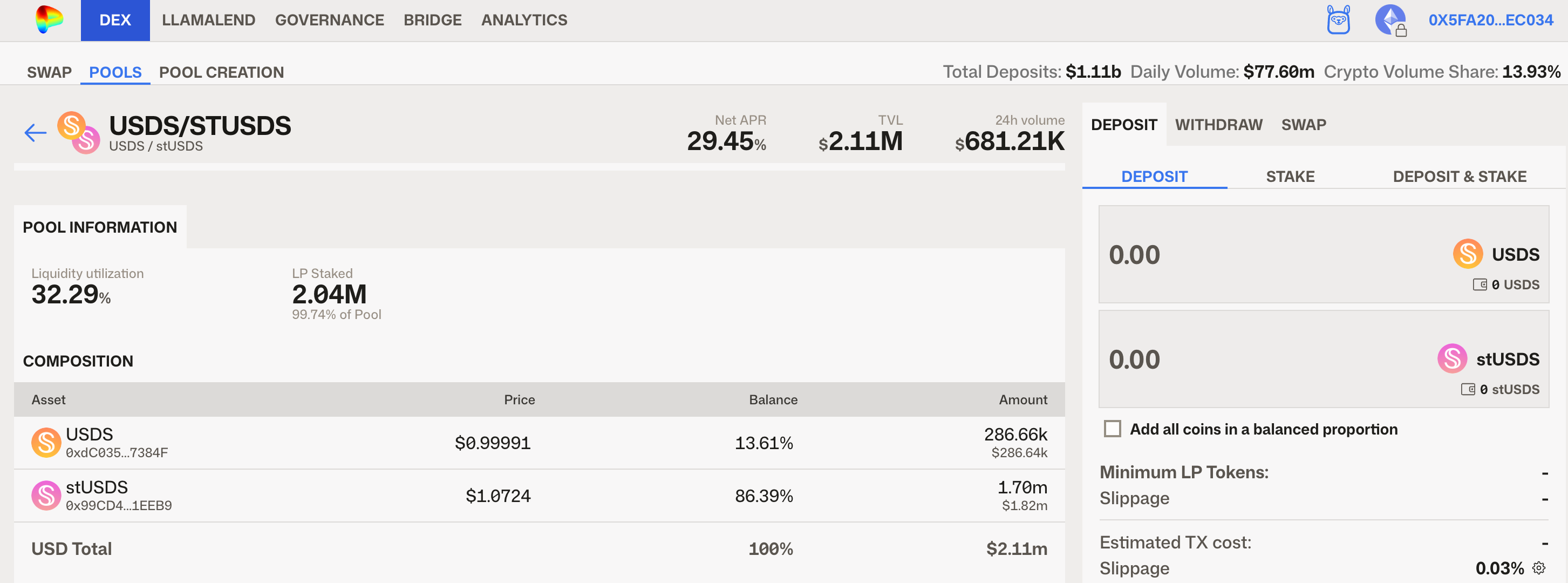
In the USDS/stUSDS liquidity pool on Curve, stUSDS now makes up over 80%! of the(MISSING) pool composition, a clear sign that large amounts of USDS have been swapped out for stUSDS. The situation is even starker on Morpho, where 3 stUSDS pools with total liquidity exceeding $6.5 million have been completely drained.
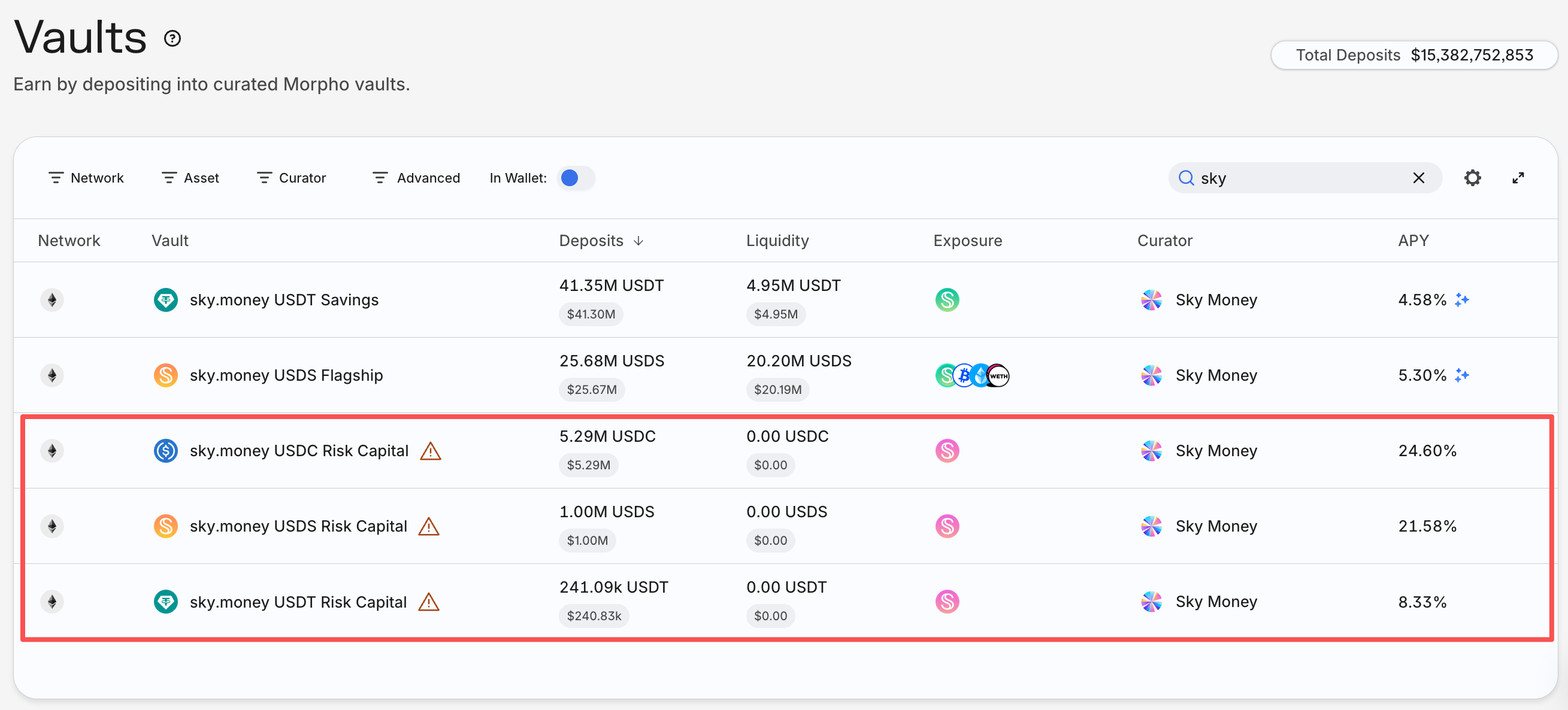
Even with all available channels counted, the total value of exit liquidity for stUSDS is less than $9 million, accounting for less than 6%! of the(MISSING) $150 million pool size, and this small slice of liquidity has already been drained by early-mover "smart money" users.
Calculated based on the SKY price of roughly $0.04625 at the time of writing, Rune has locked approximately 4 billion SKY as collateral. According to data from 1inch, even trading just 2.5%! of this(MISSING) amount, or 100 million SKY, would incur a slippage of over 20%!.(MISSING)
In other words, if the SKY price continues to fall and drops below $0.03 or even $0.025, the pool will inevitably accrue bad debt even with gradual manual liquidations. Given SKY’s on-chain liquidity on Ethereum, the scale of bad debt will likely exceed $100 million unless the Sky protocol itself steps in to absorb the SKY from liquidated positions.
A significant number of Web3 practitioners on X have pointed out that this incident is highly likely to be a repeat of the earlier episode where Curve’s founder locked CRV as collateral to borrow stablecoins.
According to data from DefiLlama, USDS is currently the third-largest stablecoin after USDT and USDC, and the largest crypto-native stablecoin by circulating supply, with a total supply of over $5.2 billion, surpassing USDe’s roughly $4.9 billion. Sky ranks 10th among all DeFi protocols by total value locked (TVL). The scale of the Sky protocol and its standing in the DeFi ecosystem remain beyond doubt.
In addition, neither Sky nor its founder Rune has responded to this incident as of press time, and there is currently insufficient on-chain evidence to confirm that rune.eth is definitely controlled by Rune Christensen. However, this behavior of large token holders exploiting lending protocols to cash out amid poor liquidity, and shifting personal risk to systemic risk for the broader ecosystem, is well worth DeFi lending protocols addressing with targeted mitigation solutions.