
After launching 2065 Agent tokens with a combined total market cap of approximately $8.42 million over the past month, Orbio has integrated Mosh’s locked crowdfunding and AI market-making mechanisms.
Written by Sanqing, Foresight News
On October 21, Orbio, an AI credit marketplace on Robinhood Chain, announced support for the launch of community-funded AI Agent tokens with controlled supply. New tokens will be paired with ORBIO, with liquidity provided by AI market makers from the first day of listing. On the same day, token launch protocol Mosh stated via Twitter that Orbio is the first launchpad built on top of Mosh. Per GMGN data, as of press time, ORBIO has risen approximately 74.1% in 24 hours, with a market cap of around $35.88 million.
Orbio’s launchpad went live as early as September 25, and this update integrates Mosh’s issuance mechanism alongside its existing operating model. Over the past week, Orbio also rolled out a developer grant program offering rewards of up to $25,000, and enabled Agents to use CREDIT to pay for Higgsfield workflow services, as its business focus shifts from an AI credit marketplace to Agent infrastructure.
Token Issuance Equals Budget Allocation, But Most Agents Fail to Take Off
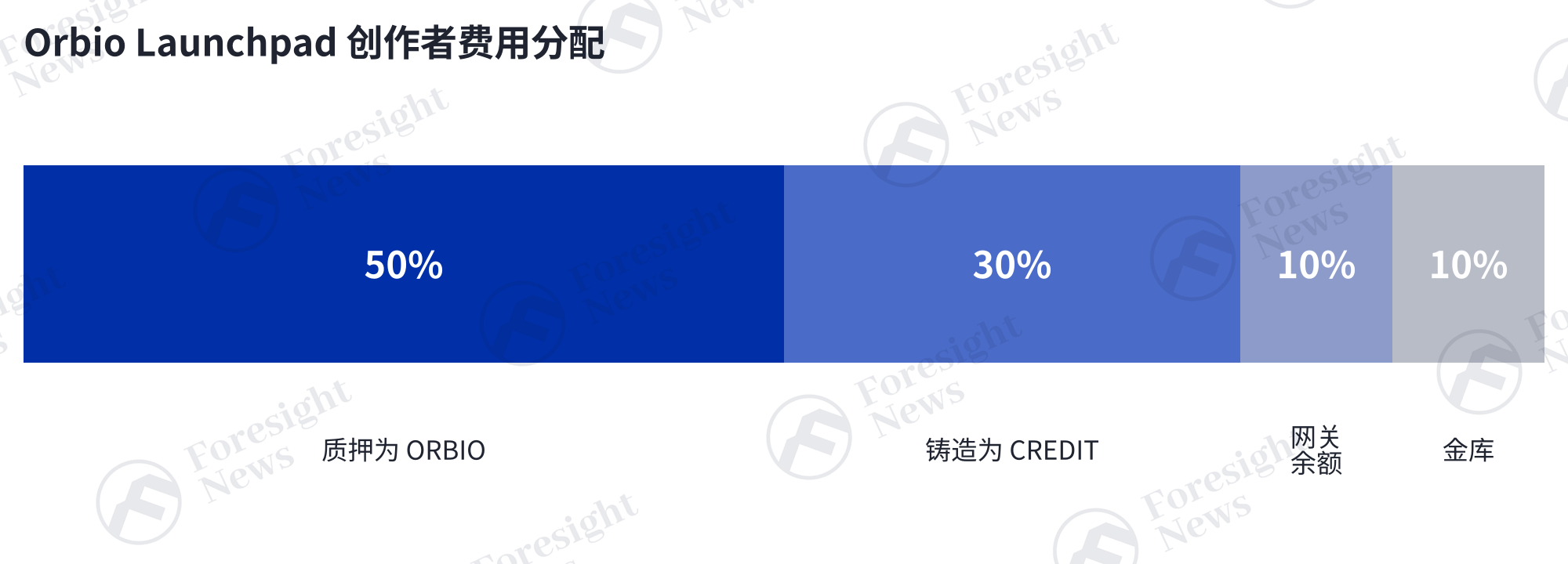
Under the existing model, project teams issue tokens via Pons paired with ORBIO. Creator fees generated from trading are collected uniformly by the Orbio treasury, then split into four parts: 50% staked as ORBIO, 30% sold for USDG to be minted into CREDIT, 10% allocated to the Agent’s directly spendable gateway balance, and the remaining 10% deposited into the launchpad treasury.
CREDIT is Orbio’s AI credit token (its issuance and pricing mechanism is detailed in Orbio’s Market Cap Hits $90 Million in 20 Days — Is Demand Keeping Pace?). CREDIT balances can be used to access models including OpenAI, Claude, and Gemini, as well as pay for tool fees across Firecrawl web scraping, Apify social media data, Alchemy on-chain data, Zernio posting, and Higgsfield image and video generation.
In other words, the trading momentum of an Agent token directly translates into the operational budget for that Agent.
For cross-comparison, Venice also ties AI credits to its native token, but credits are allocated to token holders — staking DIEM earns daily usage credits. By contrast, Orbio allocates credits directly to the Agent itself.
Developers can integrate via MCP, SDK, or API to directly access services in clients such as Claude Code and Cursor. However, per Orbio’s whitepaper, the launchpad does not host Agent runtime environments, so the sustained operation of an Agent still depends entirely on its project team.
Nearly one month after launch, however, on-chain data paints a less optimistic picture. Per Orbio’s launchpad analytics page, a total of 2065 Agent tokens have been issued on the platform as of October 21, with a combined market cap of approximately $8.42 million.
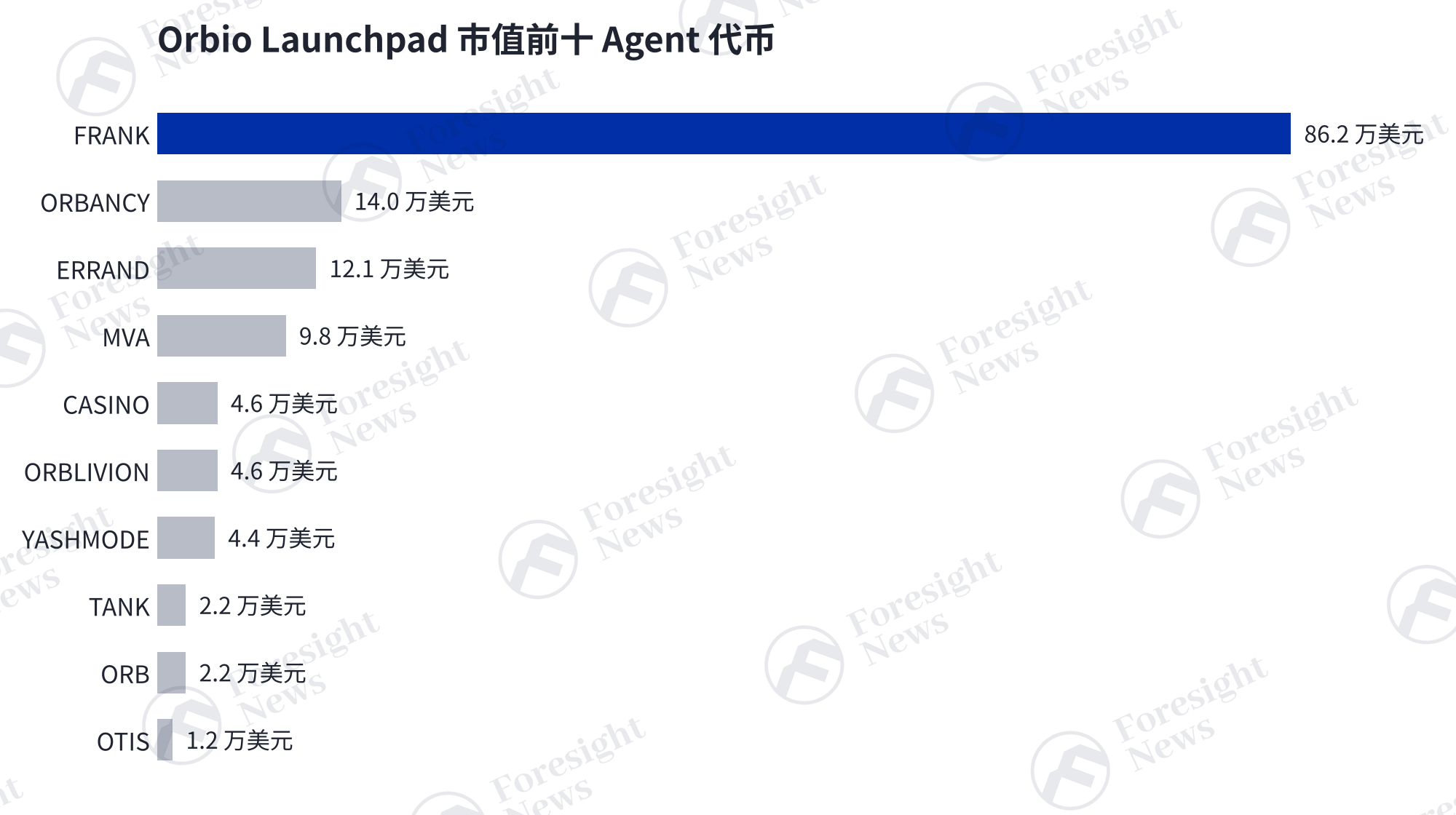
The dashboard shows the top-ranked token FRANK has a market cap of around $862,000, while the second-ranked token only holds a market cap of roughly $140,000. More than half of the top 50 projects by market cap remain in the bonding curve stage, with most holding market caps below $10,000.
In terms of fee collection, the treasury has accumulated approximately 7.07 million ORBIO in creator fees (valued at around $276,000 at current prices), and has distributed roughly $204,000 in CREDIT and gateway balances to Agents. Daily data shows that fee claim volume peaked around late September, followed by a notable decline.
Mosh Locks Early-Chip Supply Into The Treasury
Developed by UV Labs, Mosh currently supports launches on the Pons platform, and is designed to address the common "bundle dump" issue in meme token launches: where a small number of actors hoard low-price chips across multiple wallets at launch, then dump holdings in a concentrated sell-off.
Mosh’s solution converts these early chip allocations into a crowdfunding model. The community contributes funds to a bundle first; once the fundraising target is met, the project creator can trigger the token launch. Raised funds are used to purchase the initial token supply from the bonding curve, after which both the tokens and remaining funds are locked into an AI market-making treasury. Contributors do not receive tokens and cannot withdraw their funds; in exchange, they are entitled to a default 80% share of creator fees, with the remaining 20% allocated to Mosh. The market-making AI is restricted to trading within hourly limits set by the smart contract, and Mosh additionally charges a one-time 5% issuance fee.
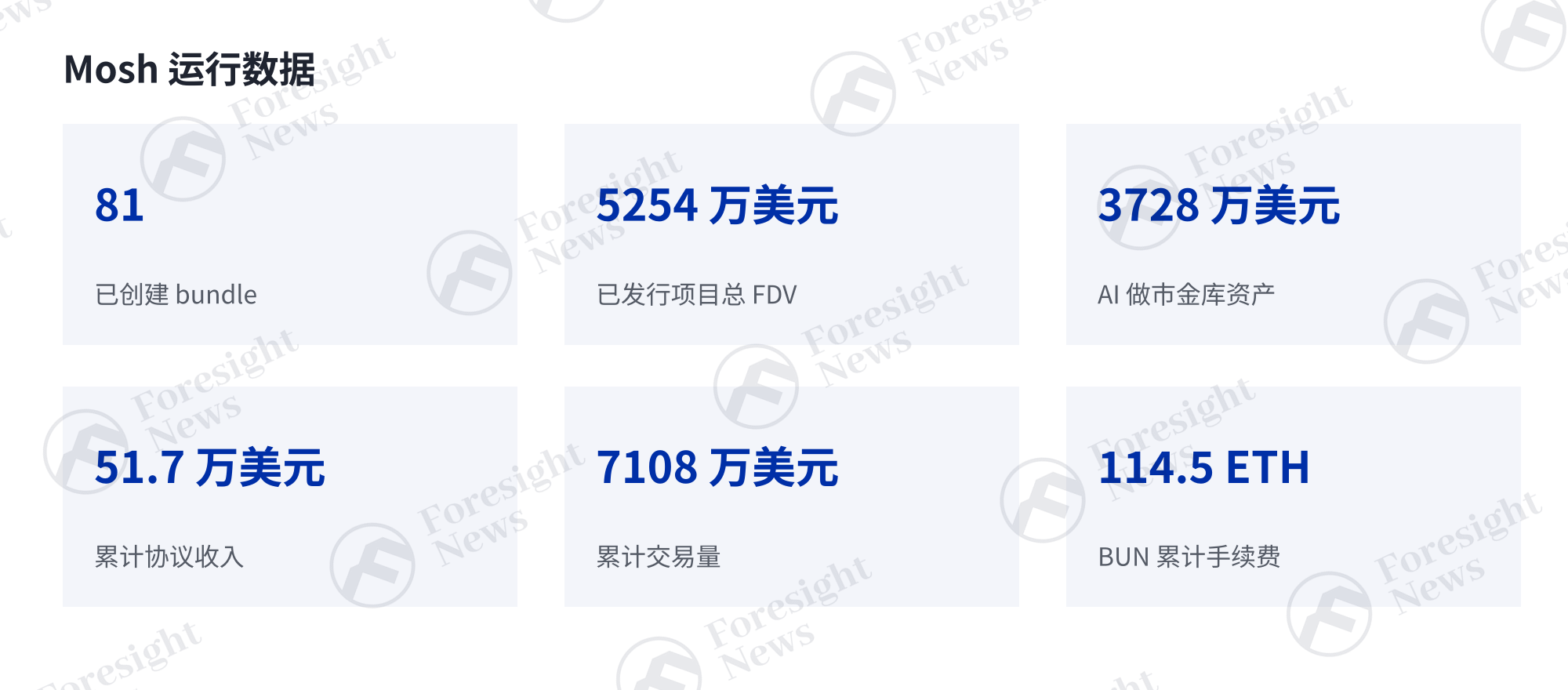
Per Mosh’s official website data, as of October 21, a total of 81 bundles have been created on the platform, with issued projects holding a combined FDV of approximately $52.54 million and cumulative protocol revenue of around $517,000. The first project BUN raised 8 ETH via its bundle, and has generated 114.5 ETH in cumulative trading fees to date. The market-making AI has earned roughly 85.3 ETH, and the token currently holds a market cap of about $49.41 million.
For Orbio, Mosh’s mechanism directly addresses gaps in its existing model. An Agent’s budget depends on sustained trading activity, but many tokens see trading volume dry up shortly after launch. Mosh uses locked funds and AI market making to maintain trading activity. Per Mosh’s metrics, 87% of tokens launched on its platform still have active trading on the 7th day post-launch, compared to only 10% for comparable projects on Pons.
At the token level, this integration has two key impacts for ORBIO: First, newly issued Agent tokens will continue to be paired with ORBIO, meaning traders still need to swap for ORBIO before purchasing the new tokens. Second, per Mosh’s documentation, bundle contributions must be made in the paired asset, and funds will remain permanently locked in the AI market-making treasury after token launch with no withdrawal option. This means that if tokens are paired with ORBIO, the ORBIO used for bundle contributions will be locked long-term.
However, under Mosh’s rules, 80% of creator fees are allocated by default to bundle contributors. Orbio has not yet clarified how much fee revenue will still be converted into ORBIO staking under the existing model after the integration goes live.
Differing Budget Mechanisms, Real Demand Remains Unproven
Pairing project tokens with a platform’s native token to capture ecosystem momentum is not a new model in on-chain ecosystems.
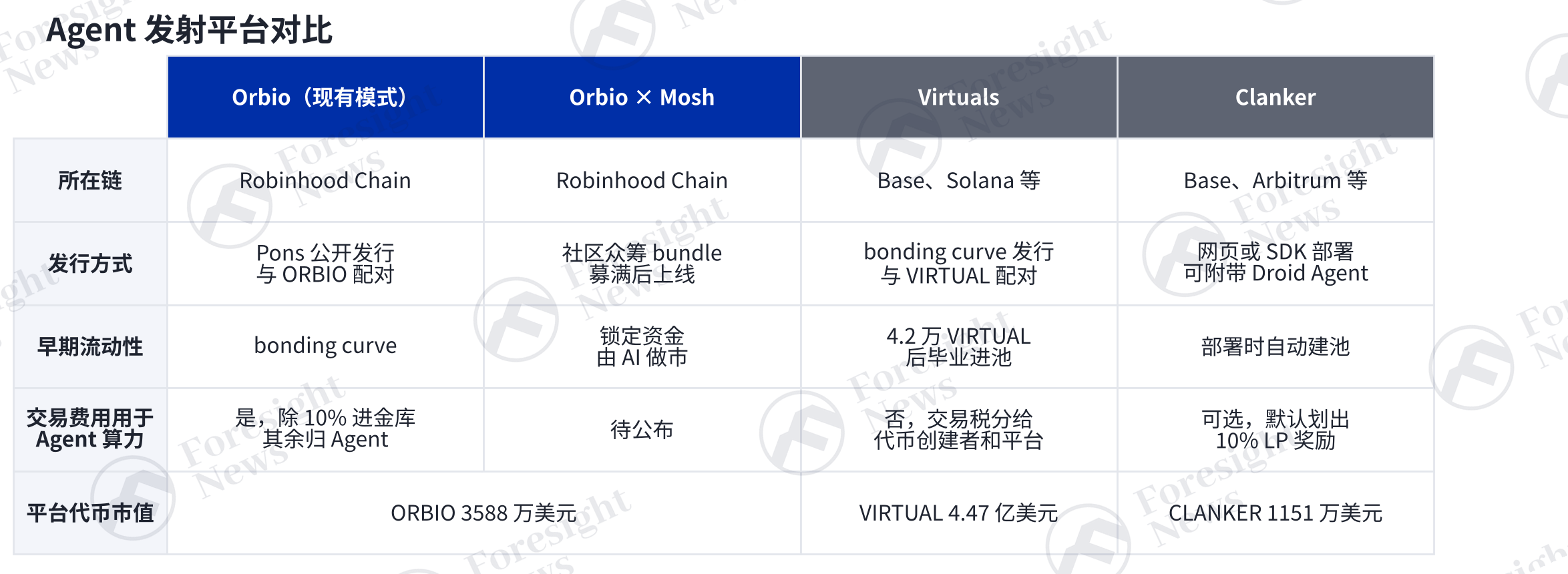
Every Agent token on Virtuals Protocol is paired with VIRTUAL, and graduates from the bonding curve to a formal liquidity pool once the bonding curve accumulates 42,000 VIRTUAL. Trading taxes are split between token creators and the platform.
Clanker, by comparison, supports attaching an AI Agent called a Droid to a token at launch, with 10% (adjustable between 1% and 50%) of the token’s LP rewards earmarked by default to pay for the Droid’s inference costs. By contrast, under Orbio’s existing model, aside from 10% of fees deposited into the treasury, the remaining creator fees are allocated to the Agent’s staking holdings or operational budget, and credits can also be used for external tools including search, data, and posting services.
Meanwhile, key metrics for ORBIO itself have pulled back. Orbio’s analytics page shows that the current staked supply of ORBIO is approximately 311 million tokens, down from 354 million as of September 21. While the protocol has generated cumulative revenue of roughly $437,000, this figure includes ORBIO collected via the launchpad valued at daily prices, rather than all being cash-based income. Actual API credit consumption via the gateway over the past 14 days totals only around $15,200.
Currently, Orbio has not announced the specific launch timeline for the first batch of Mosh-based Agent tokens, but noted that the feature will be integrated directly onto the Orbio launchpad in the near future.