
Starting out with corporate cards, Ramp now serves more than 85,000 customers and is integrating procurement, payment, bookkeeping, and stablecoin accounts into a unified financial system.
Written by ChandlerZ, Foresight News
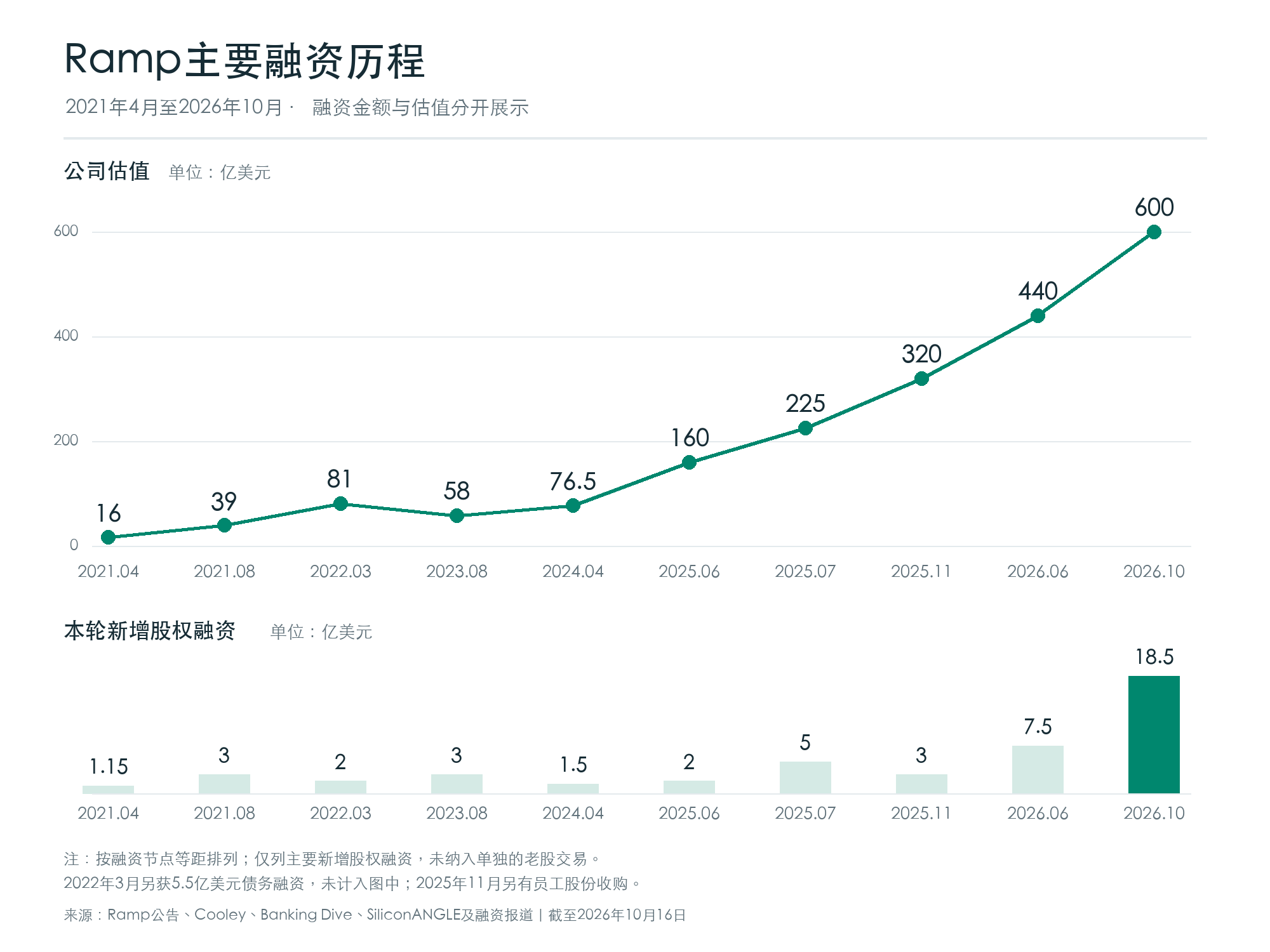
The corporate financial management platform Ramp announced on October 15 that it had closed a new $1.85 billion funding round, reaching a valuation of $60 billion. The round was led by Dragoneer, with co-leads Thrive Capital, Founders Fund, Sands Capital, and Avenir Growth, and participation from institutions including Fidelity and GIC. Following this round, the company's cumulative equity funding has reached approximately $5 billion.
This round came merely four months after Ramp’s previous funding raise: in June this year, the company closed a $750 million round at a $44 billion valuation, marking a $16 billion valuation jump from that mark. Going further back in 2025, Ramp secured incremental funding of $200 million, $500 million, and $300 million in June, July, and November respectively, with corresponding valuations of $16 billion, $22.5 billion, and $32 billion.
Founded in 2019, Ramp originally offered corporate cards and supporting expense management software for businesses, before gradually rolling out features covering procurement, travel, supplier payments, and accounting automation. All workflows — from employee card spending and manager expense approval to finance team bookkeeping — can be completed via Ramp’s product suite. The stablecoin accounts and AI cost management solutions launched this year are also built for these same enterprise customers.
Three Serial Entrepreneurs Pivoted From Consumer Refunds to Enterprise Spending
Ramp’s three founders — Eric Glyman, Karim Atiyeh, and Gene Lee — had previously collaborated to build Paribus. Glyman and Atiyeh first met at Harvard, before partnering with Lee to launch the consumer tool, which tracked price changes after users made purchases and helped them claim refunds for price differences per retailer policies. Capital One acquired Paribus in 2016.

After gaining exposure to the corporate card business line at Capital One, the team began researching enterprise payment and reimbursement workflows. As Glyman recalled, after leaving Capital One, they interviewed hundreds of founders, and found that corporate payment records were scattered across multiple systems, forcing employees to repeatedly submit expense claims and making it difficult for finance teams to track departmental spending in real time. The three co-founders launched Ramp in March 2019, and officially unveiled the product to the public in February the following year.
The team connected corporate cards with expense management, letting businesses set spending rules before payments were made. Administrators can assign cards, credit limits, and usage permissions to employees, and after employees make payments, finance teams can continue processing receipts, categorizing expenses, and posting entries directly within the platform. Ramp cards run on the Visa network, and require businesses to repay the full balance on the agreed due date.
For example, when a department procures software, a manager first approves the budget, an employee uses a corporate card to complete the subscription, and the expense record is synced to the finance system automatically. If monthly renewals, employee reimbursements, and supplier invoices are processed on separate tools, finance teams would have to manually aggregate all records. Ramp facilitates data flow between all these touchpoints, cuts down on manual data entry, and lets administrators monitor real-time budget utilization.
On June 25 this year, Ramp adjusted its leadership structure: Atiyeh stepped down from his CTO role to become co-CEO, jointly leading the company with Glyman, while the former head of Applied AI Rahul Sengottuvelu took over as CTO. Prior to this role change, Atiyeh had overseen not only technology, but also risk control, operations, and marketing for an extended period.
Extending From Single Card Transactions to Procurement, Payments, and Bookkeeping
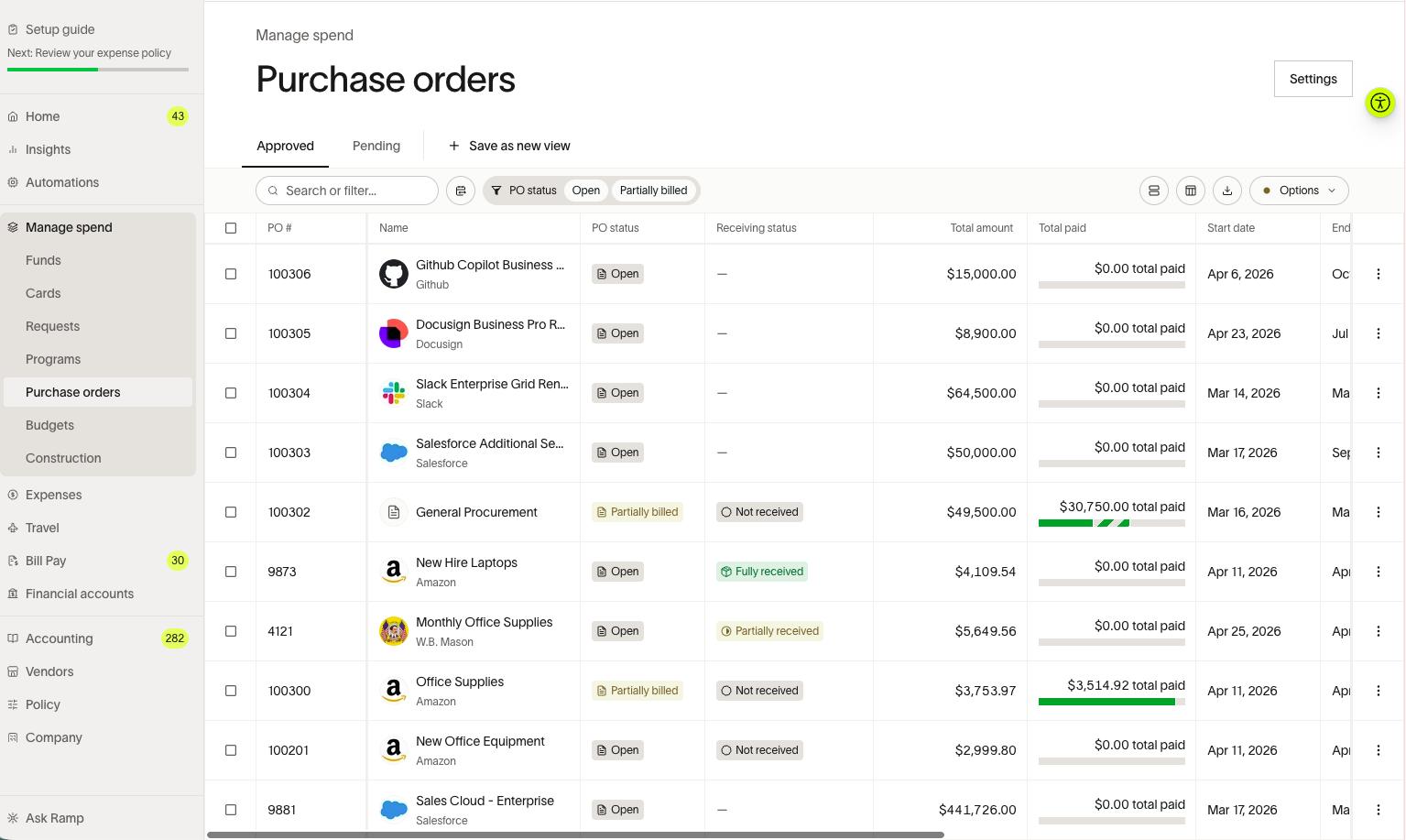
After onboarding customers via corporate cards, Ramp was able to cross-sell procurement, travel, and supplier management services to the same client base. Employees submit procurement requests, managers approve them against allocated budgets, finance teams arrange payments after receiving invoices, and records are finally synced to the accounting system. Supplier information and expense data are reusable across all these steps, so businesses do not need to re-create records for every workflow.
Ramp generates revenue from both payment and software services. When customers make purchases with corporate cards, Ramp earns interchange fees from the card transaction fee split, while software subscriptions are charged to businesses that require premium features. The company’s most recently disclosed revenue figures also include interest income and other revenue, net of customer incentives.
As it added procurement and payment tools, customers began using multiple Ramp services simultaneously. According to the announcement accompanying this funding round, most customers already use at least two Ramp products, with roughly a quarter using three or more. For Ramp, this means existing customers may purchase additional management features, or entrust the platform to handle supplier payments, in addition to their core corporate card usage.
This year’s launched AI Token Spend Management solution addresses persistent pain points in enterprise spend management. The cost of using AI models varies based on call volume, model selection, and task complexity, so a single supplier invoice often fails to clarify which team incurred the cost. Ramp aggregates costs by team, project, and model, and provides overspend alerts, budget limits, and recommendations for switching to lower-cost models, to support collaborative decision-making between finance and business teams.
Stablecoin Payments Follow Existing Enterprise Approval Workflows
Cross-border payments have also been integrated into this unified system. In July this year, Ramp launched stablecoin accounts and payment functionality. Businesses can hold USDC and USDT, or fund transactions from USD bank accounts, and convert funds to pay directly to supplier wallets.
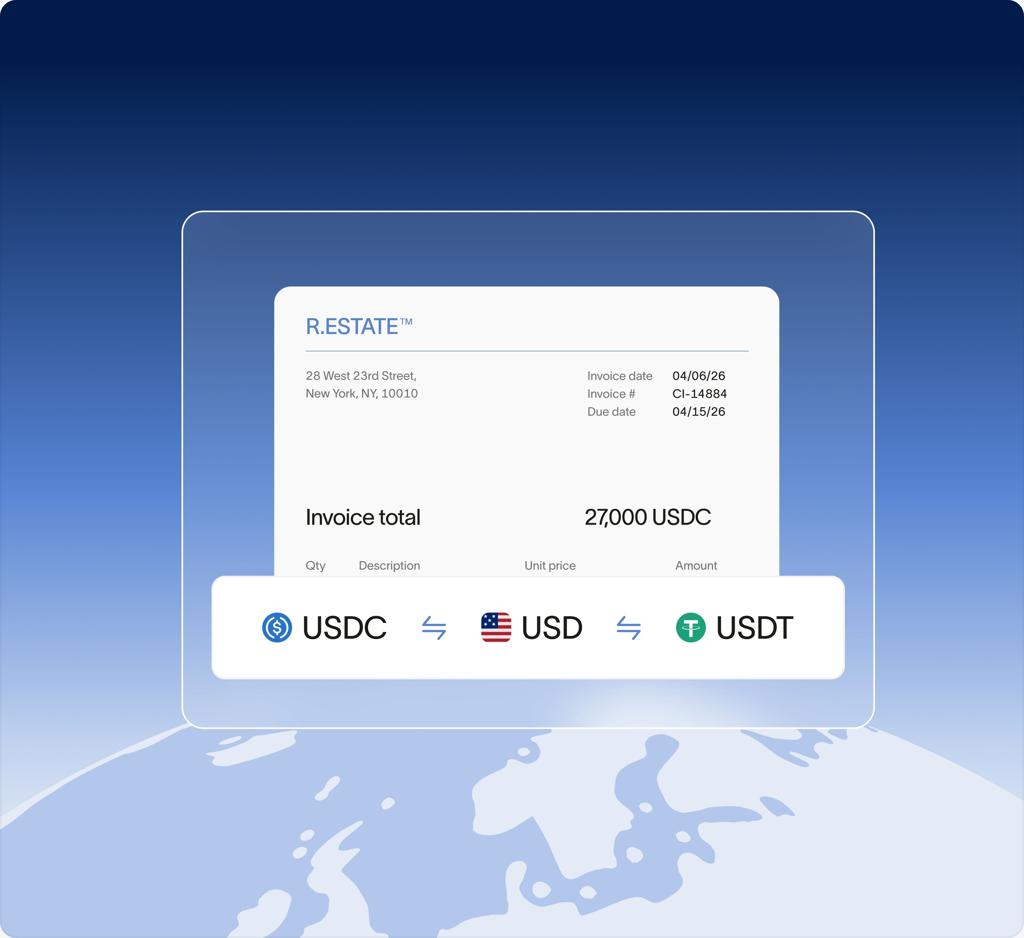
For example, if an overseas contractor expects to receive USDC, the paying business can select stablecoin as a payment method within Ramp Bill Pay, and fund the transaction from a Ramp account or external bank account, without having to purchase crypto on a cryptocurrency exchange themselves. For customers that need to hold on-chain funds, they can open a Ramp Stablecoin Account, deposit supported stablecoins, and use the balance to pay card bills, supplier invoices, or employee reimbursements.
All these operations leverage the platform’s built-in approval workflows and accounting integration features, with custody provided by Bridge and its affiliates. According to Ramp’s help documentation, payments made via platform stablecoin accounts are typically processed and delivered within 5 minutes, 24/7, while transactions funded from external bank accounts require first completing deposit processing. Stablecoin balances are not classified as bank deposits, and are not covered by U.S. Federal Deposit Insurance Corporation (FDIC) protection. The service is currently unavailable to customers in New York State.
Annualized Revenue Surpasses $2B as Ramp Expands Its Financial Product Suite
As its business scales, Ramp’s customer base and transaction volume have grown steadily. In November 2025, the company disclosed it had more than 50,000 customers, over $1 billion in annualized revenue, and more than $100 billion in annualized procurement transaction volume. As of October 1 this year, these three metrics have reached over 85,000 customers, over $2 billion in annualized revenue, and over $275 billion in annualized procurement transaction volume, respectively. The company also noted it is cash flow positive. Notable clients on its roster include Visa, Uber, Shopify, Robinhood, and Notion.
These metrics cover Ramp’s overall business. The company has not separately disclosed stablecoin account balances, transaction volume, or revenue contribution in this announcement, and the scale of adoption of its new payment method remains to be revealed in future updates.
Alongside this funding round announcement, Ramp also shared updates on its upcoming accounts receivable product, which covers invoicing, collection, payment reconciliation, and revenue recognition. The platform, which has historically focused on enterprise spend management, is now expanding to cover enterprise cash collection processes, and the accounts receivable product is listed in the recent launch roadmap shared in its October announcement.