
Fission closes $10 million Series A round led by Pantera Capital, with a core focus on tokenized fund liquidity.
By Nicky, Foresight News
As reported by Fortune on October 15, tokenized fund liquidity platform Fission announced the completion of a $10 million Series A funding round led by Pantera Capital, with participation from Circle Ventures, Borderless Capital, and Ari Rubenstein. The round was closed in September, and the company did not disclose its valuation.
Founded in 2024 and headquartered in New York, Fission operates with a core team of 8 to 10 members. The company previously completed a $1.6 million pre-seed round in October 2024, led by SALT Fund and Kraynos Capital, with participation from Anthony Scaramucci.
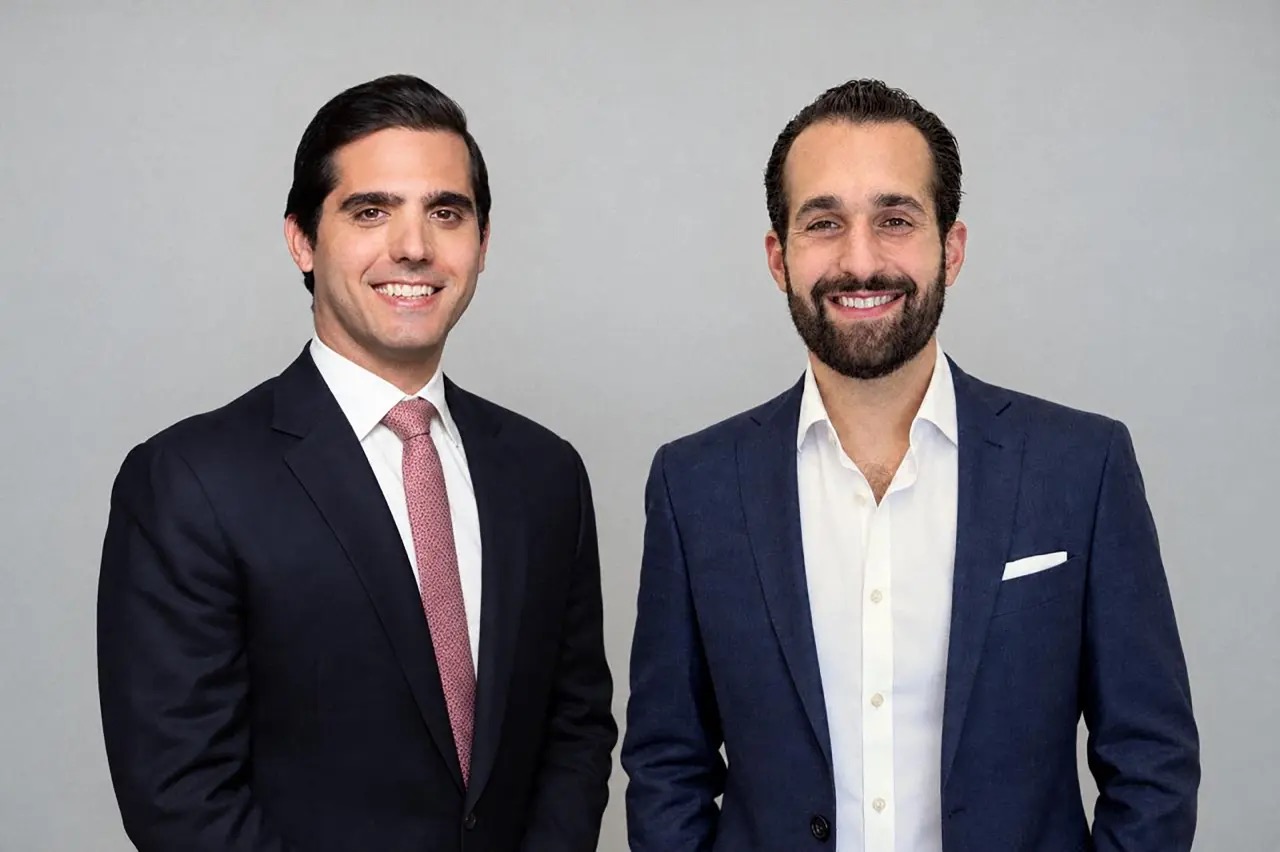
CEO Jonathan Shaffer previously oversaw public equity investments across the technology, industrial, and consumer sectors at Point72, before shifting focus to strategic private investments in fintech and digital assets. He holds a bachelor’s degree in Philosophy, Politics and Economics (PPE) from the University of Pennsylvania and an MBA from Yale University.
Steve Bendit, Chief Risk Officer (CRO), previously served as Head of Global Business Development and Institutional Sales at Securitize, where he drove the issuance of over $4 billion in tokenized securities. The two co-founders split core responsibilities, with Shaffer leading investment decision-making and Bendit leading institutional outreach, while Chris Humphrey serves as the company’s Chief Technology Officer (CTO).
This $10 million funding round targets a clear, unsolved market pain point: tokenized funds have been migrated on-chain, but exit remains a slow, cumbersome process.
Traditional private equity funds and alternative investment products typically set quarterly or longer redemption windows, with some products taking as long as 200 days from redemption application to final fund arrival. Tokenization has changed the form in which fund shares are held, but it has not changed the redemption cycle of underlying assets. Fission’s core value proposition is to provide exit pathways outside of scheduled redemption windows. Following the funding announcement, company officials emphasized that the platform has cut the waiting time from roughly 200 days to 90 seconds of settlement, and is continuing to advance cross-chain support and integration with more asset classes.
Per information available on the company’s official website, Fission’s product modules include a core redemption platform, Vaults (providing API integration and instant liquidity), Token Issuer integration (delivering liquidity infrastructure for asset issuers), Lending Protocol support (for collateralization and financing), and continuous liquidity access for token holders.
Product Mechanism: Acting as a principal buyer to deliver instant liquidity via atomic settlement
Fission’s core offering is its redemption platform, which does not operate as a matching venue between buyers and sellers, but instead acts as a principal buyer to provide liquidity directly. Accredited investors connect their digital wallets and submit sell requests, and Fission acquires their positions using stablecoins such as USDC via atomic settlement (an operation that either executes fully and successfully, or does not execute at all, with no partial, half-completed state in between), with settlement taking roughly 90 seconds to 2 minutes.
After completing an acquisition, Fission holds the position until the underlying fund processes redemption per its original terms, with portfolio-level risk management applied based on exposure, duration, asset quality, and redemption characteristics. Redeemed capital is recycled to support subsequent liquidity provision. The platform charges transaction fees, with official examples indicating a rate of roughly 2.5%, which varies based on the asset and prevailing market conditions.
The key to this design is that it does not require fund products to be reengineered to support instant redemption. Instead, it inserts an infrastructure layer between investors’ demand for immediate liquidity and funds’ natural redemption cycles, enabling assets to acquire the liquidity characteristics required for on-chain markets without altering underlying investment strategies or compliance structures. Technical support includes audited smart contracts and institutional custody providers such as Fireblocks, with support for cross-network atomic transfers.
Currently, the assets supported on its redemption platform include the Apollo Diversified Credit Securitize Fund (ACRED), BlackRock ICS US Dollar Liquidity Fund, NYLIM US High Yield Bond Fund, Janus Henderson Anemoy AAA CLO and Treasury funds, Midas Fasanara Global, and Invesco Short Duration US Government Securities, among others. Its client base is primarily institutional investors, including hedge funds holding tokenized private credit or equity assets, crypto firms managing treasury funds, and stablecoin issuers allocating reserves to yield-bearing tokenized investment products.
Per data from rwa.xyz, as of October 16, 2026, the total size of the tokenized real-world asset (RWA) market (excluding stablecoins) is roughly $39.29 billion. The underlying traditional private credit market is valued at the trillion-dollar level, meaning tokenization penetration remains extremely low. McKinsey previously projected that tokenized financial assets will reach roughly $2 trillion in the base-case scenario and $4 trillion in the optimistic scenario by 2030. Growth on the issuance side has persisted for several years, but the maturity of liquidity infrastructure has lagged significantly — exactly the market gap Fission is targeting.
There are not many direct competitors serving this market niche. The closest peer is Multiliquid (under Uniform Labs), another institutional-grade liquidity protocol that supports atomic swaps between tokenized funds and stablecoins, with asset coverage including products from Wellington Management, VanEck, Janus Henderson, and Fasanara. The protocol is live on Ethereum and Solana, has raised a total of $8 million, with its seed round led by Polychain and participation from Circle Ventures.
Compared to its competitors, Fission’s key differentiator is its compliance architecture. The platform adopts an institutional-grade permissioned model, serving only accredited investors, with infrastructure designed to respect the investor eligibility requirements and transfer restrictions of underlying products.
At the same time, CRO Bendit’s experience at Securitize has brought the team deep expertise in Regulation D (Reg D, the U.S. SEC’s most important private offering exemption under the Securities Act of 1933, which allows companies to raise capital without completing full SEC securities registration, only requiring the post-offering filing of the simplified Form D — a framework widely used by startups and funds for private fundraising), private securities, on-chain identity, and the implementation of transfer restrictions.
Shifts in the external environment are also moving in favor of this model. On September 17, 2026, the SEC issued an innovative exemption creating a five-year conditional safe harbor for tokenized U.S. publicly traded stocks, allowing eligible tokenized securities trading venues to conduct on-chain secondary transactions. This exemption is primarily targeted at public equities, so its impact on liquidity for private credit assets is indirect, but the overall regulatory direction is leaning toward controlled experiments and conditional approvals.
On the institutional side, BlackRock continues to scale its tokenized money market fund BUIDL; Apollo and Janus Henderson have issued tokenized private credit products via Securitize and Centrifuge; and Robinhood Chain offers equity tokens in over 120 countries. The sustained expansion of the issuance side has created a demand base for the liquidity layer, but the real bottleneck lies in reliable exit mechanisms and capital efficiency.
Fission’s products have now moved from the conceptual stage to practically usable deployments. Its redemption platform is publicly live, and the company has processed millions of dollars in redemptions per official disclosures.
In terms of integrations, Centrifuge announced a partnership with Fission in August 2026 to provide 24/7 USDC liquidity for four institutional funds on its platform, including NYLIM HYB, Apollo ACRDX, Janus JAAA, and JTRSY. Shaffer noted that Fission is currently the only independent instant liquidity provider for certain assets, such as the quarterly-redeeming ACRDX (the Anemoy Tokenized Apollo Diversified Credit Fund, a separate RWA-tokenized portfolio of Apollo’s diversified credit fund).
Following this partnership, Midas also announced integration of Fission into its Open Liquidity Architecture, unlocking T+0 redemption for its mWIN and mGLOBAL products, with coverage extended to Wellington Management Multi-Sector Institutional Credit and Fasanara Capital Asset-Backed Credit.