
Multiliquid's founder and CEO revealed that there are currently no plans to launch a native protocol token.
Written by Ma He, Foresight News
On October 16, Multiliquid, the institutional-grade tokenized asset liquidity protocol under Uniform Labs, announced the closure of its seed funding round. The round was led by Polychain, with participation from Strobe Ventures, CMT Digital, Metalayer Ventures, Generative Ventures, and Circle Ventures. Combined with the previously completed pre-seed round, the total capital raised by the project has reached $8 million.
Will Beeson, the protocol's founder and CEO, previously told The Block that Multiliquid has begun processing pilot transactions, and plans to onboard more liquidity providers in the fourth quarter. He also confirmed that there are currently no plans to issue a protocol token.
Can It Become the Curve for the RWA Sector?
Multiliquid does not issue assets itself. Instead, it aims to build an instant conversion channel between existing blue-chip tokenized products and stablecoins.
Holders can exchange tokenized money market funds or Treasury products for USDC with one click, or complete the reverse operation. The entire process is settled in a single transaction at the fund's net asset value (NAV), with no need to wait for traditional redemption windows.
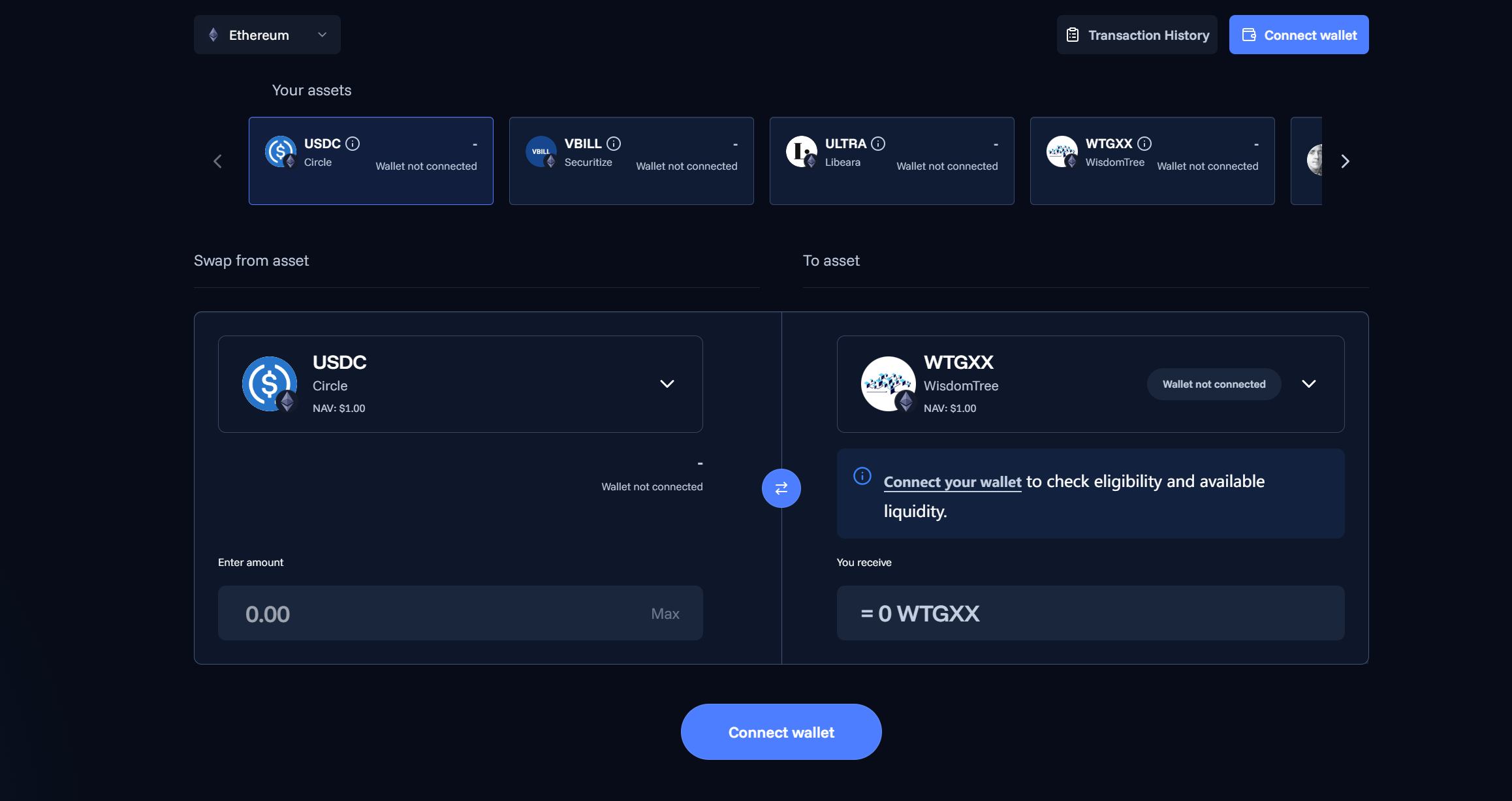
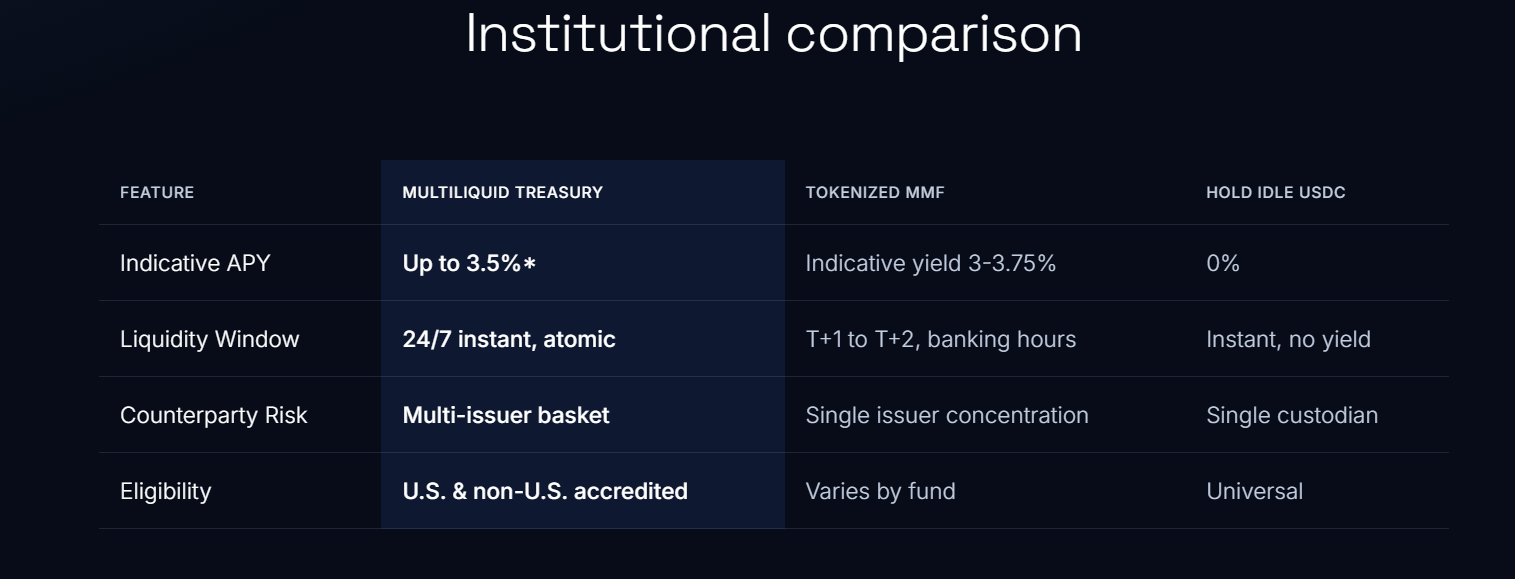
In traditional capital markets, redemptions for money market funds and short-term Treasury products typically follow T+1 settlement cycles or longer. After traditional assets are mapped on-chain, most products remain constrained by the physical time lag of the traditional finance T+1 redemption mechanism, creating frictions for institutional users who need to quickly adjust positions or liquidate assets.
Multiliquid's operating mechanism shares similarities with Curve, which enables efficient swaps between different stablecoins. The key distinction is that Multiliquid serves permissioned, compliance-focused tokenized funds, rather than fully permissionless crypto assets.
Currently, the protocol primarily serves institutional users, including corporate treasuries requiring flexible capital allocation, capital providers willing to offer secondary market liquidity, and asset issuers seeking more convenient exit pathways for their holders.
According to data from RWA.xyz, as of mid-October, the total distributed on-chain value of tokenized real world assets has neared $39 billion, representing significant expansion from the start of the year. Within this category, the scale of tokenized U.S. Treasury and money market fund products ranges between $14.8 billion and $15.5 billion, making it still the largest single segment.
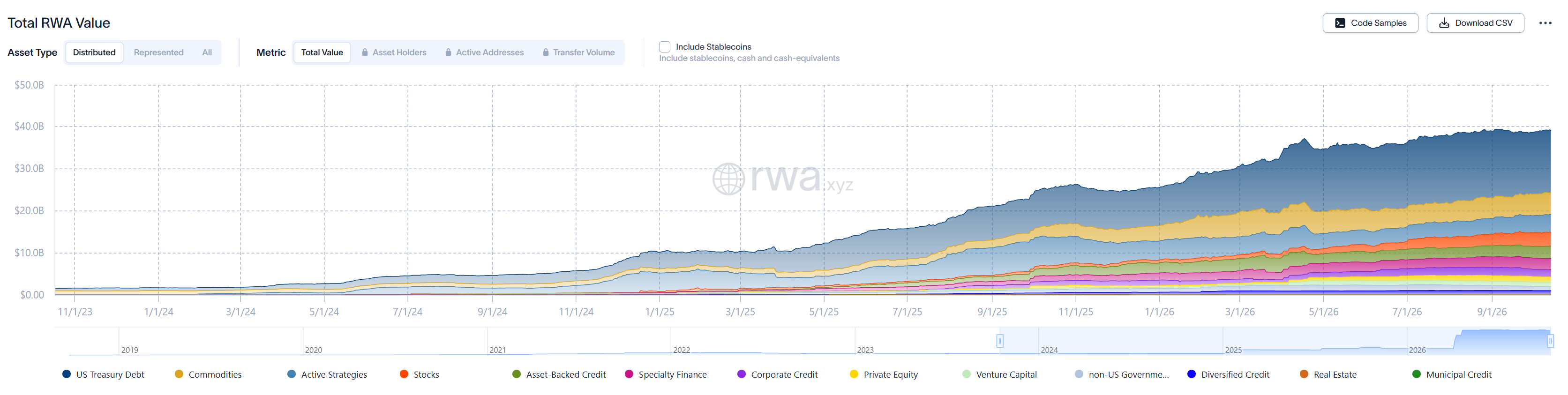
BlackRock's BUIDL, Circle's USDC, Ondo's USDY, and related products from Franklin Templeton hold the largest market shares. Despite rapid growth on the issuance front, most of these assets still operate in permissioned models, with limited secondary market trading and real liquidity utilization. The proportion of tokenized Treasuries integrated into open DeFi lending or collateral scenarios remains relatively low, and frictions still persist for institutions seeking efficient on-chain rebalancing and collateral management.
This trend also explains why liquidity infrastructure is starting to garner growing attention. As the scale of tokenized assets expands, if redemptions and conversions still rely on traditional workflows, the core advantages of on-chain allocation will be difficult to fully realize. What the market currently needs more than simply adding new issuance platforms are tools that connect products from different issuers with stablecoins, and enable instant settlement within established compliance frameworks.
The Multiliquid protocol currently targets three primary groups of institutional users: treasury managers needing to deploy idle stablecoins into yield-bearing assets with on-demand redemption; capital providers willing to offer secondary market liquidity for blue-chip tokenized assets; and asset issuers that want to provide 24/7 programmatic exit paths for their holders, while avoiding the costs of building underlying liquidity pools and associated capital losses. Currently, the protocol generates revenue by charging basis point fees on completed transactions.
Team Background
According to official disclosures, the Multiliquid team draws deep expertise from traditional finance and institutional business backgrounds.
Will Beeson previously co-founded Allica Bank, a UK-based challenger bank, and later served as Chief Product Officer for Libeara, Standard Chartered's tokenized asset platform. In this role, he led the buildout of institutional tokenization infrastructure and participated in the launch of ULTRA, an investment-grade tokenized money market fund under Wellington Management.
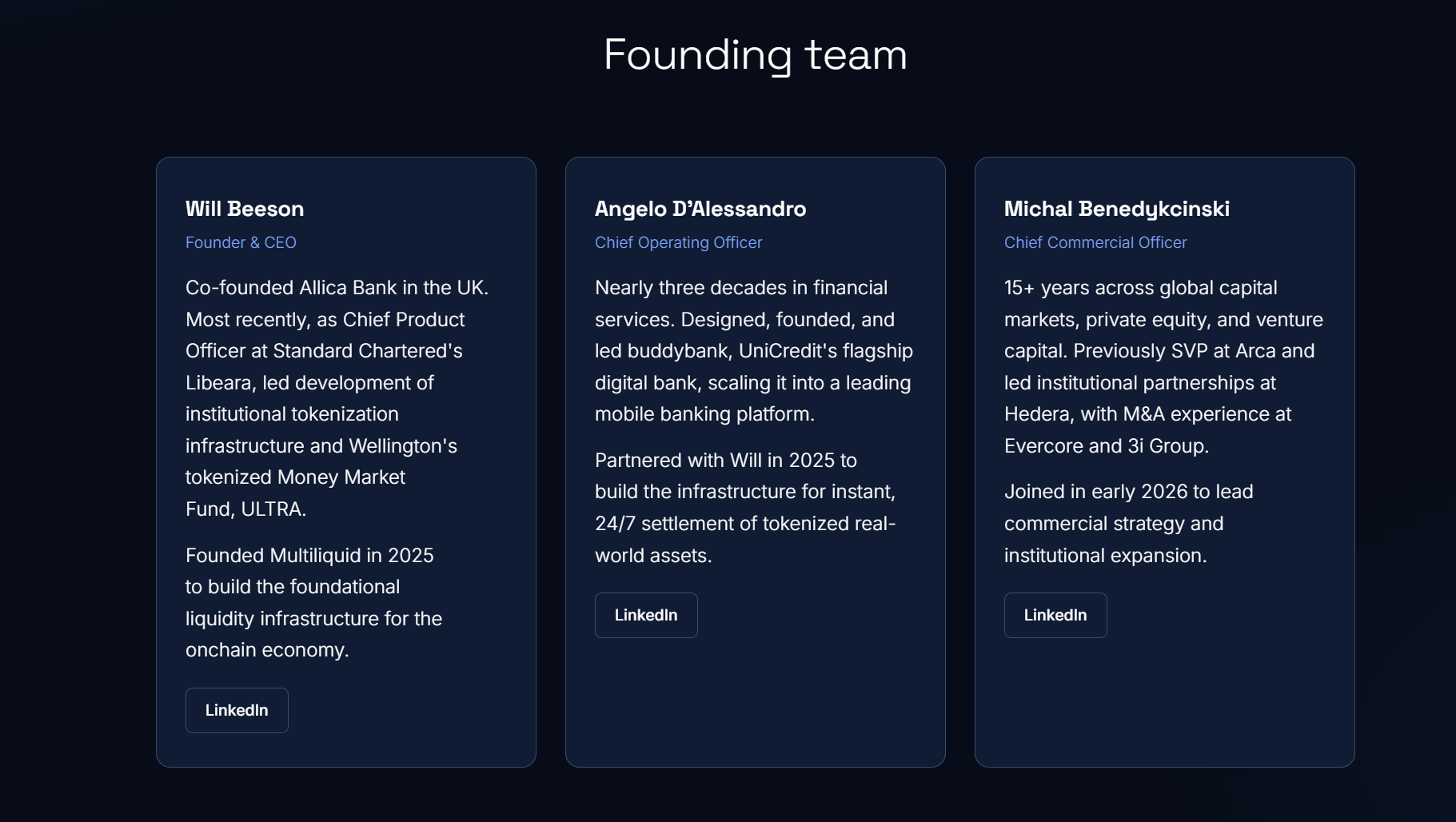
Angelo D'Alessandro, Multiliquid's Chief Operating Officer, has nearly 30 years of experience in financial services. He previously founded and led buddybank, the digital banking arm of UniCredit.
Michal Benedykcinski, Chief Commercial Officer, brings over 15 years of experience in capital markets and private equity. He previously served as SVP at Arca, where he led institutional partnership efforts for Hedera.
Per the disclosed funding structure: the pre-seed round was completed around May to June 2025 via a Simple Agreement for Future Equity (SAFE) framework, while the seed round was closed as a priced equity round between April and June 2026. The exact breakdown of funding amounts for each round and corresponding valuation have not been disclosed. Raised capital will be primarily used to expand the protocol's engineering team, onboard more liquidity and trading venue partners, and integrate additional tokenized cash and Treasury products to EVM-compatible networks and Solana.
From a market context perspective, institutional demand for allocations to on-chain Treasury and money market products is growing, but liquidity and settlement efficiency remain core bottlenecks. Multiliquid has chosen to target the instant conversion layer between assets and stablecoins, rather than the issuance side. This path is closer to the on-chain equivalent of repurchase agreements and overnight liquidity tools used in traditional markets.
The protocol is still in its early stage, with specific data on trading volume and institutional clients not yet made public. Whether it can continue to integrate more asset managers, and build verifiable liquidity backed by real capital scale, will be the key metric to track its long-term progress.