
Happy Monday, friends!
Just talking a bit about the recent move in crypto here.
And on a personal note I am still thinking about the way going forward, especially where to live. It’s not easy when every option is possible.
Btw, if you want daily updates from me (posting like 10x per day), then check out my free TG channel: https://t.me/cryptogoodreads
Thanks for reading The Black Swan 📈! Subscribe for free to receive new posts and support my work.
Alt Season
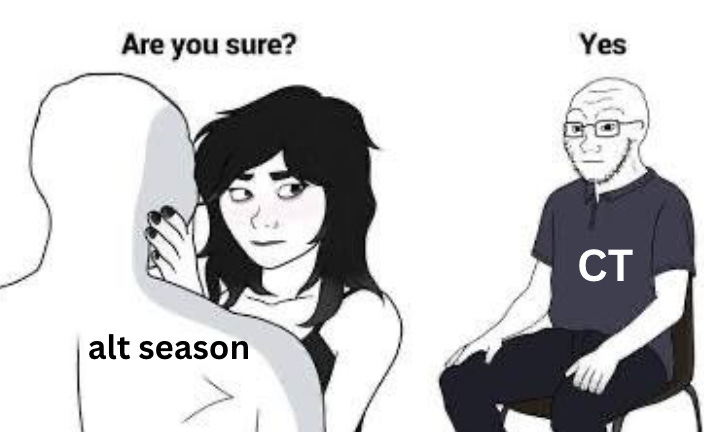
Green candles everywhere. We’ve been in “easy mode” since August 19th.
Yet, I have the feeling that many have actually lost money. Now, why is that? Well, because many are going around chasing the hottest coin of the day. This is due to FOMO. You see one coin that have run up a lot, then instead of buying that, people are buying the beta.
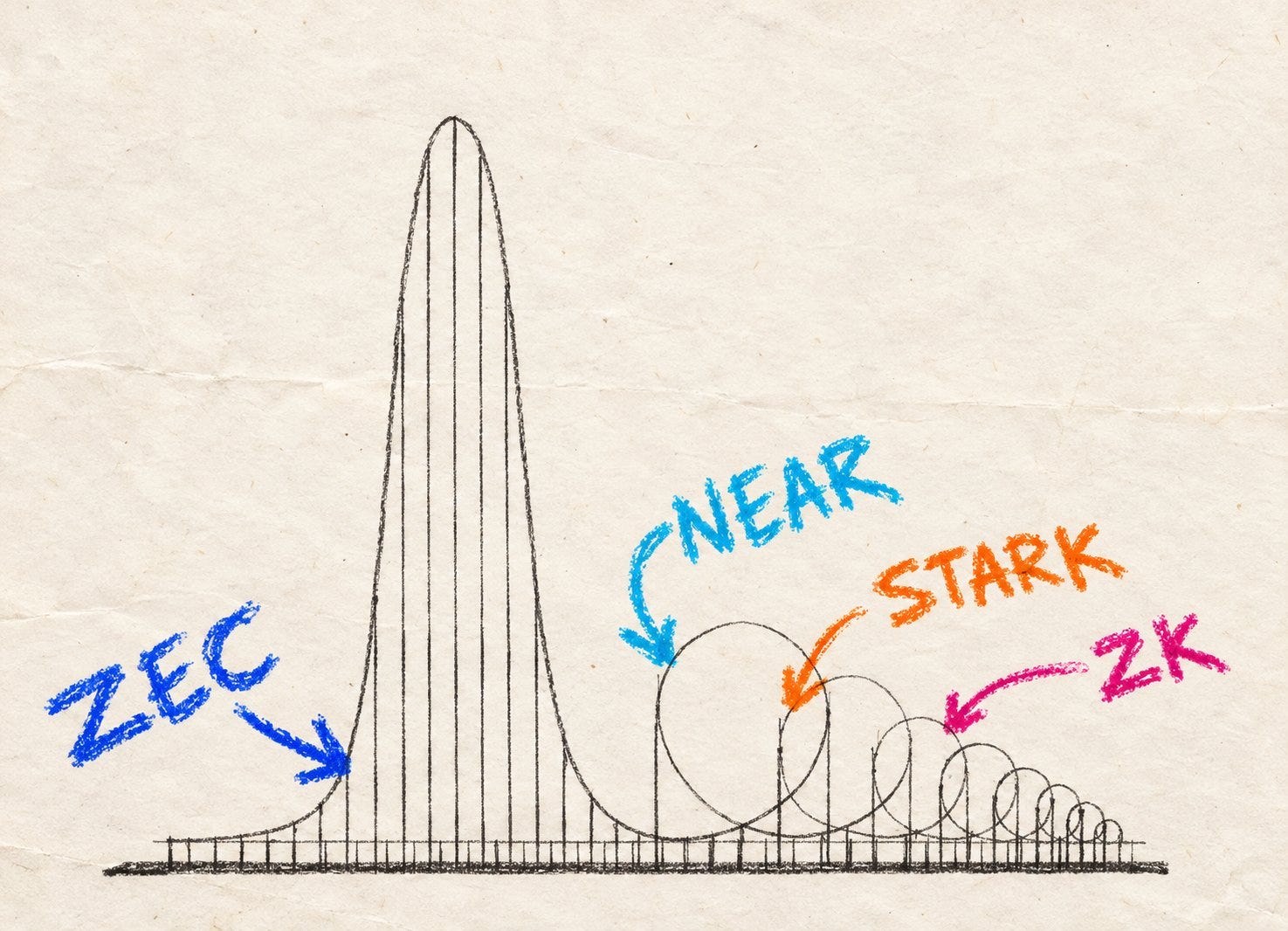
Here’s an example for you.
$ZEC was $50 one year ago. Now it is $1,300. That’s a 26x of your investment, like $100k would have turned into $2,600,000.
But instead of chasing $ZEC, people looked for their beta, eg. $NEAR, STRK, etc, and longed those instead.
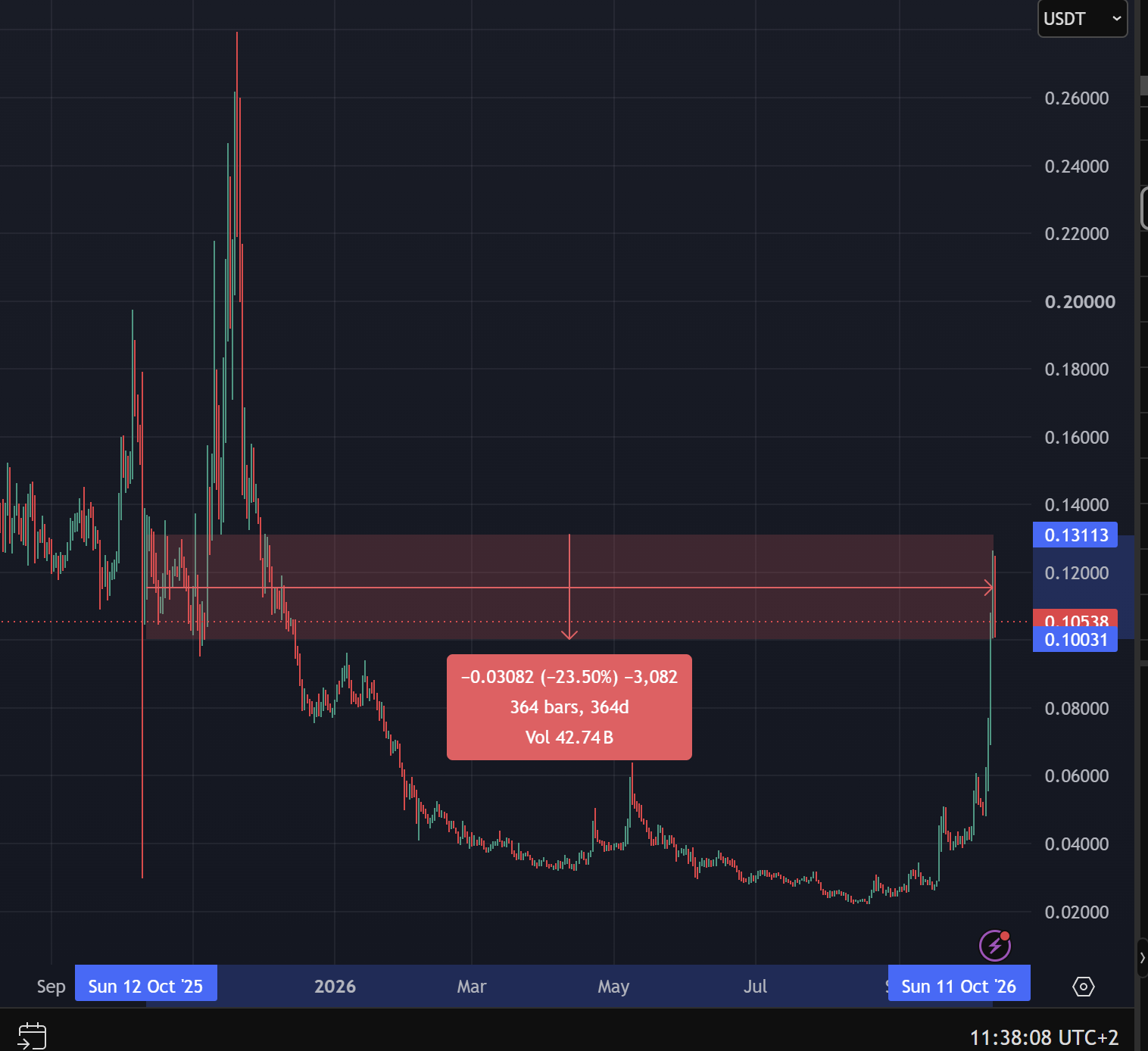
Let’s move one step back. Because what is alt season really?
Alt season is one of crypto’s most anticipated ideas: the moment when Bitcoin stops taking all the attention and the rest of the market starts outperforming.
But there is a difference between a few tokens pumping and a genuine altseason.
A proper alt season is broad. It means a large share of altcoins are beating Bitcoin over a sustained period—not just rising in dollar terms. BlockchainCenter’s index uses a specific benchmark: at least 75% of the top 50 eligible coins outperforming Bitcoin over 90 days, excluding stablecoins and asset-backed tokens.
The familiar story goes like this: Bitcoin leads, confidence returns, and investors start looking further out on the risk curve. Attention moves toward large-cap altcoins, then smaller projects and more speculative trades. That rotation is the classic description of alt season, but it is not a schedule the market has to follow.
The benchmark is Bitcoin, not simply the dollar.
An altcoin can rise in price and still lag BTC. If that happens across most of the market, it is not the kind of broad relative outperformance that an alt-season index measures. Equally, a spectacular rally in a handful of tokens tells you little about the health of the wider altcoin market.
Anyway, there’s been a trend lately that we’ve returned to buying older coins. Simply because old crypto actually tried to solve things. For example, ZCash wanted a version that worked exactly like Bitcoin, but that was private.
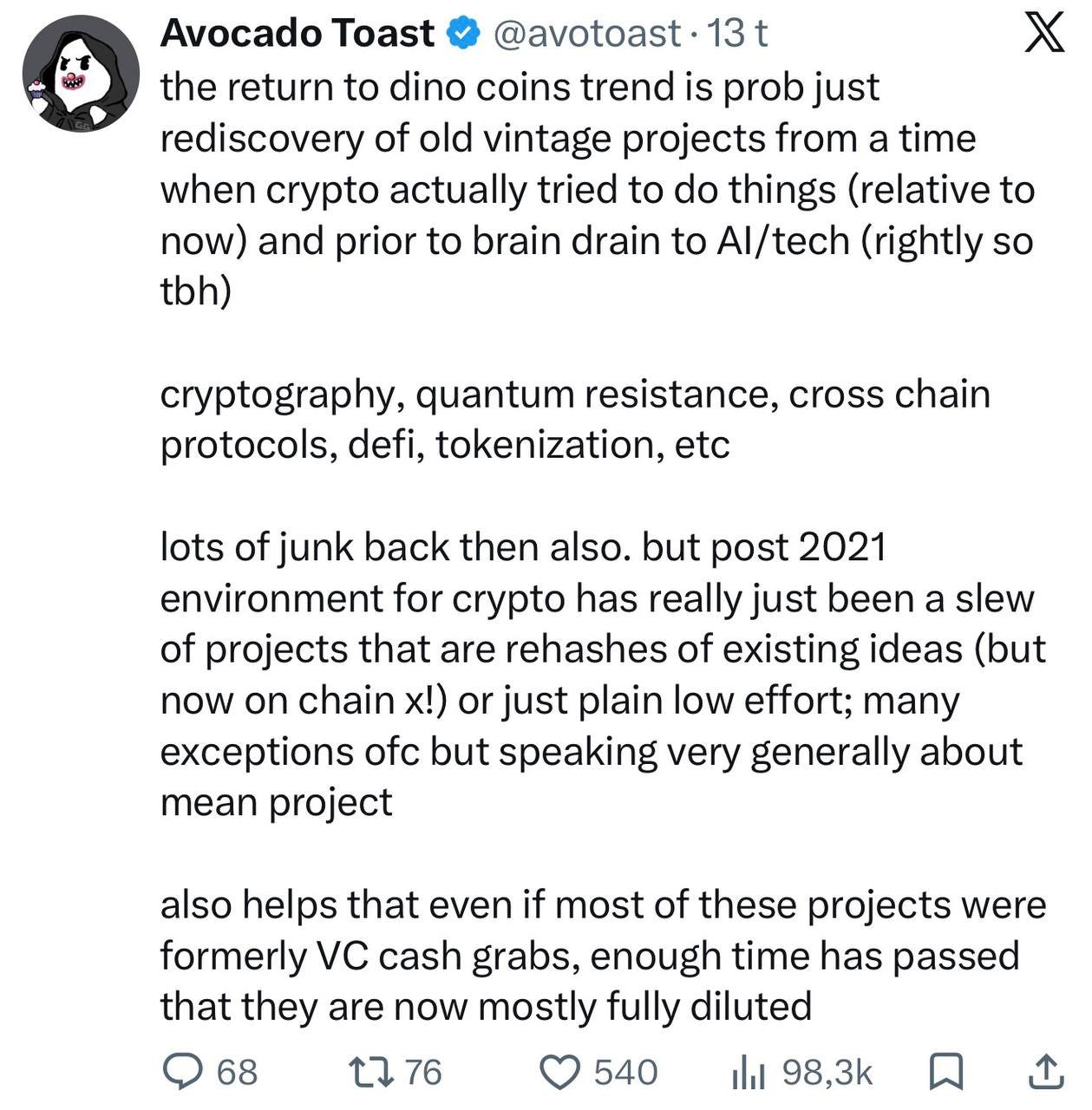
Starknet is more or less quantum-resistant, and people find that important right now because of the article that appeared last week that said that supercomputers and AI might be able to hack non-quantum-resistant crypto coins. Like imagine all of your digital money just disappeared from your wallet tomorrow? Like how sad wouldn’t that be?
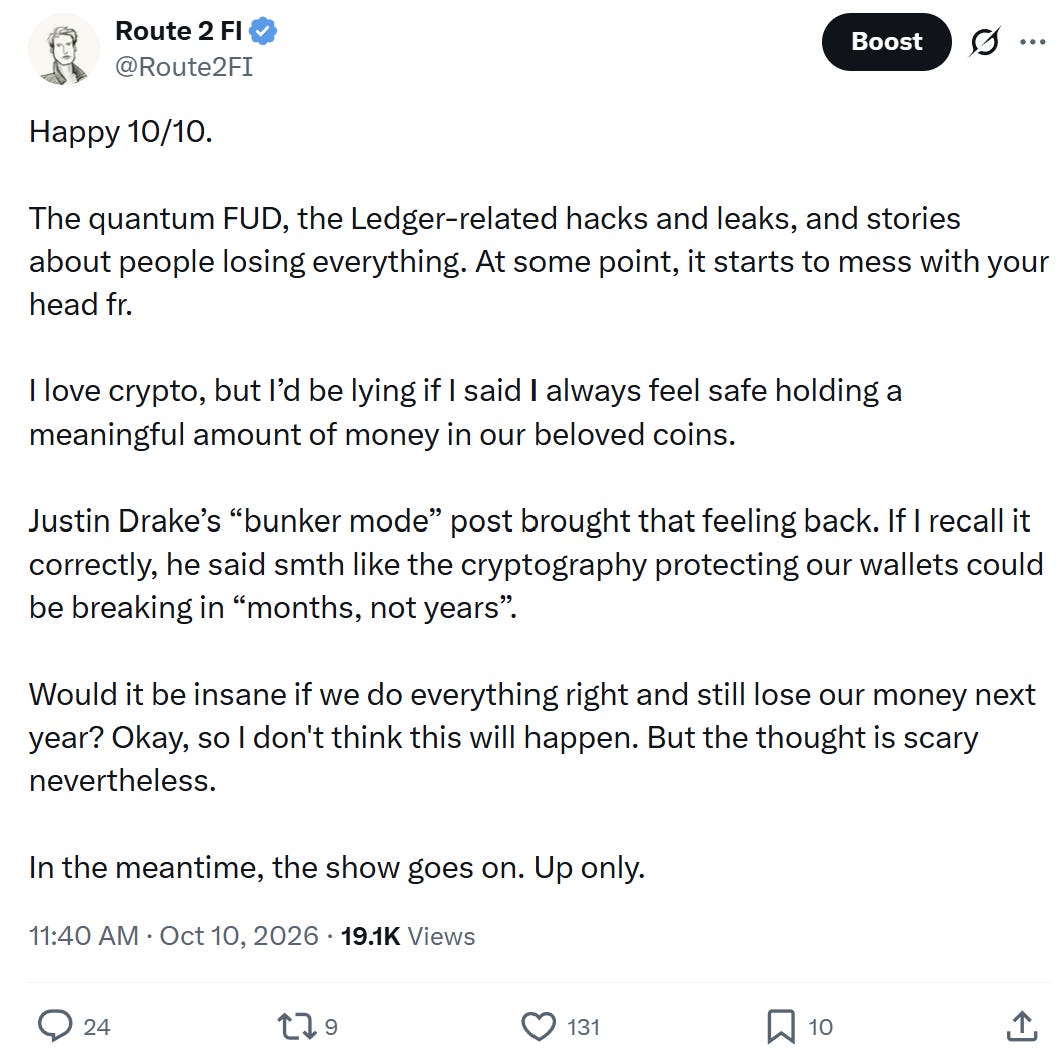
I also wrote about this, which you can see above.
With that said, we used to joke about when these dino coins pumped, it was all over…
Is it different this time?
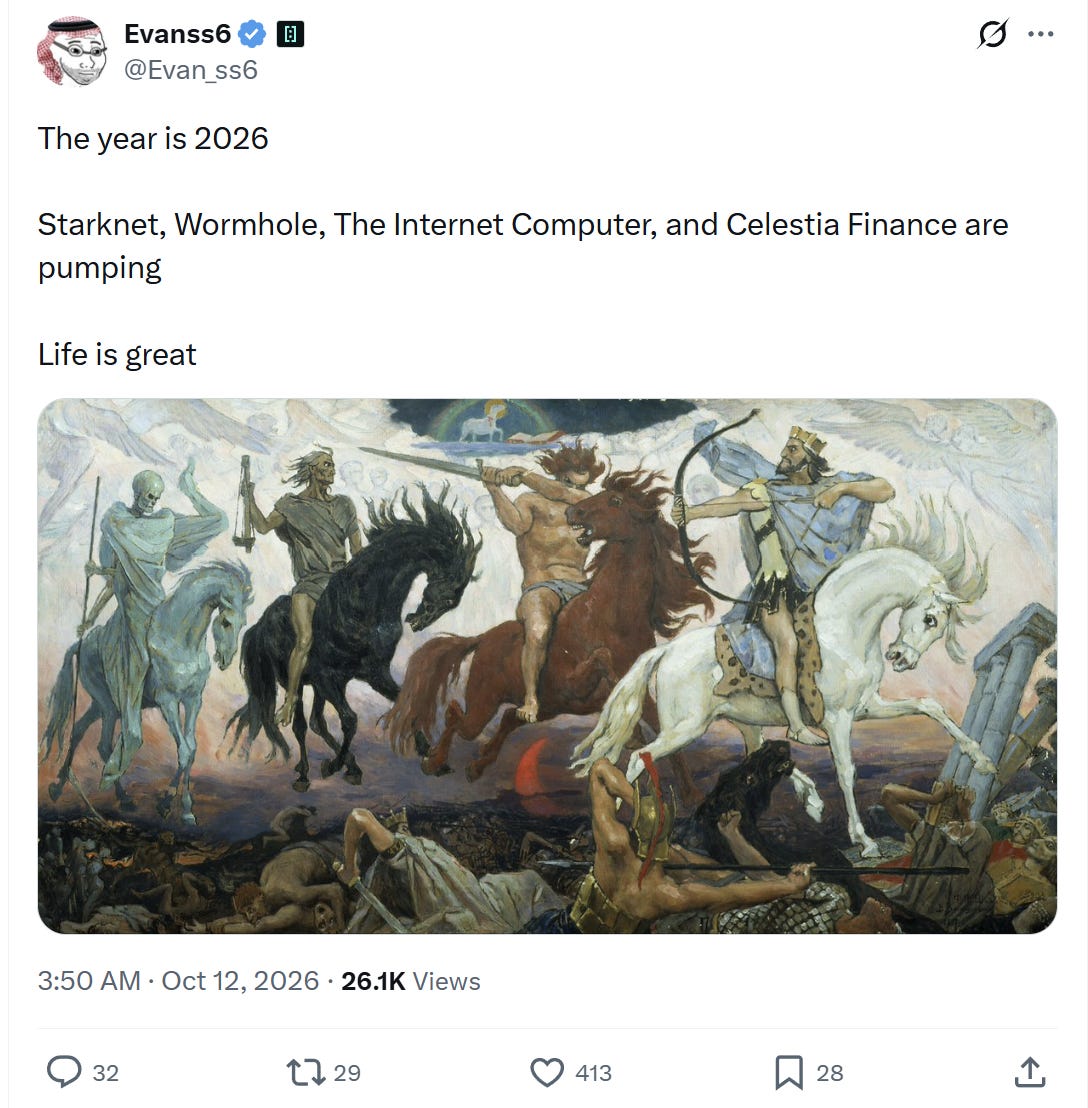
This used to be the time when you sold everything...
But the reason why people are buying these projects now is that most of them are fully unlocked (or close to fully unlocked), and that they actually tried to solve something.
For example: Eli Ben-Sasson in Starknet stated the idea of leaving Ethereum to become an L1, with “the first fully quantum-resistant network, and with a target of reaching that already next year.
People bought into that idea because of the massive FUD lately. Justin Drake’s “bunker mode” post said something like cryptography protecting our wallets could be breaking in “months, not years”.
Like it would be insane if we do everything right in crypto and still lose our money next year because of quantum tech, right? Yeah, well...even if you think it will happen or not, that’s the reason why these coins have a bid rn.
…
Until next time,
Ciao.
Thanks for reading The Black Swan 📈! Subscribe for free to receive new posts and support my work.