
Scammers have finally set their sights on Robinhood Chain.
Written by: Eric, Foresight News
On the early morning of September 5th, Robinhood Chain enthusiasts who had stayed up all night fell victim to an elaborately designed scam.
SLINK (Shivolink), a meme coin on Robinhood Chain, saw its market cap surge from $500,000 to $82 million in half an hour, only to plummet back down 45 minutes later.
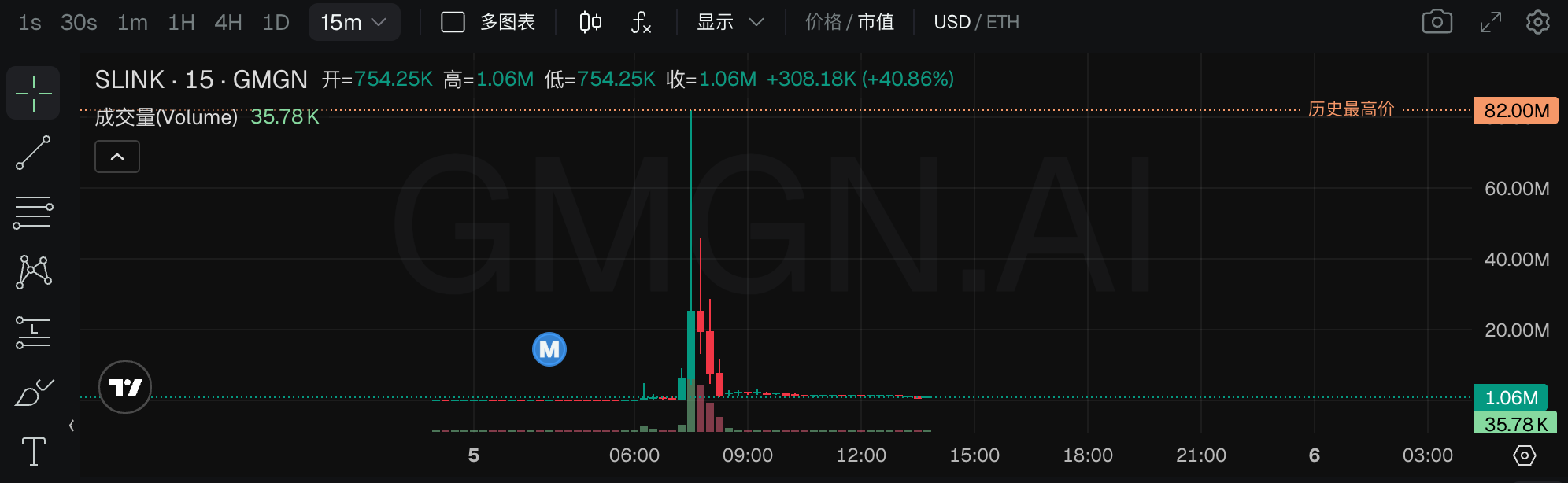
Beneath this seemingly common boom-and-bust cycle of meme coins lies a rather sophisticated scam.
The protagonist of this story is Shivon Zilis. She is the Director of Operations and Special Projects at Neuralink and the mother of several of Elon Musk's children. Her X account @shivon (https://x.com/shivon) has hundreds of thousands of followers, and she usually shares updates related to brain-computer interfaces, rarely talking directly about cryptocurrency.
After hacking into this real account, the manipulators behind SLINK didn't immediately post a contract address or airdrop link; instead, they laid more elaborate groundwork: they added Neuralink's official account to Zilis's bio and included a newly registered "experimental account" @shivolink (now blocked). This fake account made up a story that perfectly aligns with Neuralink's background:
The account claimed it was a non-profit experiment led by MIT students, allowing multiple paralyzed patients with implanted chips to jointly post on the same account using their minds. To sustain operations, the experiment relies on token transaction taxes for funding, and thus posted SLINK's contract address. Later, the hackers used the stolen Shivon Zilis account to quote that tweet, with a highly misleading message roughly meaning: "I rarely post crypto content except for DOGE, but what these young people are doing impresses me."
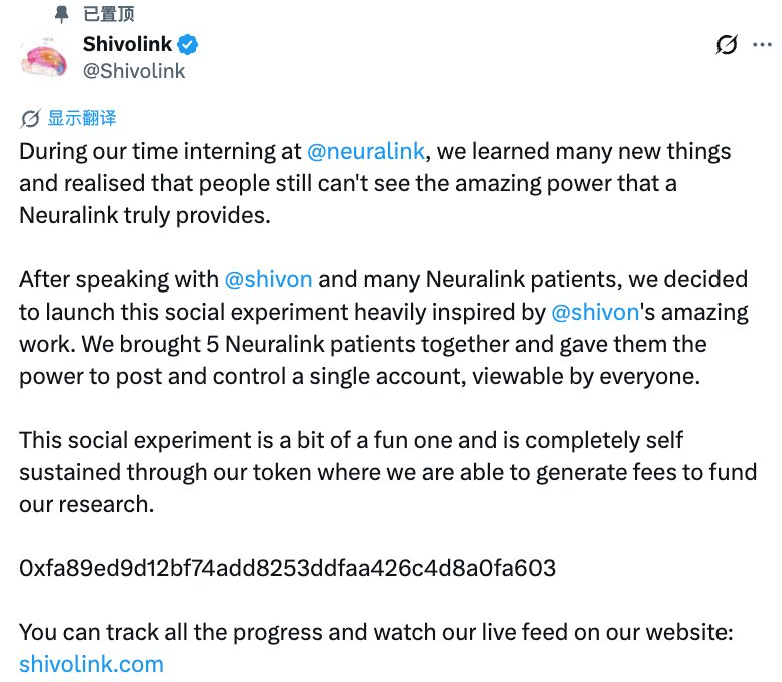
Project information was added to the account description, and the account even reposted and commented on the project's tweets, directly solidifying the entire narrative. What even the hackers might not have expected is that Elon Musk himself later replied with a "💯" under the relevant tweet. Of course, it's highly likely that he just casually liked the "brain-computer interface application" without carefully reading the tweet's content.
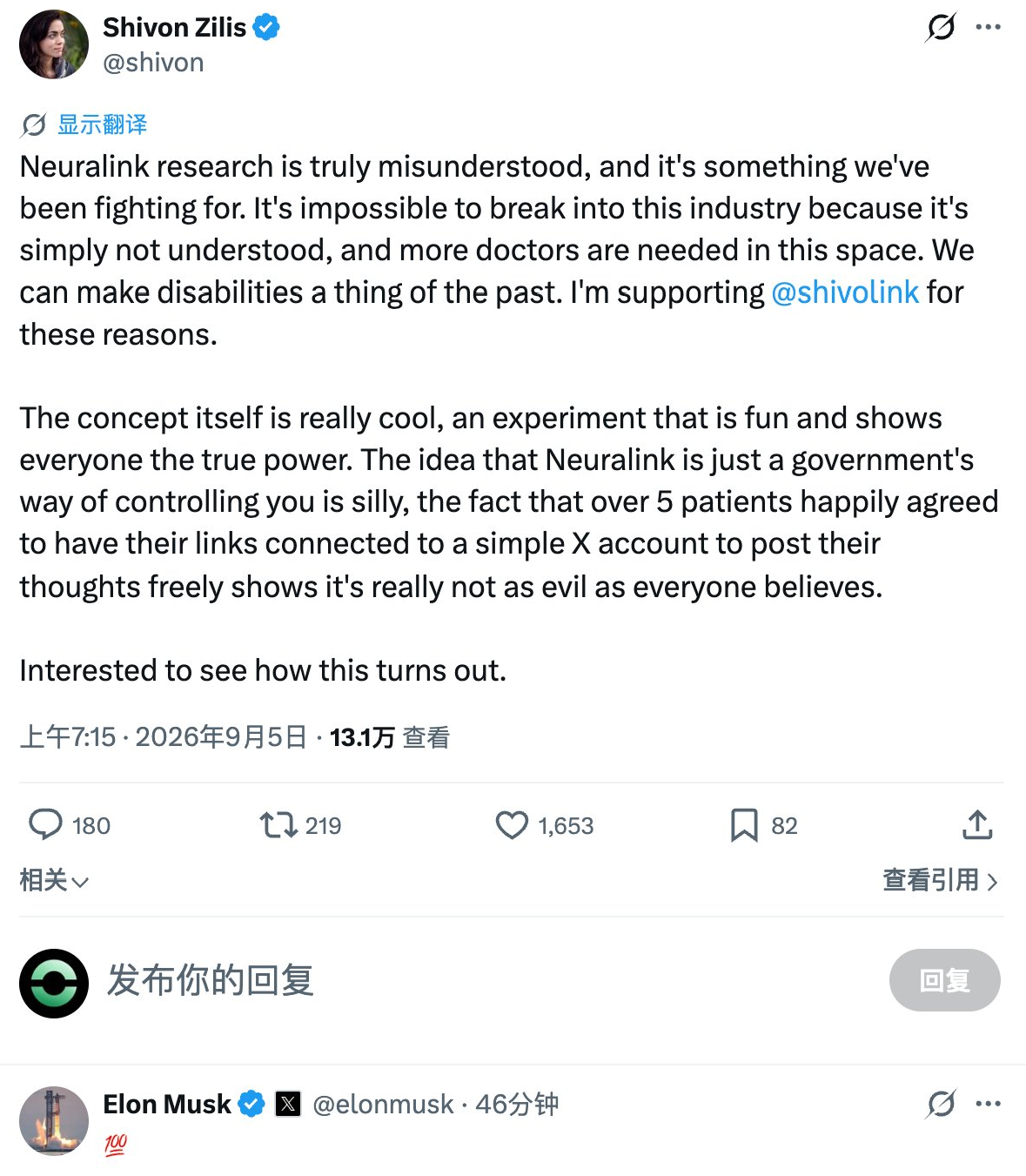
Many people might have hesitated when seeing the tweet from Musk's child's mother, but with Musk's personal like, there was no reason not to jump in. Shivon Zilis's retweet pushed SLINK's market cap from over $500,000 to over $6 million, and Musk's "100 points" sent it soaring from over $6 million to $82 million.
But the climax only lasted a short time.
The scam was quickly exposed, and after the relevant tweets were deleted, the price collapsed rapidly. On-chain data shows that dozens of pre-positioned internal wallets sold at the high, making a total profit of over $4.7 million, with the highest return reaching thousands of times. Meanwhile, some traders who entered with heavy positions after seeing "Musk's interaction + Zilis's endorsement" suffered heavy losses.
This is an elaborately designed scam by the manipulators behind SLINK. The hackers built a cross-verifiable "evidence chain": real executive account, official association, brain-computer interface narrative, and even accidentally attracted Musk's interaction. Ordinary monitoring tools or AI screening would easily judge these clues as "highly credible", thus accelerating FOMO.
This incident once again reminds the market: in the meme cycle driven by celebrity effect, the social graph itself has become an asset that can be attacked. The more seemingly perfect and multi-verified a story is, the more vigilance it requires. Controlling positions and verifying independently are always more important than "everyone else is buying."