
AMC, which was saved by meme stock retail investors back in the day, disapproves of tokenization—yet after its CEO's rant, both its stock price and the MEME token rose.
Written by: angelilu, Foresight News
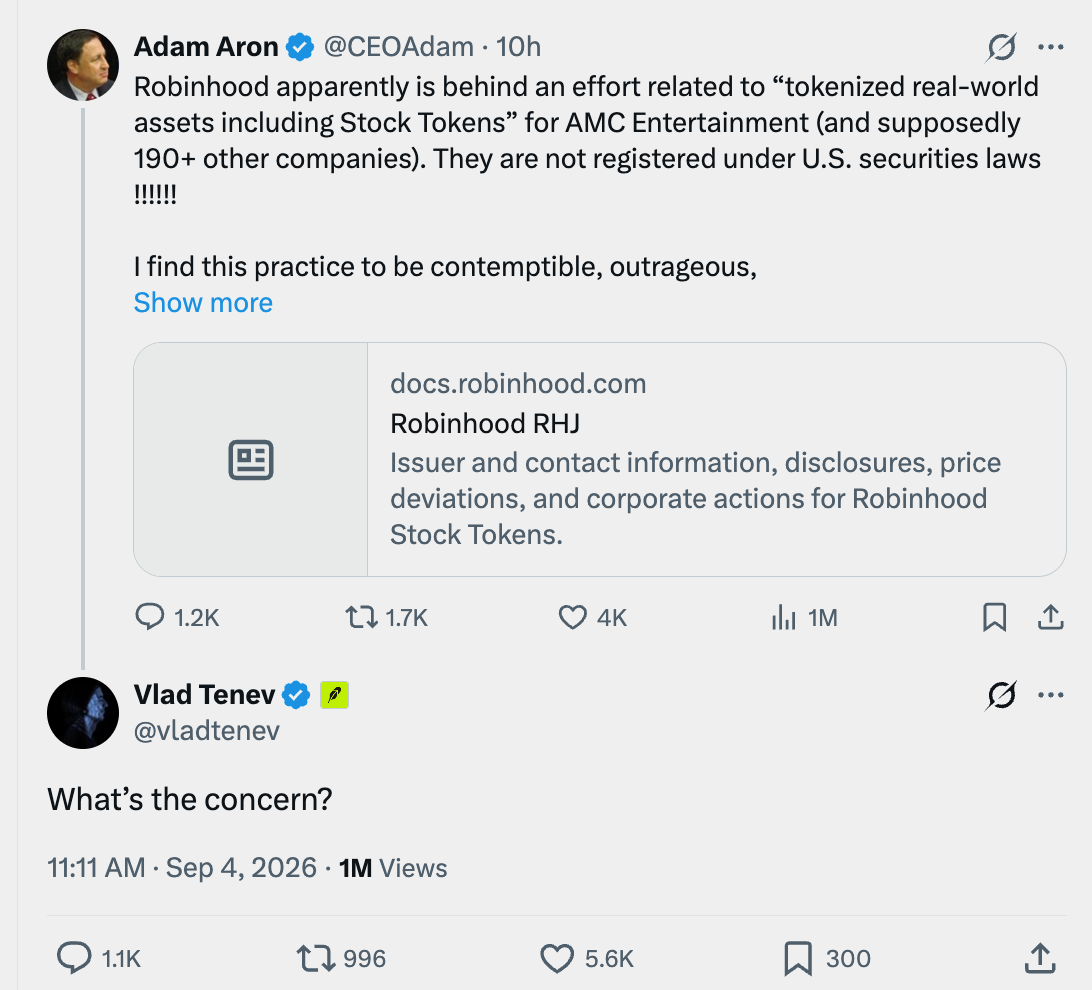
On the evening of September 3, AMC Theatres CEO Adam Aron blasted Robinhood on X for issuing tokenized AMC stocks without permission, using words like "despicable," "outrageous," "disgusting," "abhorrent," "unforgivable," and "contemptible." He also stated that external securities lawyers have been engaged. Robinhood CEO Vlad Tenev only replied with four words: "What's the concern?"
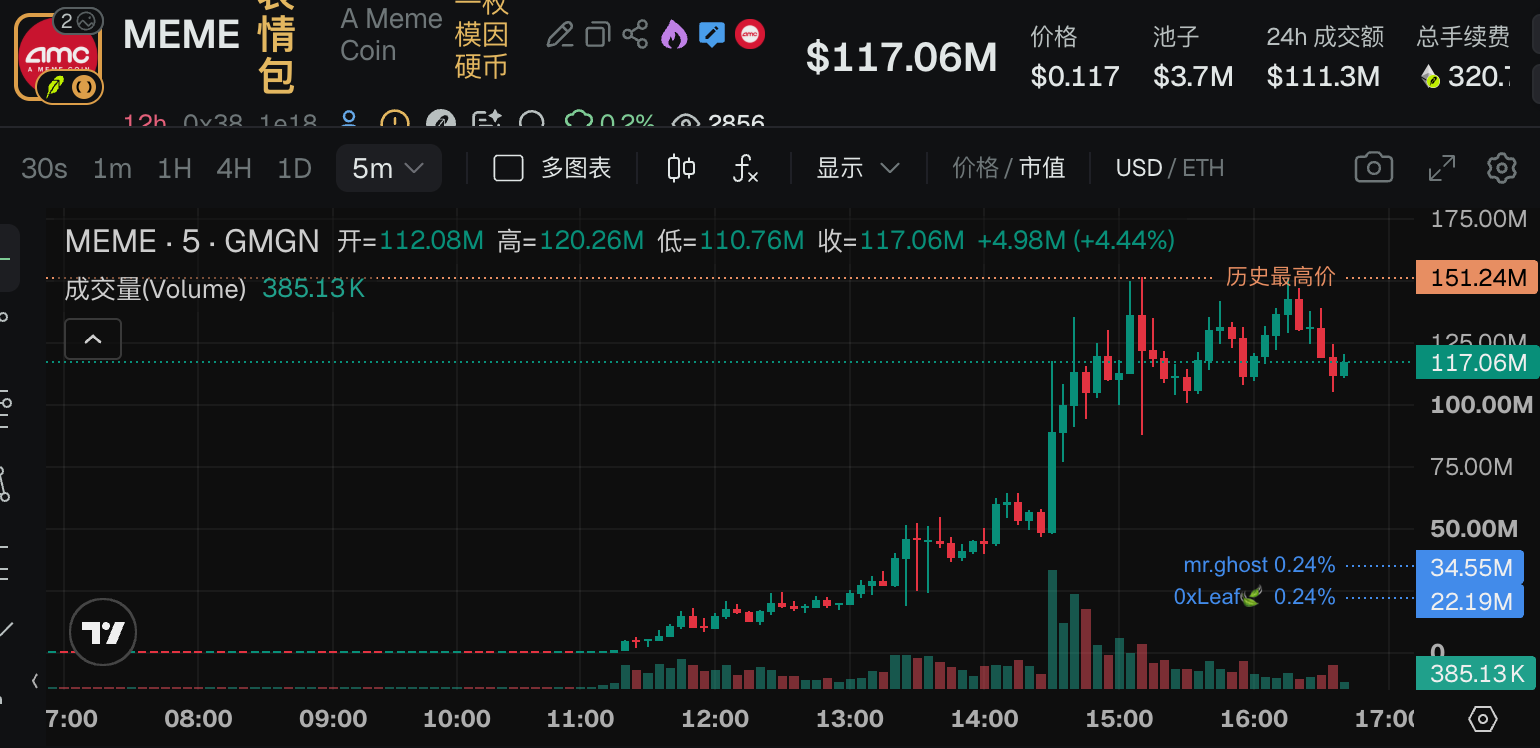
Almost simultaneously, a token named MEME launched on Robinhood Chain, with its trading pair being tokenized AMC. According to GMGN market data, within 12 hours of launch, its market cap soared from zero to over $150 million. As of press time, the market cap has fallen back to around $100 million, with a 24-hour trading volume of $115 million.
The Rant Targets a "Stock" Without Shareholder Rights
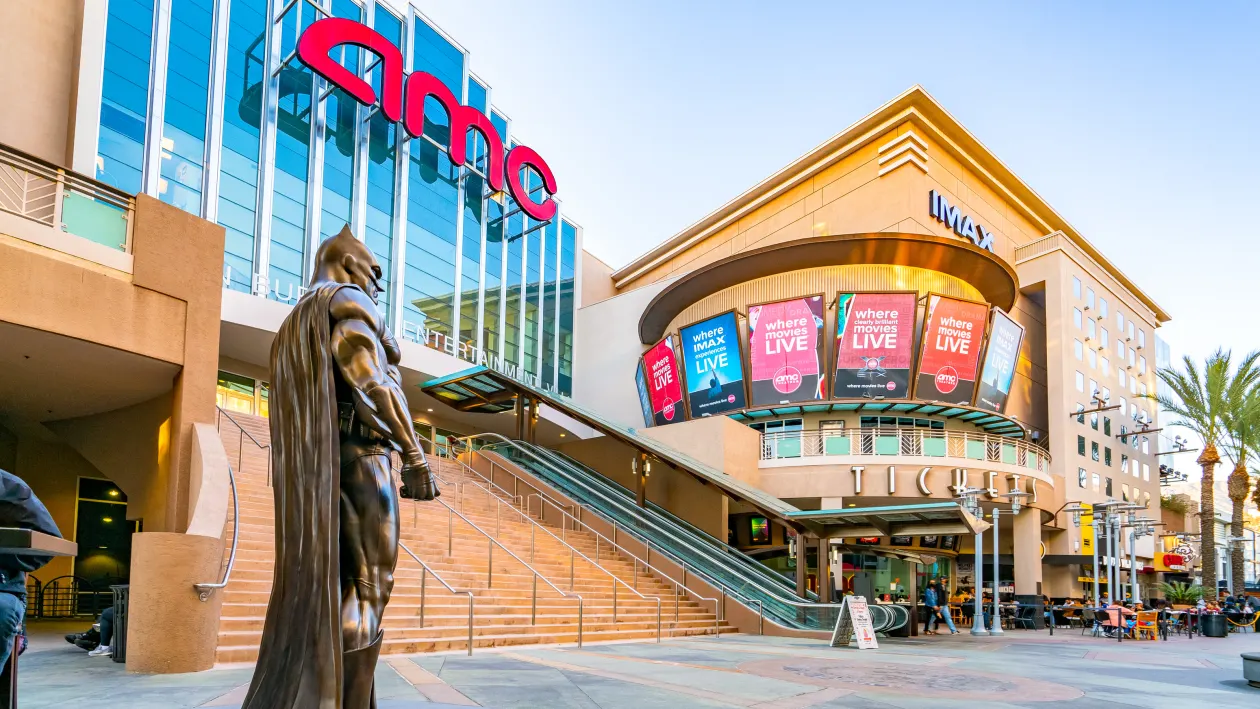
Some may still be unfamiliar with AMC. Founded in 1920, AMC Theatres is headquartered in Leawood, Kansas, USA. It operates approximately 898 theaters and 10,059 screens worldwide, making it the largest theater operator globally, listed on the New York Stock Exchange (NYSE: AMC).
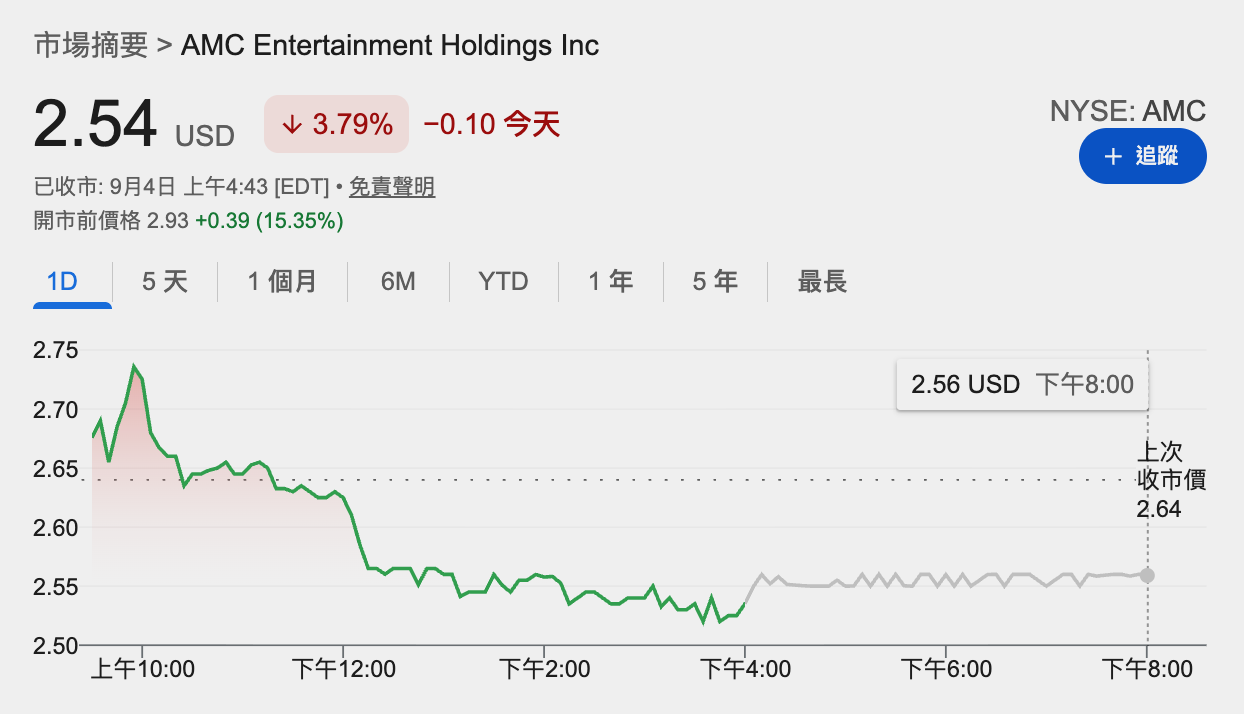
As of the close on September 3, AMC's stock price was $2.54, with a market cap of $2.27 billion. In other words, a meme coin launched for just 12 hours had a market cap equivalent to about 6% of this century-old company it references!
The subject of the two CEOs' dispute is Robinhood's tokenized stocks. On July 1, Robinhood launched its own Layer 2 network, Robinhood Chain, and initially rolled out 95 tokenized U.S. stocks. Issued by offshore entities like those in Jersey, these tokens provide price exposure similar to real stocks but do not grant equity, voting rights, or ownership. They are not available to U.S. investors and are not registered under U.S. securities laws.
Aron's allegations have four points: Robinhood, a U.S. company, is doing this in offshore jurisdictions to bypass U.S. regulations; this "fictional synthetic equity market" will weaken the company's own financing capabilities; investors receive something without real shareholder rights; and ultimately, it will加剧 public distrust in financial markets. He demanded that Robinhood voluntarily stop trading tokenized AMC stocks; otherwise, he will assess whether to force a halt, report to the SEC, and emphasized that AMC is "in no way associated with this and does not endorse it."
Robinhood's stance has remained unchanged: Stock Tokens are derivative contracts that provide economic exposure, and holders do not have legal or beneficial rights to the underlying company. Apart from Tenev's反问, the company has not issued an official statement regarding the allegations.
The Rising MEME Token Weaves the CEO's Fury Into Its Narrative
The official MEME account @amemecoinrh has only one narrative: "The theater is just a cover; it's always been A Meme Coin." Reinterpreting the three letters AMC as "A Meme Coin."
This meme has bite because Aron himself was the biggest beneficiary of memeification. In January 2021, AMC's stock price fell to a historical low of $1.91, with over $5 billion in debt and on the verge of bankruptcy restructuring. Precisely because it seemed to be collapsing, it became a short target for hedge funds, with the short interest ratio reaching about 25% of outstanding shares at one point.
Retail investors on Reddit's WallStreetBets forum seized this opportunity to buy en masse and purchased a large number of call options, forcing market makers to buy the underlying stocks to hedge their exposure. This created a double push of short covering and gamma squeeze: on January 27, the stock surged 301% in a single day, and on June 2, it hit an all-time high of $72.62 intraday. Aron took advantage of this to conduct consecutive secondary offerings, raising approximately $2 billion throughout the year and pulling the company back from the brink of bankruptcy.
(Note: AMC completed a 1:10 reverse stock split and merged APE shares on August 24, 2023. The above are the actual transaction prices at that time and cannot be directly compared to today's $2.54 stock price.)
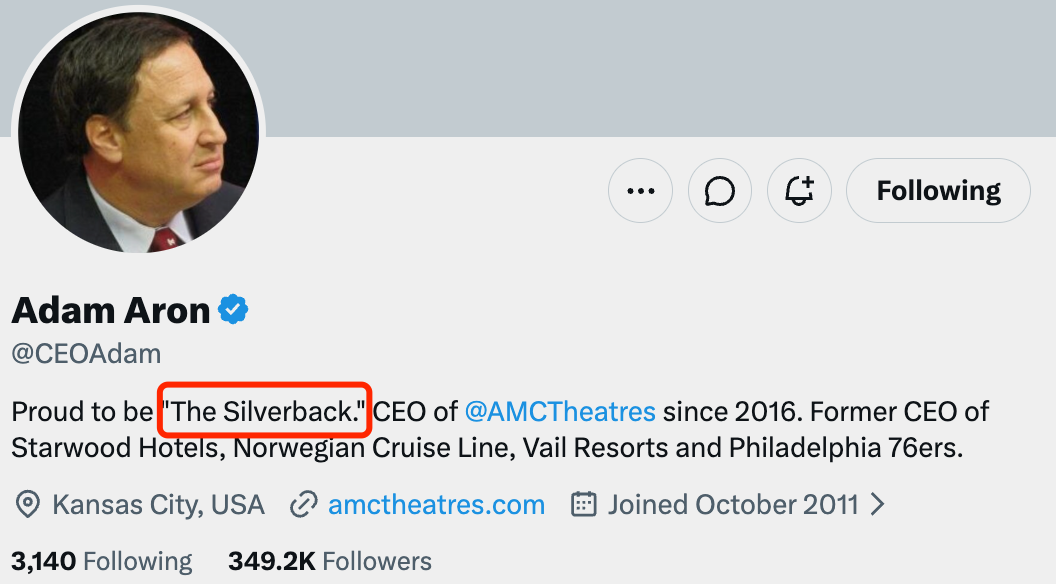
At that time, he fully embraced the meme culture: retail investors called themselves "Apes" and him "Silverback." He even donated $50,000 to a gorilla conservation fund—this title still appears in his Twitter bio.
He is no stranger to crypto either. In November 2021, AMC began accepting BTC, ETH, BCH, and LTC for movie ticket payments. In January 2022, Aron launched a Twitter poll to ask whether to add Dogecoin, and over two-thirds of respondents agreed. In April of the same year, AMC's mobile app officially supported Dogecoin and Shiba Inu payments via BitPay. In other words, he welcomes meme coins to buy popcorn but opposes using his company's equity to create synthetic products—he draws this line clearly, and this conflict should not be simply labeled as "a traditional CEO who doesn't understand on-chain."
Robinhood also played a role in that story. On January 28, 2021, it temporarily restricted users from buying GME and AMC, allowing only selling. This was seen as an original sin by retail investors. Robinhood stated that its clearinghouse raised capital requirements to deal with highly volatile, leveraged stocks, so it had to restrict purchases of certain stocks. Tenev apologized at a congressional hearing for this. Five years later, the same company and the same stock are clashing again, but in a different form.
There are always wealth stories after a meme token surges. According to Lookonchain monitoring, one address spent $2,972 to buy 16.11 million MEME tokens, and within less than 12 hours, the floating profit exceeded $2.1 million, a return of 713x. Frank, the founder of the NFT project DeGods, spent $1,491 to buy 11 million MEME tokens, and his position once exceeded $1.2 million, a return of about 810x.
After the Rant, AMC's Stock Rose 18%!
AMC's real stock price rose. Before the U.S. stock market opened on September 4, AMC rose by more than 15% to $2.94, corresponding to a market cap of about $2.7 billion. The most direct short-term effect of this public accusation in the name of "protecting investors" was to bring a wave of attention-driven gains to AMC itself—almost the same logic as in 2021, except this time the igniter was the CEO himself.
Legally, AMC has only commissioned lawyers to investigate; there is no answer yet as to whether it will sue or can stop the trading. The offshore issuance structure itself is designed to avoid such jurisdiction. Market-wise, MEME is just one of many AMC-related meme tokens on Robinhood Chain, a typical case of "controversy equals alpha": conflict provides narrative, and narrative provides liquidity.