
Thousands of sails pass by the side of a sunken ship; ten thousand trees spring up in front of a withered tree.
Written by: Eric, Foresight News
No industry can reach prosperity without going through a round of brutal elimination, and Web3 is no exception.
Based on public information collation by Foresight News, since 2025, at least 78 Web3 projects with total financing exceeding $1.5 million have announced shutdowns. Among these, 69 projects with confirmable financing amounts have taken a combined total of over $900 million in investments. If we include small projects that did not receive institutional funding and died quietly, the total number far exceeds 300.
This means that in the past nearly 600 days, an average of one Web3 project dies every two days—whether well-known or not.
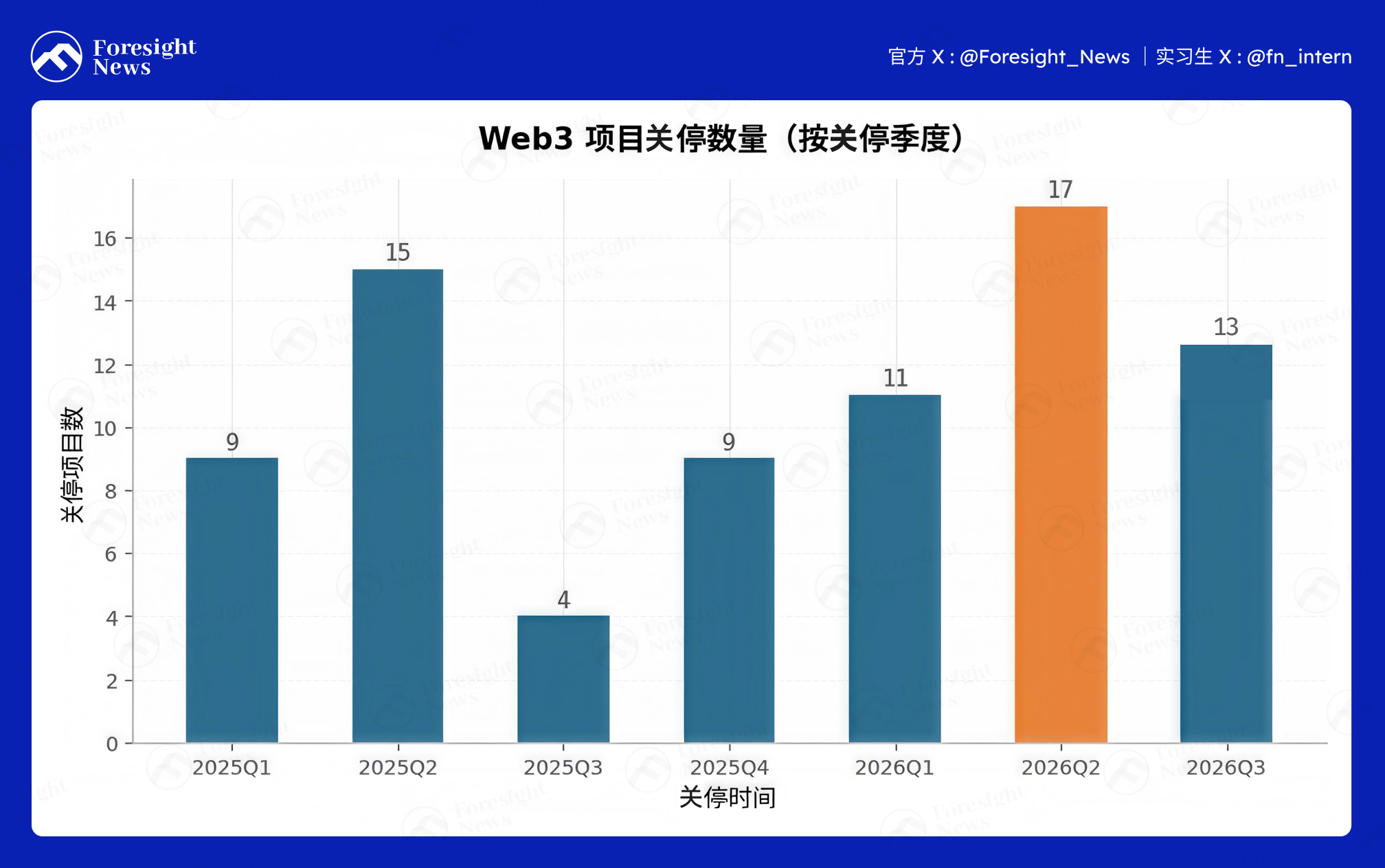
Among the 75 projects counted by Foresight News, 37 were shut down in 2025, while 41 have already closed in the first half of 2026—with 17 shut down in Q2 alone, hitting a quarterly peak since this round of liquidation. "B爆款" Dapps from the previous bull market like DappRadar and Zapper, as well as established exchanges such as BitMEX and AscendEX (formerly BitMax), have all ended their business careers in the past two years.
The reshuffle has not stopped due to the market's recovery; instead, it is accelerating.
After securing millions or even tens of millions of dollars in financing, every team entering this new world once held the lofty ambition of "Laughing to the sky as I go out; are we not the ones meant for great things?" But after years of market baptism, these cold and cruel numbers are still laid bare before everyone.
Emerging markets are still markets, and Web3 is no gentler than other industries.
"Unable to Sustain Themselves" is the Top "Cause of Death"
Breaking down the "causes of death" for the 75 projects, the top reason is "insufficient funds"—31 projects fell victim to this issue, accounting for over 40%. Closely followed is "lack of market demand," which led to the shutdown of 17 companies. Together, these two reasons account for nearly two-thirds of the total. In other words, the majority of projects share one common cause of death: they never managed to support themselves.
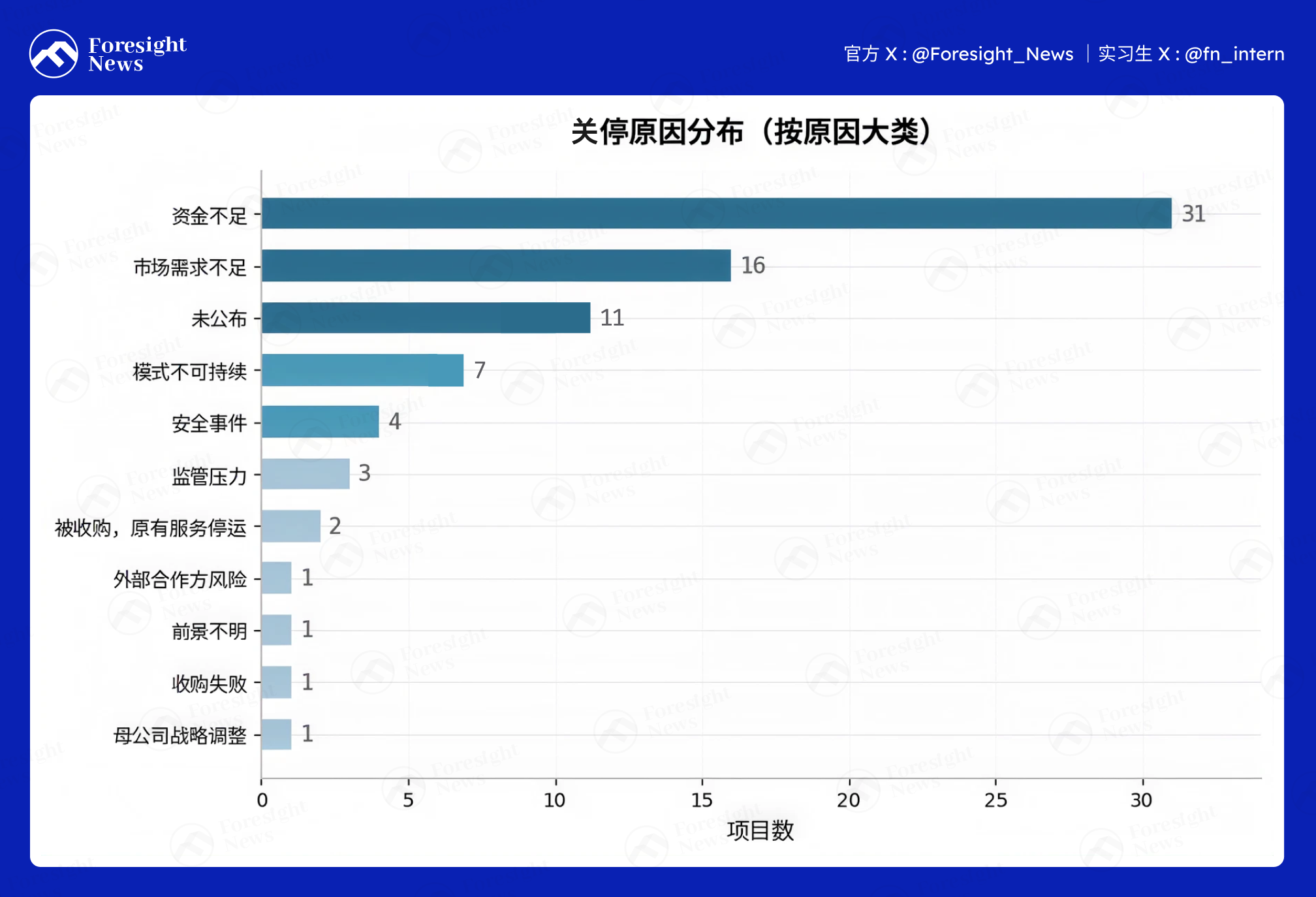
The expressions used in these projects' shutdown announcements are largely similar; many stated, "Despite our best efforts to find a way forward, we still failed to identify a sustainable development path." The subtext here is: at the time of their launch, the projects either had no clear plan or their initial vision was vastly different from the actual market situation.
An industry observer described this wave of closures as "a direct reflection of failed business models and broken capital chains, not just simple market sentiment fluctuations"—a piercingly accurate assessment. The investment logic in the primary market over the past two years has completely shifted: the first question investors ask is no longer "How big is your growth potential?" but "How do you make money?" Projects whose revenue cannot cover operating costs and cannot tell new stories were the first to fall after financing channels tightened. The OSL Research Institute summarized this shift in its annual report as the industry moving from the "first half" to the "second half": the growth model driven by asset price increases and protocol innovation has reached its end, and the market is shifting from "narrative to delivery."
To put it more bluntly: the market and capital are no longer willing to pay for "experiments," and a project's self-sustaining ability has become a necessity.
Compared to these evasive reasons, the 5 projects that announced "unsustainable business models" are much more honest. For example, Goldfinch, which focused on unsecured credit lending, shut down due to continuous bad debts from loans to emerging market enterprises; fantasy.top, a social game that became popular through token incentives, saw its incentive model collapse after the hype faded.
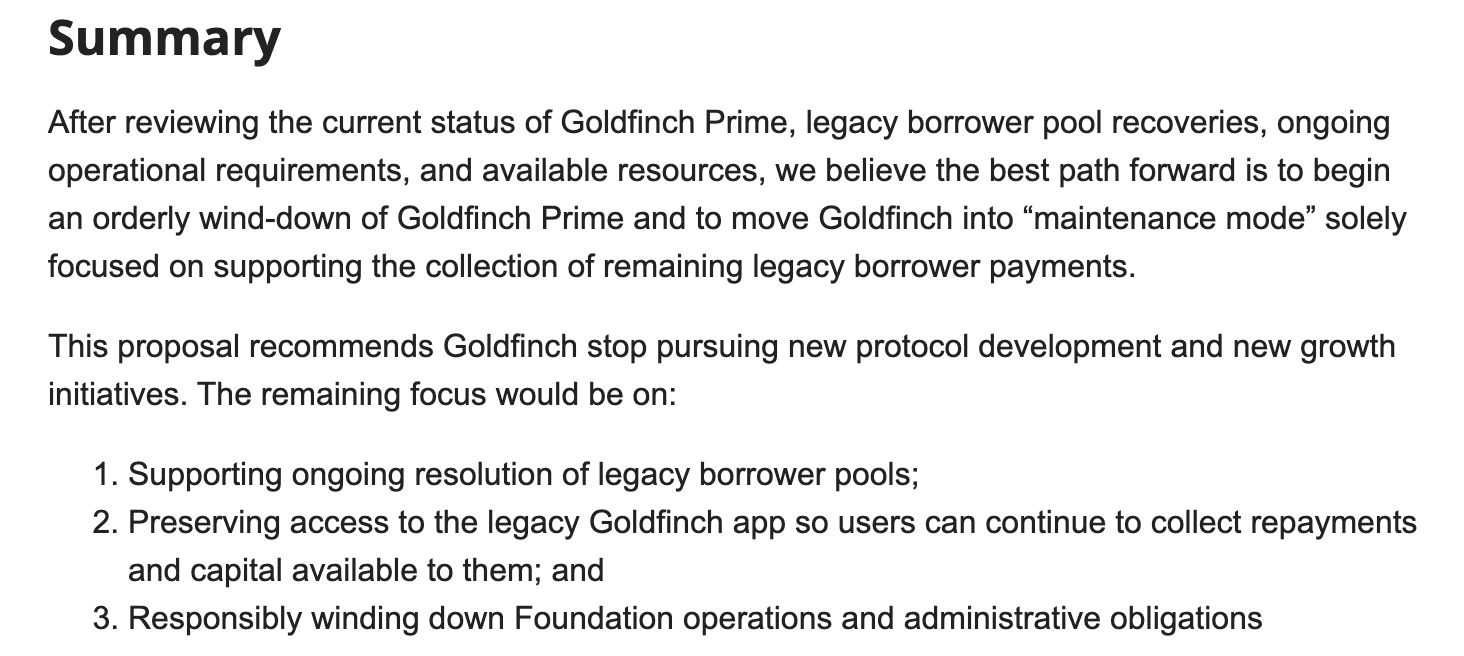
"Unsustainable business model" is a very interesting reason for closure. Unsecured credit lending in traditional financial markets is mostly based on big data or personal credit history to set reasonable limits. As an emerging "lending company," Goldfinch dared to offer unsecured credit loans in emerging markets without credit data support—this is not a problem that can be solved by cryptocurrency and Web3 alone. Clearly, the reason for the birth of this company, which raised nearly $40 million, is hard to believe; it’s unclear how top institutions like a16z were persuaded to invest.
In addition, some companies died due to regulation. Mango Markets shut down its protocol via community vote after reaching a settlement with the SEC; Tokenize Xchange fell due to a rejected license application. Another type of death is uniquely Web3: being dragged down by larger partners. Crypto bank Juno was operating well but closed due to the ripple effect of its custody partner’s bankruptcy—this type of risk nested in traditional financial chains is often the part that project parties can least control.
Speaking of risk, the 4 projects that closed directly due to security incidents are also uniquely Web3. L2 Kinto, Ctrl Wallet (formerly XDEFI), Radiant Capital, and zkLend all had their already tight capital chains broken directly by a single hacker attack. Since Web3 projects handle real money, being hacked is like a bank having its money stolen by hackers—trust collapses instantly, making recovery almost impossible for most projects.
These cases expose the fragility of Web3 projects. After a hack, projects can only use daily operating funds to compensate; at the same time, the project token price plummets, losing the ability to sell tokens for funds or secure further financing. "Death" is almost just a matter of time. Except for a few projects with strong financial strength that can survive this, most small teams are completely unable to bear it—but both face the same risks.
But from another perspective, being unable to survive a security incident may itself be a reason for elimination.
The End of Involution is a Mess
When data analysis crosses into track dimensions, the patterns become clearer.
Since 2023, Bitcoin has gradually emerged from the haze, breaking through the $100,000 mark and even approaching the long-ago "prediction" of 1 million RMB. On the other hand, in tracks like DeFi that have been proven feasible, while the head effect becomes more obvious, bubbles are continuously squeezed.
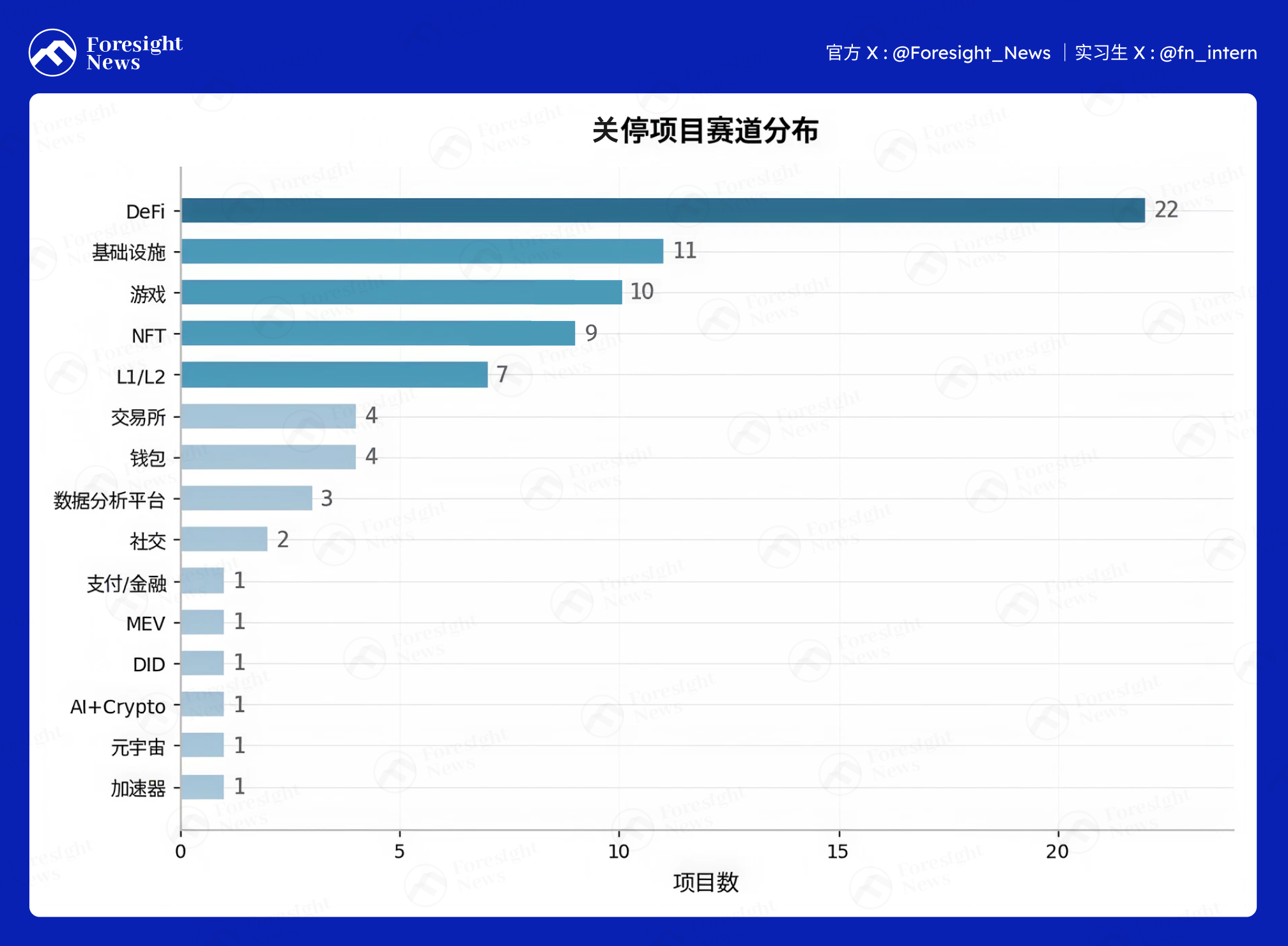
DeFi, as the hardest-hit area in this round of closures, accounts for nearly 30% of the 75 projects. This distribution itself illustrates a long-avoided industry problem: finance is indeed one of the few real-use cases for blockchain technology, but not all financial products have sufficient market demand, nor are all financial products suitable for independent operation. Among the 22 fallen DeFi projects are stablecoin protocol Angle, derivatives protocol Polynomial, and restaking protocol MilkyWay—their causes of death are varied: lack of funds, no demand, hacking, regulation, unsustainable models. Almost every type of death can find an example.
Homogenization is the underlying theme: when Uniswap and Aave absorb most of the liquidity, the second tier can only rely on narratives. More importantly, many DeFi protocols are essentially functions, not businesses—they can thrive as modules of head protocols, but when independent, they have to bear customer acquisition, security, and operating costs alone. Market demand is limited; when a niche area is crowded with far more players than the market can support, some are destined to be eliminated.
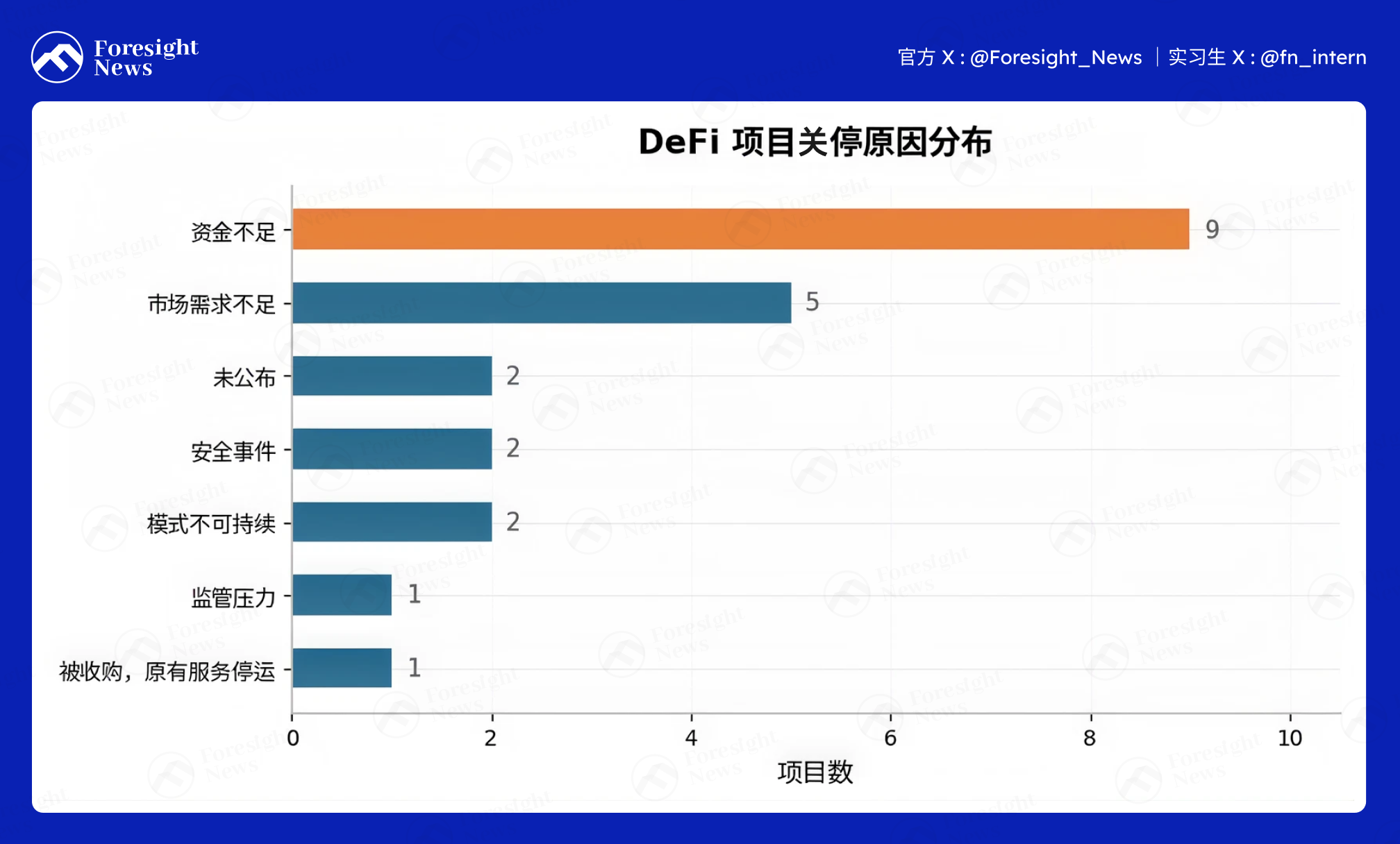
The primary reason for DeFi project closures is still insufficient funds. For DeFi projects—one of the few Web3 sectors with revenue sources—to be trapped by funding issues shows that the capacity of mature DeFi tracks is approaching saturation.
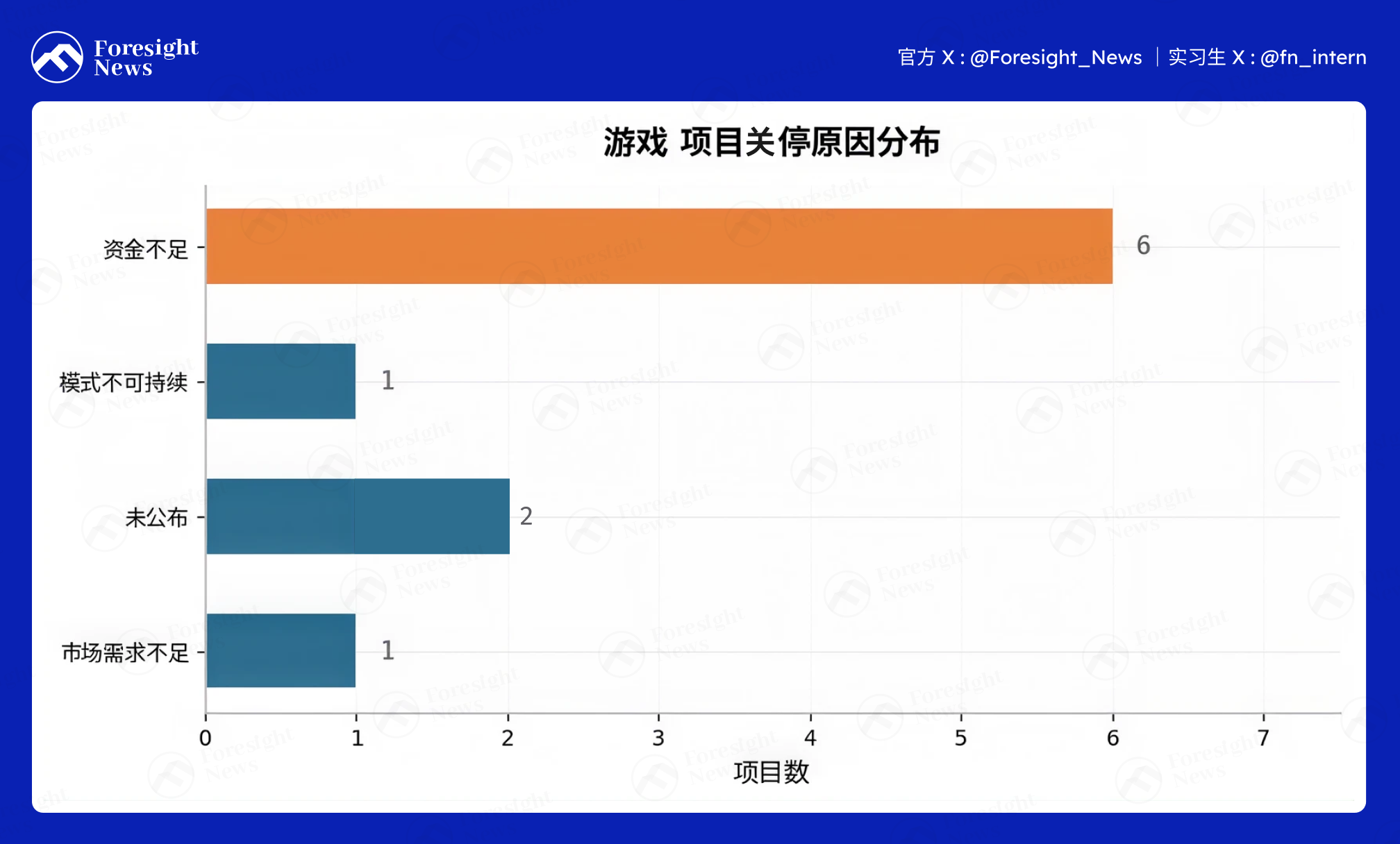
Among the 9 shut-down projects in the game track, 6 died from "being unable to secure the next round of financing." This aligns with the logic of the content industry: game development often takes 3-5 years and burns a lot of money; a $100 million budget is not unusual in traditional gaming. Chain game teams with a few million dollars want to replicate AAA experiences—once test data fails to support the next round of financing, the project has no second chance. Among the 9 NFT and metaverse projects, 4 died from "disappearing demand": when X2Y2 shut down, the total NFT market volume had dropped by about 90% from its peak; Bloktopia directly fell as the metaverse narrative faded.
NFT and metaverse can be considered the first tracks in Web3 history to be "falsified." Currently, NFT is still lingering, while the metaverse has almost disappeared. The metaverse not only fooled Web3 but also led Facebook to rebrand as Meta in 2022 and go all-in on the metaverse. Looking back now, NFT and metaverse are more like products "unfit to exist" that were propped up by excess capital during the bubble period.
When the economy declines, these trivialities of the boom are no longer pursued. From another angle, these projects became popular relatively late; the market did not provide a long enough boom period for them to educate the market and find a break-even operating model. Even Yuga Labs, which once received $100 million in financing, recently reclaimed DAO rights to control "how to spend money."
The fall of L1/L2 and infrastructure points to another excess. Public chains were once the most expensive narrative in the financing market, but when Ethereum Layer2 has become so oversupplied that they compete for users, a new chain without a unique ecosystem is almost dead on arrival. Old chains like Kadena and Evmos can only exit gracefully after continuous market bleeding. The same applies to the infrastructure track: cross-chain, sequencers, account abstraction—each layer has a dozen teams, but the industry's real transaction volume simply cannot support so many "road builders."
The elimination game in the infrastructure sector aligns with our understanding of the industry. These projects are not without demand, nor are they slacking in operations—they simply lost in the brutal market competition. The fall of these companies also reminds investors and industry participants: the market logic has undergone a qualitative change. Being new or having strong technical capabilities is no longer a "get-out-of-jail-free card." Blind independent entrepreneurship is not as good as integrating good ideas into existing projects or systems.
When the Tide Recedes, Veterans and Whales Stranded Together
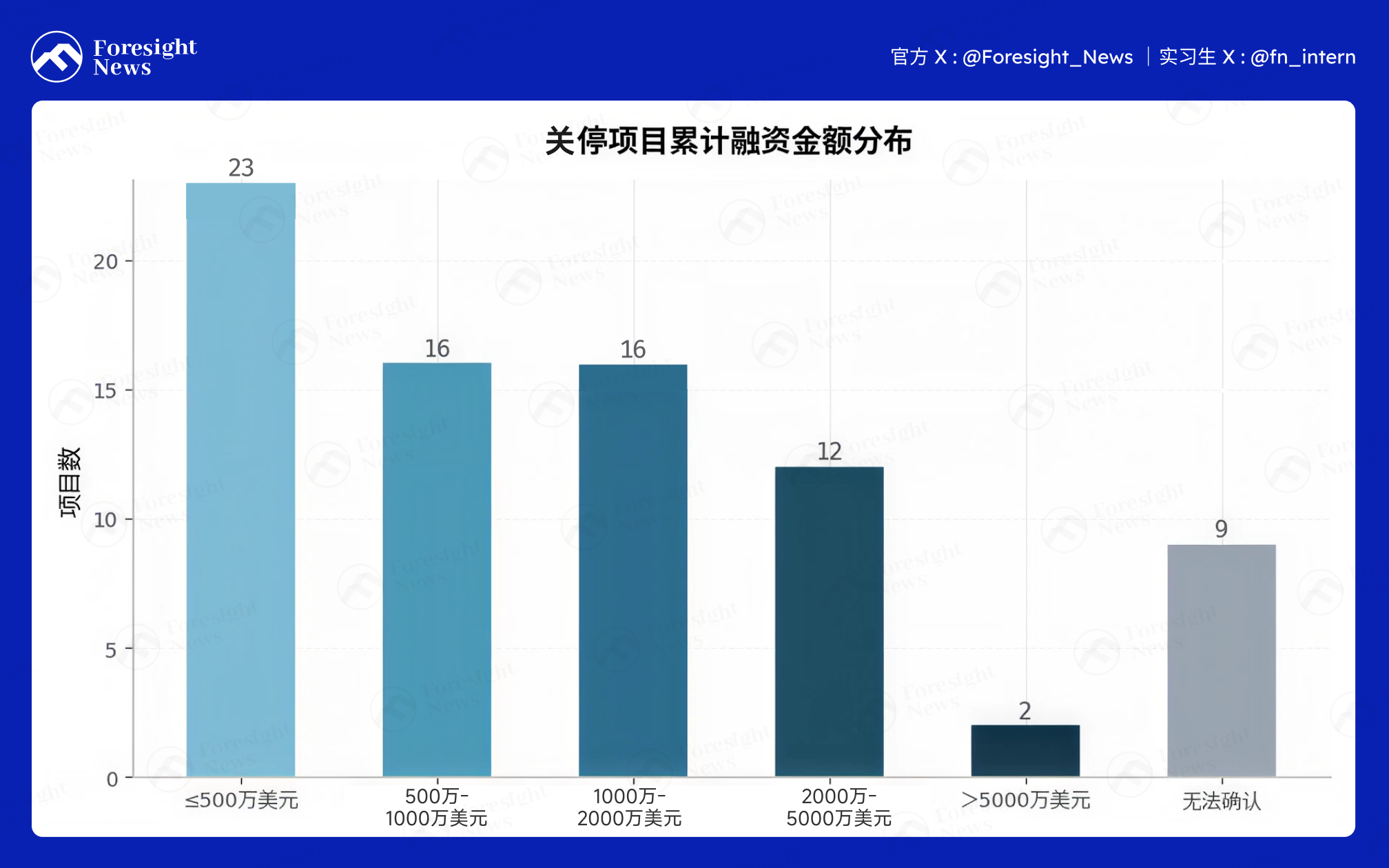
In this round of reshuffling, financing scale cannot form a protective shield. Among the 75 projects, 23 raised over $15 million (nearly 100 million RMB): Mango Markets raised $70 million, AscendEX raised $63 million, Loopring raised $45 million—whether they had no money to burn or had money but found it meaningless to burn, these projects finally chose to stop.
Financing can buy very limited things. Loopring is one of the earliest trading protocols to implement zkRollup on Ethereum; technically, it is not backward, and the team is hardworking. But under the夹击 of head DEXs and centralized exchanges, its trading volume remained low for a long time, eventually having to announce shutdown and transition to the next-generation product. Money can maintain team operations, subsidize users, and support a few years of dignity—but it cannot buy real demand. When a company's product is ignored, the more financing it has, the higher the cost of maintaining this "ignorance."
A more common problem is: high financing only extends the trial-and-error time, not the probability of a viable business model. After receiving far more funds than actually needed, team size, market spending, and token incentives often expand simultaneously, pushing fixed costs up quickly. When the market is good, these expenses are covered by growing numbers; once the market cools, the bloated cost structure makes high-financing projects harder to pivot than small teams. From this perspective, huge financing is sometimes not a buffer but an amplifier—it amplifies the project's optimism during the boom and its fall speed when the bubble bursts.
Polkadot, which "threw money around with eyes closed," is the best example.
The time dimension structure is more illustrative: projects established from 2021 to 2022 account for 45% of the total, exactly corresponding to the peak of the previous financing bubble. In those two years, the crypto primary market raised over $30 billion annually; a large number of projects were born under the logic of "get money first, find demand later." Their concentrated death today, 3-4 years later, is a typical delayed liquidation.
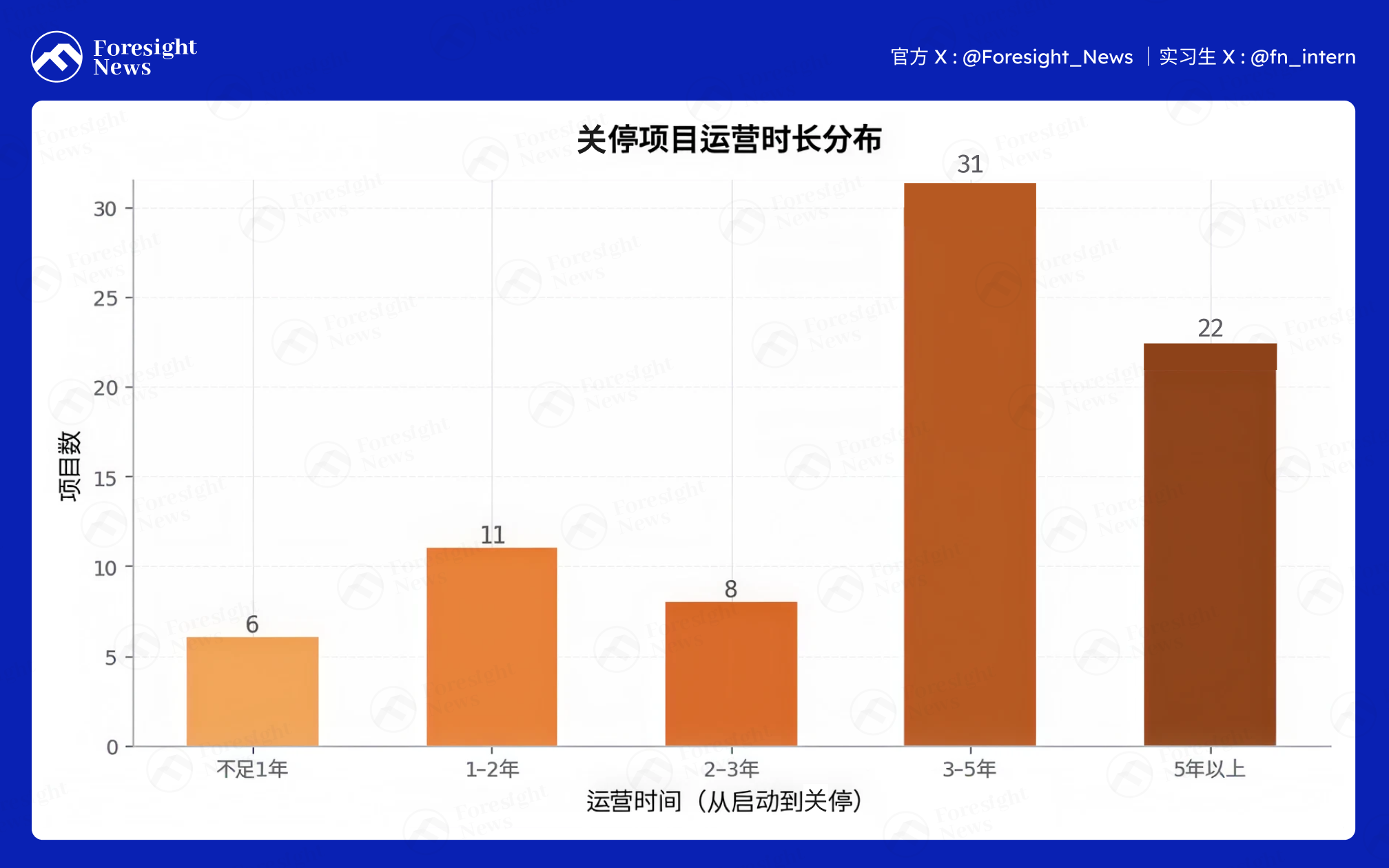
Notably, 9 "veterans" with over 7 years of operation also fell in the past two years—including BitMEX (founded 2014), Loopring (2017), and Blocknative (2018). The median survival time of all 75 projects is 4 years. Together, these numbers show that this round of reshuffling eliminates not just speculative projects born during the bubble but also re-prices a batch of business models that never truly worked. Seniority, financing, and technical reputation cannot exempt them.
a16z once summarized a "crypto price-innovation cycle" using ten years of data: After the price peaks in each cycle, the number of developers, entrepreneurial activities, and infrastructure investment do not fall with the price; instead, they settle and become seeds driving the next cycle.
From this perspective, the shutdown list over the past two years is on one hand a delayed清算—清算 the excess capacity催熟 during the 2021 financing bubble, not the industry itself. Industry fundamentals also support this: the total market capitalization of stablecoins has exceeded $300 billion, and on-chain dollars are渗透 into the payment and settlement links of the real financial system at a visible speed; Pendle, which proposed the concept of "yield tokenization" in 2021, now has a TVL exceeding $10 billion and ranks among the head DeFi protocols; Ethena's synthetic dollar USDe once exceeded $14 billion in supply in 2025, becoming the third-largest dollar stablecoin after USDT and USDC. The common feature of these projects is that they solve real needs and have clear revenue models—they do not live in narratives but in cash flow.
On the other hand, the worsening economic environment has made some projects born in the new cycle after 2022 quickly realize they cannot survive in the current market: DeFi platform Dango chose to shut down less than 4 months after its launch. In addition, in July, three exchanges—BitMax, BitMEX, and BitMart—announced shutdowns one after another. These exchanges, once considered "money printers," are no longer viable, which is enough to show that under the surface prosperity, the downturn is accelerating.
The Story is Not Over
Economist Steven Klepper found in his research on the evolution of the U.S. auto industry that around 1900, there were over 200 automobile manufacturers in the U.S. competing; decades later, only the Detroit Big Three survived.
He summarized this pattern as an inevitable "shuffle period" in the industry life cycle: after the birth of new technology