
Kalshi could go public as early as late 2027 or 2028.
Author: Ma He, Foresight News
On June 19, according to The Information, Kalshi's annualized revenue has exceeded $2 billion, and it has initiated early, informal discussions with multiple investment banks regarding an initial public offering (IPO). Just one month ago, Kalshi completed a new $1 billion funding round led by Coatue Management, pushing the company's valuation to $22 billion—its third funding round in seven months, with other investors including Sequoia Capital, a16z, IVP, Paradigm, Morgan Stanley, and ARK Invest.
These IPO discussions are in a very early, informal stage. Company executives have only had preliminary contacts with investment banks, and there is still a long way to go before formally submitting registration documents.
Total Trading Volume Reaches $52.7 Billion, Monthly Active Users Around 2 Million
According to Kalshidata, as of June 22, Kalshi's total trading volume has risen to $52.7 billion, with a daily average volume of $29.27 million. In October 2025, its daily average volume began to rise exponentially.
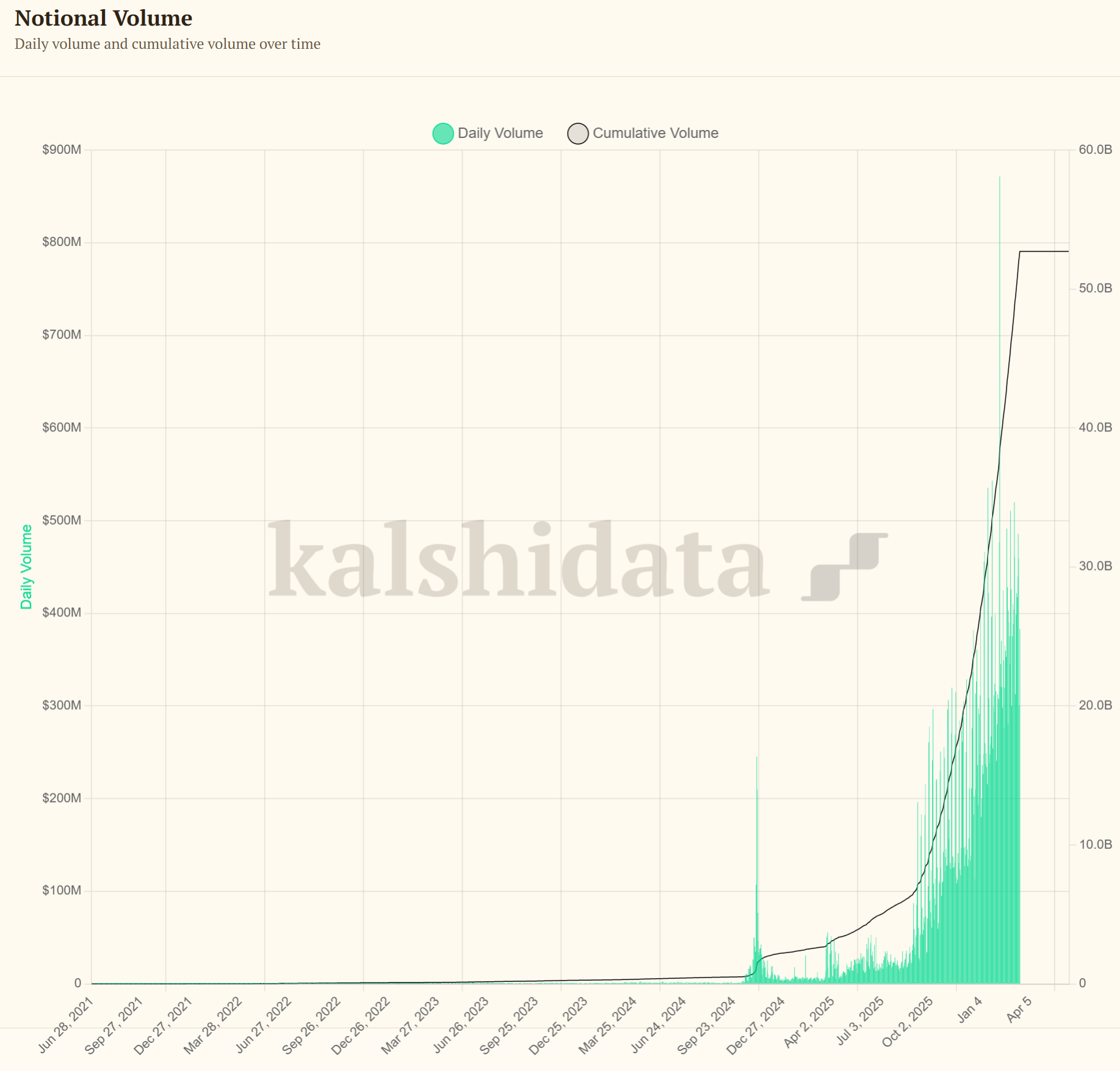
Kalshi currently holds over 90% of the U.S predictive market activity share. Kalshi's revenue surge mainly comes from the simultaneous increase in trading volume and effective fees. Over the past year, its annualized trading volume has climbed from approximately $52 billion to $178 billion. Sports event contracts contribute the majority of its revenue. NBA playoffs, 2026 World Cup-related markets, and partnerships with the National Hockey League (NHL) have attracted many traders.
In December 2025, Kalshi's annualized revenue was still around $600 million. In May this year, Kalshi had approximately 2 million monthly active users, with annualized revenue exceeding $1.5 billion.
In addition, Kalshi recently launched Bitcoin perpetual contracts and will roll out its perpetual contract trading platform Kalshi Pro this summer.
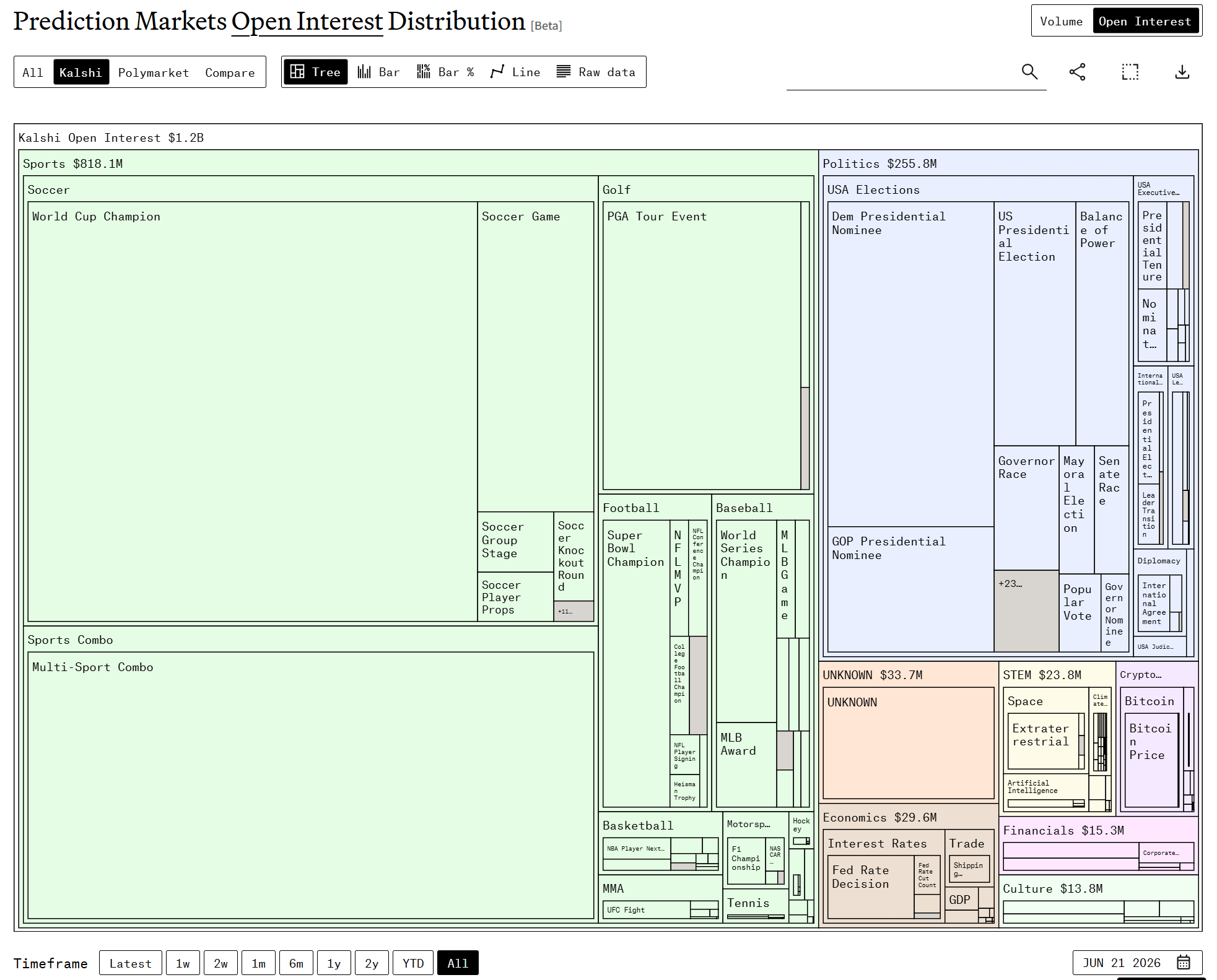
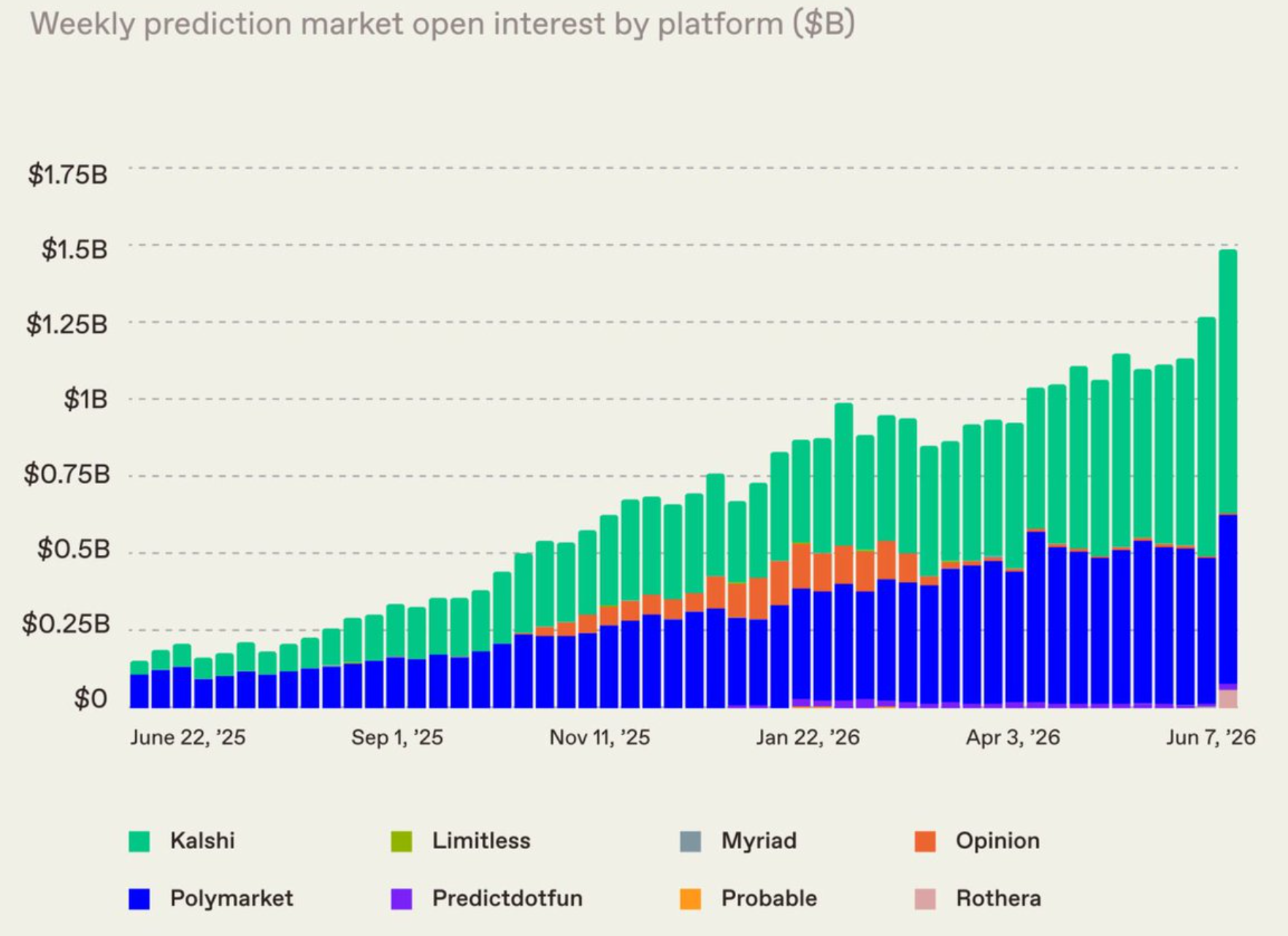
Since May 2026, Kalshi's open interest has remained on an upward trend at a high level, while Polymarket has not shown significant changes.
Litigation Disputes Are the Biggest Variable
Kalshi's IPO path is not smooth, with its core risks centered on jurisdictional conflicts.
Kalshi insists that its event contracts are "swaps" under the exclusive jurisdiction of the CFTC, and state-level gambling laws should not apply. Since 2026, multiple states have engaged in a tug-of-war with Kalshi. The New Jersey court supported Kalshi's sports contracts, and the Tennessee federal court granted a preliminary injunction in February 2026, finding that federal law may take precedence.
The Massachusetts court once ruled that it is subject to state gambling laws, and Arizona even filed criminal charges against Kalshi, stating in the charges that Kalshi may claim to be a predictive market, but in reality, it operates illegal gambling activities and accepts bets on Arizona elections—both of which violate Arizona law. No company has the right to decide for itself which laws to comply with.

Tarek Mansour
Kalshi CEO Tarek Mansour responded: "The Arizona Attorney General's charges are unfounded and clearly an overreach. If they can file these criminal charges against Kalshi, they could also file the same lawsuits against traditional derivatives on the Chicago Mercantile Exchange and Nasdaq, including options trading, interest rate swaps, and grain futures. We have filed a lawsuit against Arizona in federal court. However, instead of allowing the federal court to conduct a substantive review of the case, the state attorney general is trying to bypass proper judicial procedures by filing false charges in state court. We will not be intimidated."
The CFTC has taken an active defensive stance, filing federal lawsuits against states such as Arizona, Connecticut, and Illinois, arguing that its "exclusive jurisdiction" should not be eroded by state laws. Meanwhile, both the CFTC and Kalshi have taken enforcement actions against market manipulation and insider trading.
On June 18, 2026, Kentucky Attorney General Russell Coleman sued Kalshi and Polymarket, accusing them of engaging in sports betting without a license and listing partners such as Coinbase, Robinhood, and Webull as related parties.
The outcomes of these lawsuits will directly affect Kalshi's sports revenue sources. If an unfavorable final judgment impacts its core products, both its business model and IPO will face significant pressure.
Ideally, it takes 6-9 months from early IPO discussions to listing. Kalshi only started informal discussions in June 2026, so the theoretically earliest IPO time is December 2026, but this requires zero delays in all links, resolution of litigation issues, and cooperation from the SEC.
Multiple institutions predict that Kalshi could go public as early as late 2027 or 2028.
Since 2025, it has been common for large fintech companies to have IPOs exceeding $1 billion in scale. Companies with revenue scales close to or larger often raise several hundred million to over a billion dollars in their initial offerings. In 2025, Circle went public with a valuation of $8 billion, with annualized revenue around $2 billion and total fundraising of approximately $1.05 billion.
Currently, Kalshi has become a unicorn with a valuation of $22 billion, approximately 11 times its annualized revenue ($2 billion). If its revenue continues to grow (driven by sports events and election cycles) and the U.S. stock market maintains a certain level of liquidity at the time of IPO, its fundraising amount may far exceed $1 billion. The specific amount is still worth closely monitoring.