
How close is Base to launching its token? What clues are hidden in the official code?
Written by: KarenZ, Foresight News
Speculation about Base's airdrop has heated up again.
On one hand, Base's official blog has included a built-in token standard in its future upgrade plan; on the other hand, the open-source repository has secretly integrated B20Factory, PolicyRegistry, and Beryl test modules within a few days. Coupled with the mysterious teaser video released by Base on May 25, which only had the caption "...", the market naturally connects these pieces of information to the same question: Is Base preparing for a network token and airdrop?
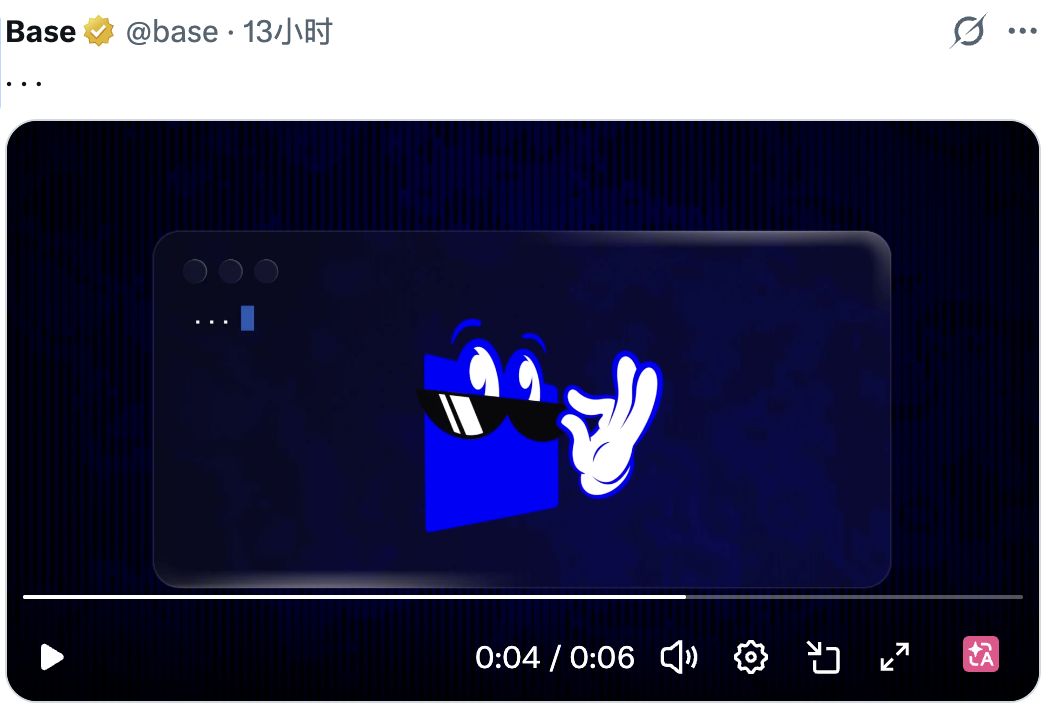
As of May 26, 2026, Base has not yet announced its token economic model, snapshot rules, or airdrop schedule. What can be confirmed is that Base's token infrastructure is entering a more defined engineering phase, and market expectations for its token launch have risen accordingly.
Official Roadmap Includes "Protocol-Built Token Standard"
Base has made public statements about network tokens before. In September 2025, Jesse Pollak, head of Base Network, stated that they were exploring a network token.
A little over a month later, Brian Armstrong, co-founder and CEO of Coinbase, said during the Q&A session of the third-quarter earnings call: "We are still in the early stages of exploring a Base network token. We will not announce any details about governance, distribution models, or specific timelines for now, and will continue to advance the discussion in an open manner."
New clues come from an official blog post introducing the Base Azul upgrade. In the future plans section of the article, Base included "establishing a token standard" in the next performance upgrade scheduled for the end of June.
"Establishing a token standard" can be understood as a protocol-built token standard. This statement is still a step away from "Base will issue its own token", but it clearly indicates one thing: Base is advancing token issuance capabilities into its protocol roadmap. For a network that has publicly discussed a network token, this is enough to make the market re-examine its token launch process.
B-20 Code Lands, Native Token Framework Takes Shape
Beyond the official blog, the B-20 module in Base's repository provides a more concrete technical picture.
On May 19, Base merged the Dynamic Native Token Addresses commit. The current source code shows that B20Factory can derive a deterministic token address based on the creator's address, token type variant, and custom parameter salt.
In b20_factory/variant.rs, Base defines three types of B-20 assets: regular B20 tokens, stablecoins, and security tokens.
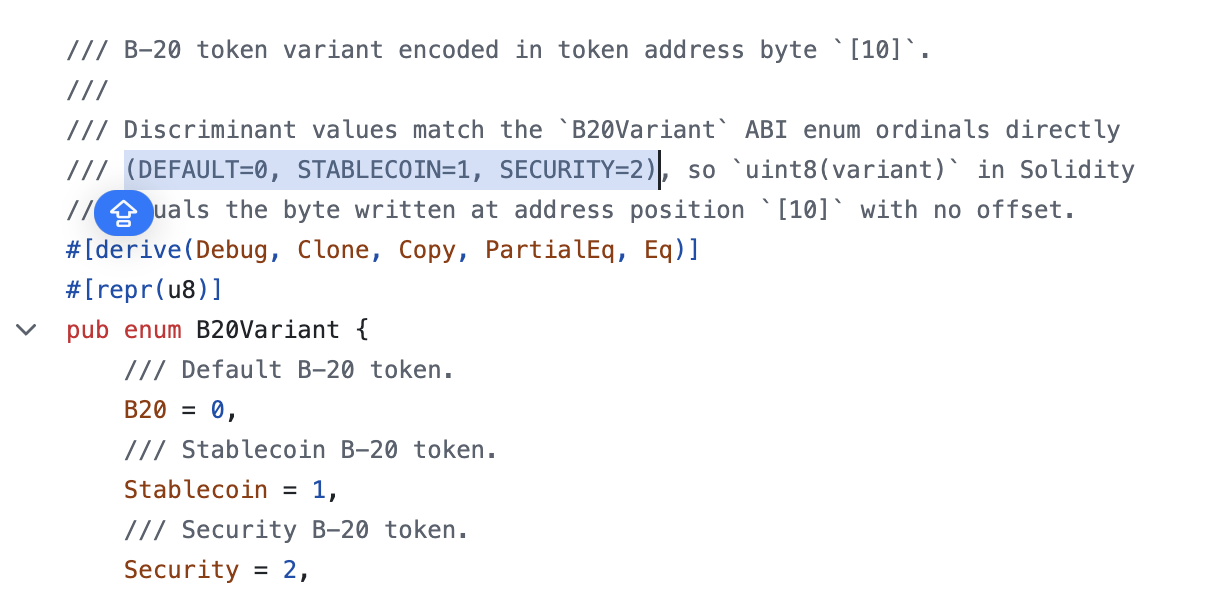
b20_factory/storage.rs implements createB20, supporting the writing of name, symbol, supply cap, and initial mint calls. This is more like a native issuance framework covering multiple types of on-chain assets, rather than a single contract prepared only for a governance token.
The detail that the community is most concerned about comes from the benchmark file base_precompiles.rs. This file did name the test token BaseToken with the symbol BASE. However, this detail should be interpreted cautiously and is not sufficient to prove that a token launch is imminent.
Beryl Code Exposed: Base's Native Asset System Moves Toward Compliance Control
The focus of B-20 is not just on "being able to issue tokens".
In provider.rs, Base states: When the upgrade reaches Beryl and beyond, the network will install dynamic precompiles such as B20Factory, PolicyRegistryPrecompile, and ActivationRegistry. There is no official upgrade page or mainnet activation time for Beryl in the currently searchable documents, but the code already shows its functional direction.
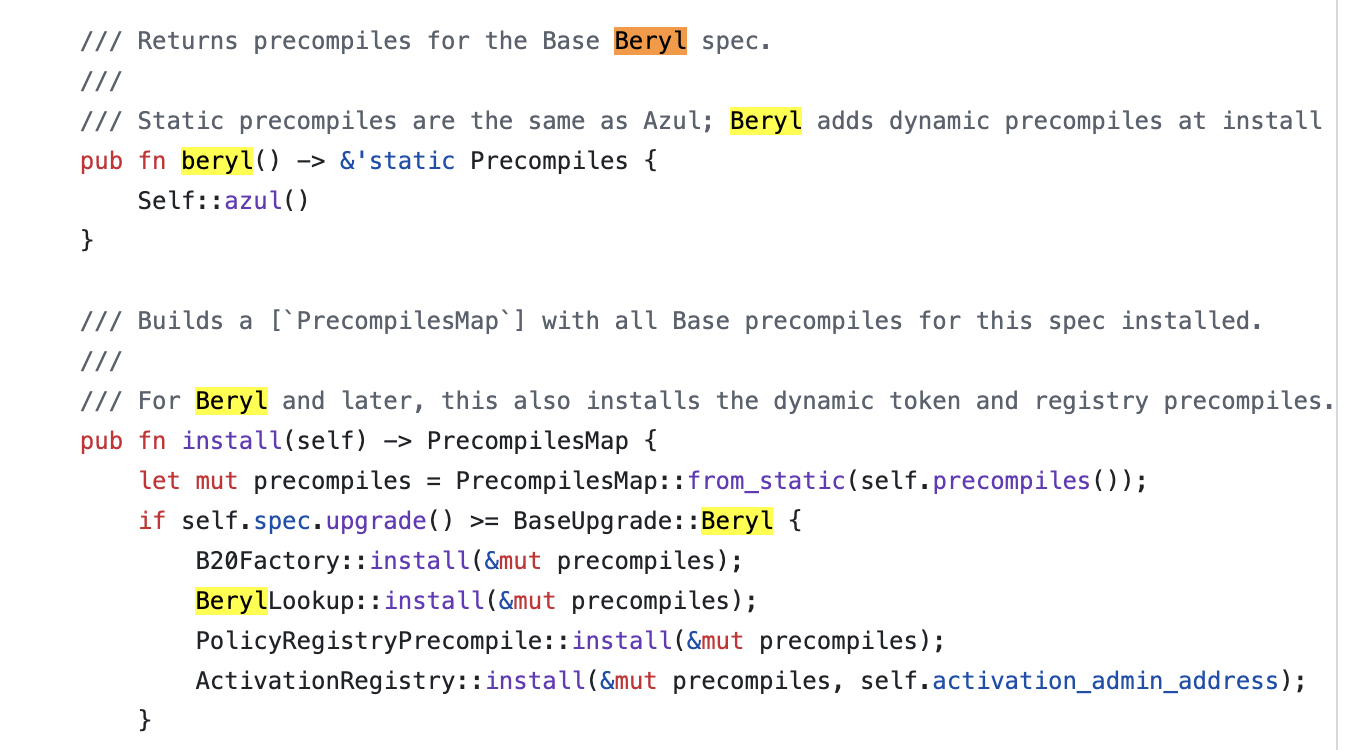
Among them, PolicyRegistry is particularly noteworthy. This module supports allowlists and blocklists, and allows B-20 tokens to bind policies to:
- The sender of the transfer;
- The receiver of the transfer;
- The executor of the deduction;
- The receiver of the mint.
In actions/harness/tests/beryl/policy_transfer.rs, the test code has verified that if the sender does not meet the bound allowlist or is on the blocklist, the B-20 transfer will be rejected.
This design is very suitable for assets with permission constraints such as stablecoins, security tokens, and RWAs. It shows that Base is building a native asset issuance and circulation system, which may target the on-chain financial market rather than just serving a potential BASE token.
Summary
A network that has clearly discussed a network token is now building a native token factory, stablecoin module, security asset module, and permission policy system at the execution layer, which indeed indicates that Base's investment in on-chain asset issuance is deepening.
This is also consistent with the team's recent public statements. On May 24, Jesse Pollak, head of Base, reposted and agreed with Coinbase CEO Brian Armstrong's discussion on the direction of financial system upgrades, focusing on RWA tokenization, stablecoin payments, proxy payments, etc. These statements are highly consistent with the B-20 design that supports regular tokens, stablecoins, and security tokens at the same time.
However, there is an easily overlooked difference here: the native token infrastructure can serve ecological issuance, stablecoins, RWAs, compliant securities assets, as well as Base's own network token. The code proves that Base is expanding its asset issuance capabilities, but it cannot prove when it will release its own token or whether it will be distributed to users in the form of an airdrop.
A more prudent judgment for now is: Base has reached the stage where its token infrastructure is gradually taking shape. As for whether historical users can get an airdrop, how eligibility is calculated, and when distribution will start, we still need to wait for official disclosure.